Root Mesh and Root Cages Around Plant Roots
Should Root Mesh and Plastic Cages Be Removed from Houseplants?
In most cases, I'll remove root mesh, fabric and plastic cages when repotting a houseplant, but only if they can be taken off without badly damaging the roots. If thick roots have already grown through a rigid cage, cutting everything away may cause more harm than leaving part of it in place.
These little cages and wraps are surprisingly common. Most people first discover one when they're repotting a plant and find mesh, fabric or plastic buried inside the root ball. It can look alarming, especially when roots have started growing through it.
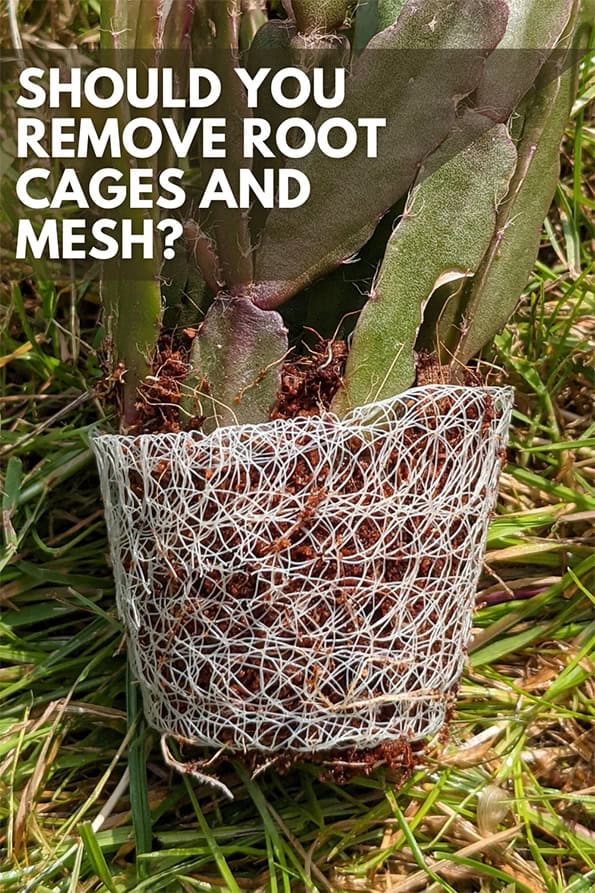
Root mesh and small net pots are surprisingly common. They're useful to commercial growers, but can become restrictive as the plant gets bigger.
So why is it there, will it harm your plant and should you pull it off? The answer depends on what it's made from, how established the plant is and how tightly the roots have grown through it.

Hi, I'm Tom!
If you're like me and enjoy the challenge of growing houseplants and getting them to thrive, then OurHouseplants can help. This website shares my knowledge and years of growing plants and provides my advice on properly caring for your indoor plant friends.
The Purpose of Root Mesh and Plastic Cages
Why are root mesh and plastic cages even a thing in the first place? Well, in most cases they're used to contain and protect the root systems of young plants, particularly during transport and the initial growth stages in the first year or so of their lives. They help maintain the integrity of the root ball and provide support to the plant.
Common Types
These are the most common things you might find wrapped around or surrounding the roots.
- Plastic net pot.
A small plastic pot with lots of holes or open slats. These are commonly used when young plants are started hydroponically because water, air and roots can pass through the openings. - Fine plastic mesh.
A flexible mesh wrapped closely around the original plug of compost. Fine roots may grow through it, but the material often remains around the central root ball as the plant gets older. - Fabric or fibre wrap.
A thin sleeve or piece of fabric used to hold a young plant plug together. Some materials may weaken over time, but you shouldn't automatically assume they're biodegradable. - Plastic collar or plug cage.
A small rigid cage around the base of the plant. These can be easy to miss because they're often buried inside a larger pot of compost. - Wire basket.
These are mainly used for larger outdoor plants and trees, where they support the root ball during transport and planting. You're much less likely to find one around an ordinary houseplant, although large indoor specimens can occasionally have them. - Burlap or hessian root-ball wrap.
This is much more common around trees and shrubs than houseplants. It holds the soil and roots together during transport and helps stop the root ball from drying out. If you find something similar around a small houseplant plug, check it carefully rather than assuming it'll quickly rot away.
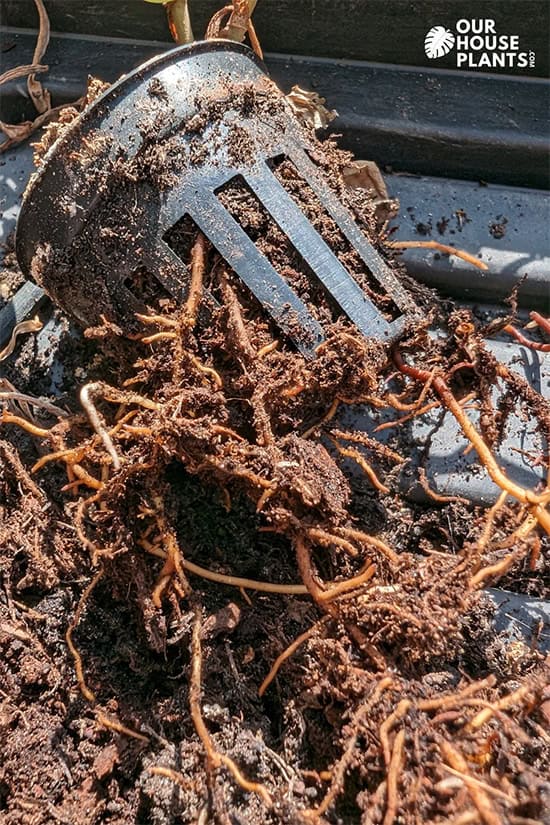
Those "cages" are often nicknamed as "death traps" because they restrict and prevent the roots from spreading naturally into the surrounding soil.
There's a common assumption that these materials, especially fabric wraps, are biodegradable and will eventually disappear without you doing anything.
Sometimes they will break down, but don't count on it. Many are made from plastic, synthetic string, wire or fabric that decomposes extremely slowly. Some will still be there long after the plant has outgrown its original plug.
Pros and Cons of Root Mesh and Plastic Cages
I've seen people suggest that these cages have long-term benefits for houseplants and somehow encourage a healthier root system. I'm not convinced. They can be useful while a plant is tiny and being produced, moved or sold, but that doesn't mean the plant needs to stay trapped inside one forever.
Some roots will grow through the openings without any obvious trouble. The problem comes when a rigid cage, tight mesh or synthetic wrap starts constricting the expanding root system. At that point it's no longer supporting the plant; it's getting in the way.
Root restriction is deliberately used with vigorous garden plants when you don't want them spreading too freely, with mint being a familiar example. That's useful in the garden, but it's normally the opposite of what we want from a houseplant we're trying to grow larger.
The truth is that most of the benefits of root mesh and plastic cages are for commercial growers while they're raising plants for sale. Here's why.
Benefits
- It's more efficient for the grower.
Many houseplants are started off hydroponically, that means they're started in a water solution rather than soil. These are tiny plants to start with and to help keep the roots together and organised, hydroponic net pots are used. When they're bigger and the grower moves them into a soil mix prior to sale, they just leave them in these pots. By not removing them, it saves them time and money. - They provide support for young plants.
Wire mesh and cages will provide support for baby plants, ensuring they grow straight and strong. They can also be moved around the growing environment easily as needed. - They protect plants during transport.
Net pots and mesh help protect the root system from damage when plants are moved from nurseries to their new homes. This can prevent accidental damage and wastage.
Drawbacks
- Impedes Root Growth.
Over time, these materials can restrict the natural expansion of the roots, leading to a tight root system that can harm the plant. This then constricts the development and slows or stops the growth above the soil because they can hinder the roots from growing normally and impedes access to nutrients and minerals. - Potential for Root Rot.
If not managed properly, they can trap too much water around the roots, increasing the risk of root rot. - Difficult to Remove.
Removing these materials can be challenging and, if done improperly, can damage the plant roots of mature plants.
Indirectly, mesh and cages do have benefits and advantages for us as consumers. If the overheads for the growers are lower, we're likely to find better and more reasonable prices in shops when buying plants.
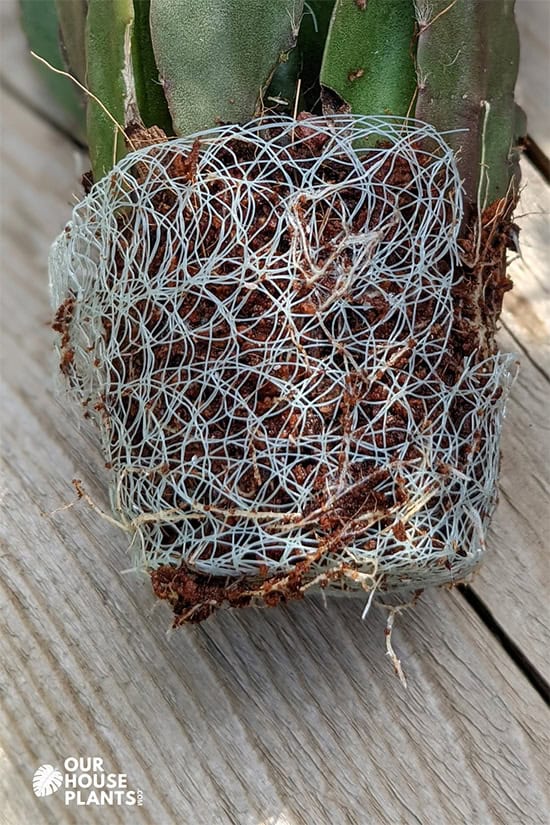
Although roots can and will grow through the holes, they're still being restricted compared to plants without the mesh and this can negatively influence and reduce the future growth of the plant.
Should You Remove Root Mesh and Plastic Cages?
Roots will still grow through the holes, but plants with unrestricted growth tend to grow much better in the long term. So it's my view that root mesh, fabric, plastic cages or (whatever awful contraption has been used), should be removed from most houseplants whenever the opportunity arises.
What's my Final Verdict?
Remove those bad boys as soon as you can! They can only cause problems for plants in the longer term. So unless there is a compelling reason to keep them. Get them off your plants!
It doesn't have to be done as soon as you get them home. But once the plant has started to establish and is of a decent size it's worth thinking about.
For small plants and baby plants, removing the mesh or cage early on can actually be beneficial. Doing it allows their roots to spread freely in their juvenile stages when they're establishing. This lets them grow taller, faster and generally provides better health for the plant.
For larger plants or trees in large root cages, the decision may depend on the specific circumstances and the plant's growth stage. For example, I saw a giant rubber tree in a tight wire basket. However, the roots had grown through the holes, and trying to remove the basket without damaging the roots wasn't feasible.
How to successfully remove mesh and cages without damaging the plant?
If you've decided to remove the mesh or cage then it may be as simple as puling the plant out of it.
In other instances, it may have started to grow through the holes or slats, making it more difficult. The plant may also be wrapped in tight fabric or even have a collar around the stems.
If this is what you're finding, then it's time to dig out the scissors, pruning shears, or even a pair of pliers to help break the plant free. These tools can all be used to cut through plastic mesh, synthetic burlap, or thin wire cages.
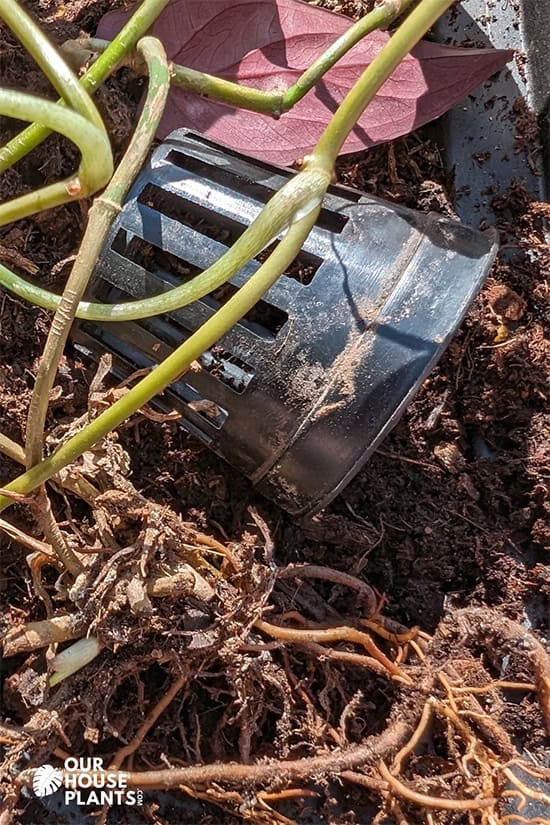
After years of being in this cage, this Syngonium is finally free and can develop into a healthy plant. I moved it into a larger pot, used a fresh potting mix with organic matter for added nutrients. After a couple of weeks it was clearly happy with the changes as I saw new growth.
Once the plant is free, you can repot it into a similar potting mix to what it was growing in previously. Because of the previous restriction, the roots may be very concentrated at the base of the stem. If that's the case, gently spread the roots out a little before repotting them.
About the Author
Over the last 20 years, Tom has successfully owned hundreds of houseplants and is always happy to share knowledge and lend his horticulture skills to those in need. He is the leading content writer for the OurHouseplants Team.