
Spider Plant (Chlorophytum): Care Guide
Why Spider Plants are so easy to care for (and why they're loved by beginners)
Spider Plants (Chlorophytum comosum) are one of the easiest houseplants to grow indoors. They tolerate missed waterings, adapt well to most homes and are famous for producing lots of baby plants (also called spider plant pups or plantlets).
What makes Spider Plants especially rewarding is how quickly they respond to good care. A healthy plant can send out long flowering stems covered with baby plants, allowing you to grow new plants almost effortlessly. This combination of toughness, fast growth and easy propagation is why they remain one of the most popular beginner houseplants.
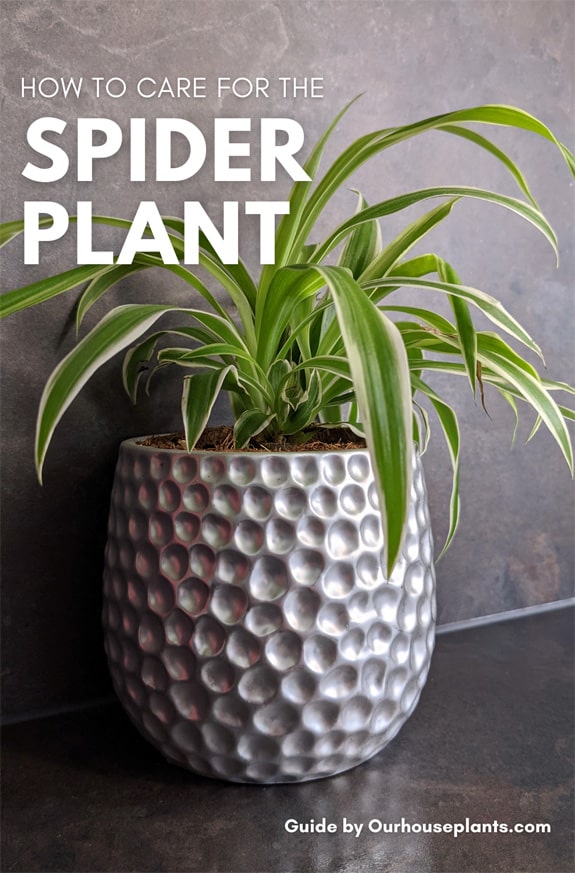
Spider Plants are easy houseplants to grow and care for. You don't even need to have a green thumb for them to do well in your care.
How do you pronounce Chlorophytum Comosum correctly? Say:
Kloe-roe-FY-tum Koe-MOE-sum
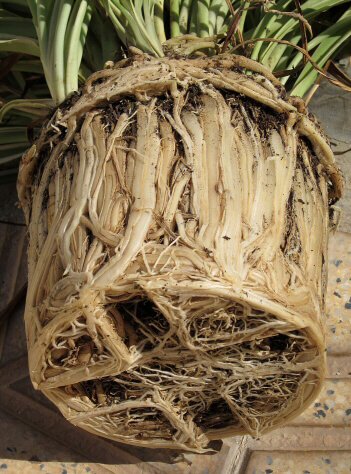
A Spider Plant needs some attention to really get it to perform at its best, but it's extremely tolerant should you accidentally forget about it from time to time. This is in part due to the thick, fleshy storage roots (rhizomes), it produces in order to store food and moisture for long term support.
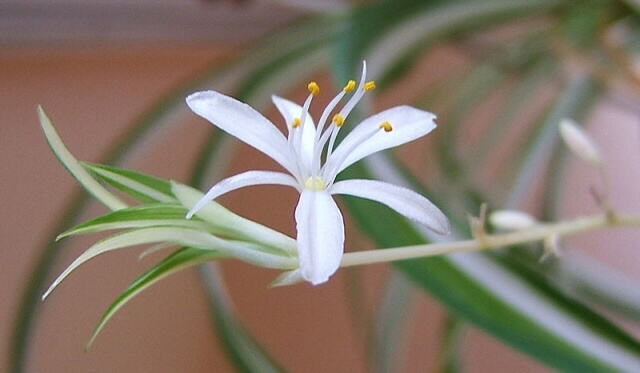
If you grow your new Spider Plant correctly, you'll quickly reap the rewards of your hard work. There is never long to wait until a new plant (or offset) is sending up slender shoots of its own that will produce small white flowers which then develop into more airborne plantlets.
Later in the article, I highlight some popular varieties you can find, but up next are the all-important care instructions.
How To Care For A Spider Plant (Quick Checklist)
| Care Area | Spider Plant Requirement |
|---|---|
| Light | Bright indirect light is best. Spider Plants tolerate lower light too, but variegated types may lose some of their colour and growth will be slower. |
| Watering | Water when the top of the compost has started to dry. Their thick roots store moisture, so occasional missed waterings are usually tolerated. |
| Humidity | Average household humidity is normally fine. Very dry air can sometimes cause brown leaf tips. |
| Temperature | Normal household temperatures are ideal. Protect your Spider Plant from frost and very cold conditions. |
| Feeding | Feed once a month during Spring and Summer to encourage healthy growth and help mature plants produce babies. |
| Growth Rate | Spider Plants are fast growers. A healthy mature plant can produce lots of baby plants (plantlets) along its flowering stems. |
| Difficulty | One of the easiest houseplants to care for, making it a great choice for beginners. |
The quick care guide above gives you the basics, but Spider Plants are even more rewarding when you understand what they need throughout the year. Below you'll find much more detail from my years of growing them, covering lighting, watering, feeding, propagation and the common problems you may encounter.

Hi, I'm Tom!
If you're like me and enjoy the challenge of growing houseplants and getting them to thrive, then OurHouseplants can help. This website shares my knowledge and years of growing plants and provides my advice on properly caring for your indoor plant friends.
Spider Plant Photos
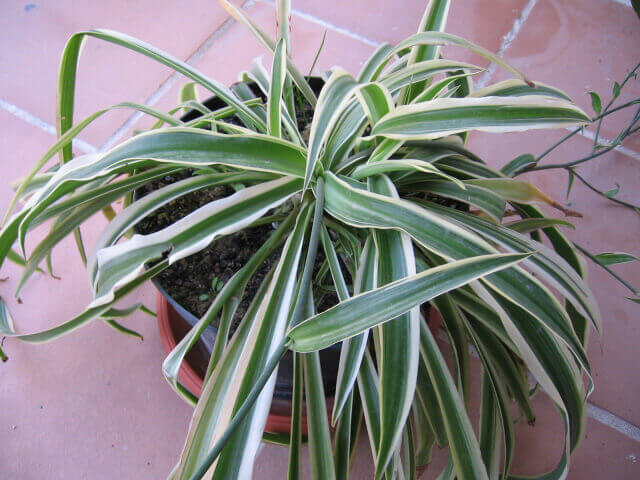
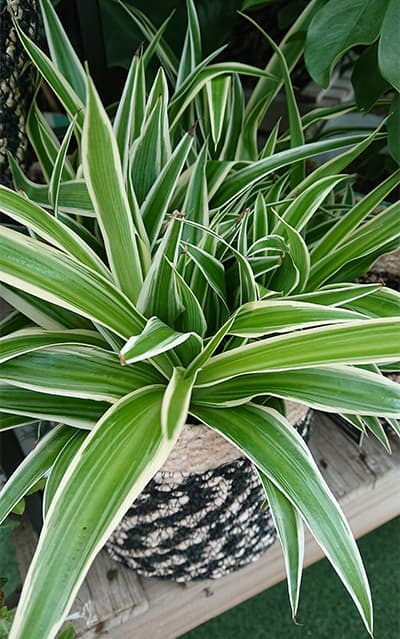
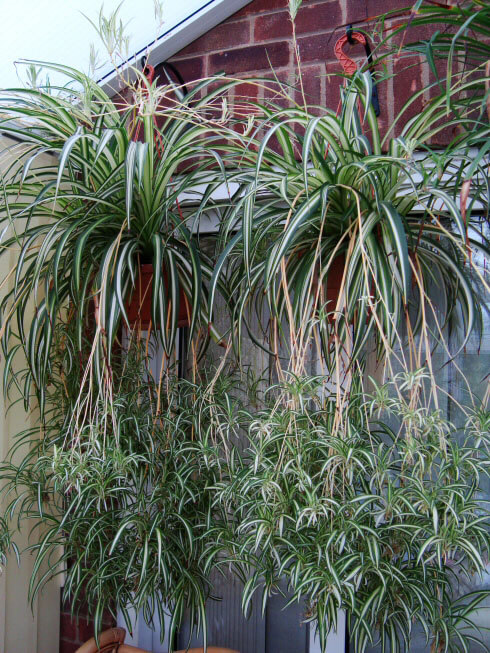
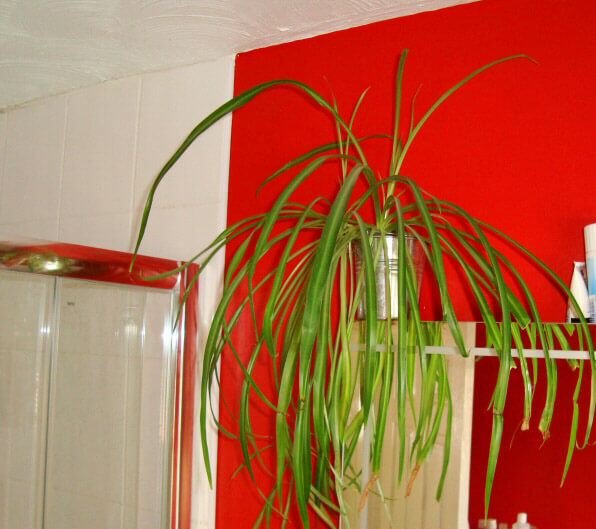
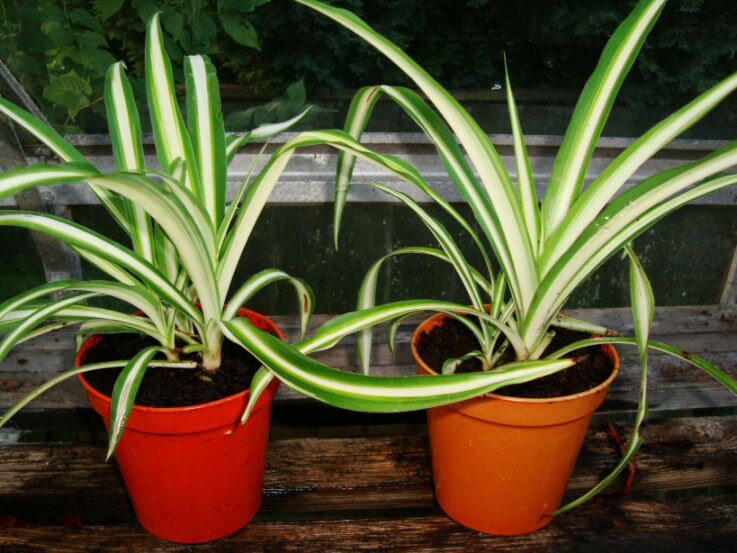
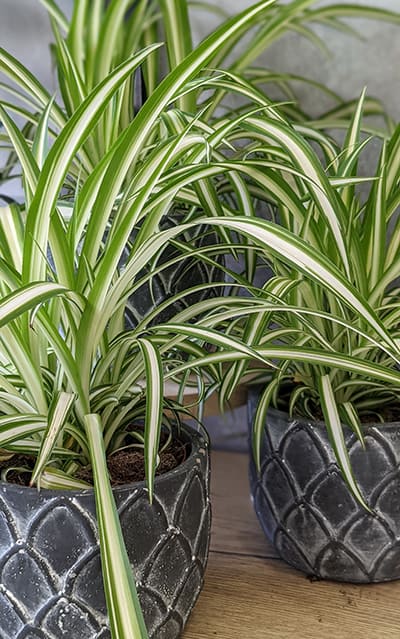

Spider Plant Care Guide: Light, Watering, Growth and Common Problems
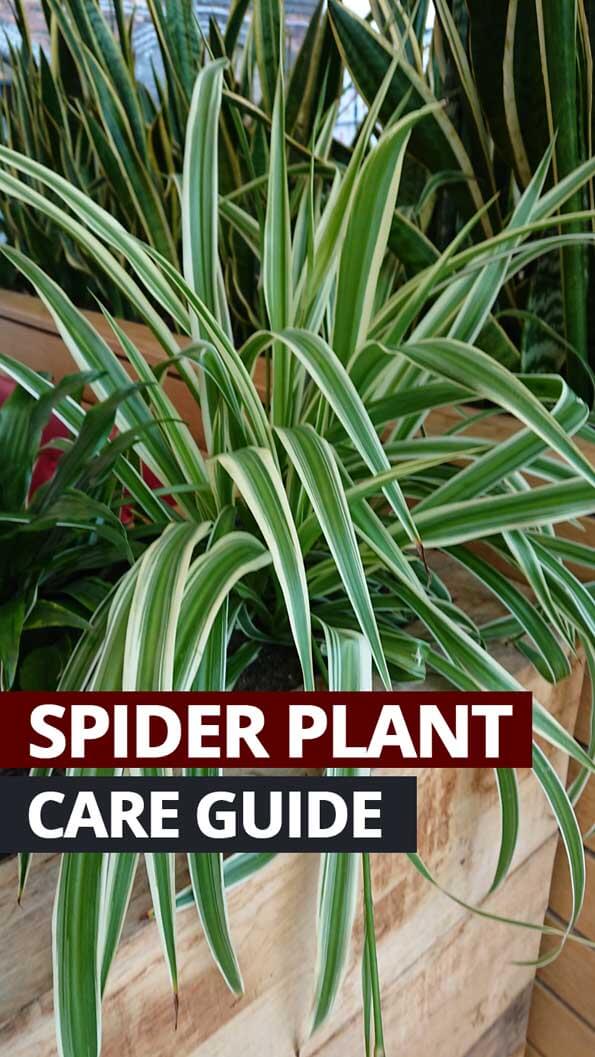
Whether you know it as the Bad Mother Plant, Ribbon Plant, Airplane Plant, St Bernard's Lily, Spider Ivy, Ribbon Plant, or the famous "Spider Plant", they're going to be easy to care for.
How Much Light Does A Spider Plant Need?
All the variegated Spider Plants need a bright spot to keep their stripes. If you can't give this, a nearby grow light should help. The all green version (which has no variegation to lose) will accept a darker location, although growth will be much slower. Direct sunlight should always be avoided.
Bright indirect light should give you the best results, but they're very adaptable houseplants. As long as you're avoiding low light spots, you should still get growth even in moderate lighting.
How Often To Water
Water your plant well in the growing months (Spring through to Autumn / Fall) and if you've put it in a bright spot, you'll get a fast rate of growth and a good chance of Spider Babies forming.
How Much Water?
The thick tuberous roots store water during dry periods, but for healthy growth aim to keep the soil slightly moist during Spring and Summer. A good way to achieve this is to allow the top layer of compost to dry slightly before watering again.
You can use tap water in most cases, but if you have very hard water then it could cause brown spots or a general "unwell" look to your plant over time. If this happens give spring or distilled water a go for a month or so and see if this improves things.
Water only sparingly in Winter as growth slows down no matter what you do at this time of year and if you've too much water sloshing around the roots, it can cause the plant to rot. Yellow leaves are a strong indication you're overdoing it with the watering so cut back.
If you're a known overwaterer or you lose a lot of plants to root rot, then make sure the planter has drainage holes at the bottom of the pot so excess water can drain away.
Do Spider Plants Need High Humidity?
For Spider Plants, humidity levels are not overly critical. Although slightly dry air can encourage brown leaf tips to form. This is hard to avoid in most homes, so unless the brown is heading quite deep into the leaf I don't personally worry about it. Half an inch (2cms) or so of browning is fine.
Feeding
These tough plants accept occasional feeding, but for even regular growth, try and feed at least once a month during the growing season using a standard houseplant fertilizer. Don't feed newly planted Spider Babies / Pups, or mature plants in the Winter months.
Do Spider Plants Clean the Air?
Chlorophytum is often associated with improving indoor air quality, (although only one or two won't do a great deal of air cleaning). But what is true is that all houseplants are good for your health. All this for the price of an occasional watering and some basic care requirements still makes them worth having.
Temperature
The average warmth of a typical home is the key to good growth. They can cope with hotter temperatures as long as you avoid intense direct sunlight, so you can put your plant outside in the Summer, but be sure to bring it indoors before Winter arrives.
If the soil is dry, your plant will survive without issue down to 5°C (41°F). If the soil is wet or you go colder than this, some damage will likely result. Any exposure to a hard frost will totally destroy the upper parts of the plant overnight.
Some readers have commented that even though frost seriously damaged the visible parts of the plants, new growth eventually sprouted from the thick roots under ground. I don't recommend doing this (just in case it doesn't work), but say you get caught out with a sudden cold spell, your plant could still come back to life the following Spring.
It's very easy and super quick to propagate new plants
How to Propagate Spider Plants
It's easy and super quick to propagate Spider Plants by planting up their offsets or Spider Babies. Some people also divide the plant when they repot. Below are the three Spider Babies propagation methods:
- Method One - If the babies have been hanging on the parent plant for while and have their own roots (see photo below), you can cut them off the flowering stem and push them directly into a pot filled with moist compost.
There is no need to use any type of rooting hormone. Water well and put in a bright (not sunny) spot. Keep moist, and within a few weeks you will notice new leaf growth.
Look at those roots! This Spider Baby is ready to get going
- Method Two - If the babies are young and have no roots yet, cut them off from the flowering stem and hang them in a container of water. The leaves shouldn't be submerged, just the root area needs to make contact with the water.
In a few weeks you'll have roots (see photo below) and you can follow the directions from Method One above.
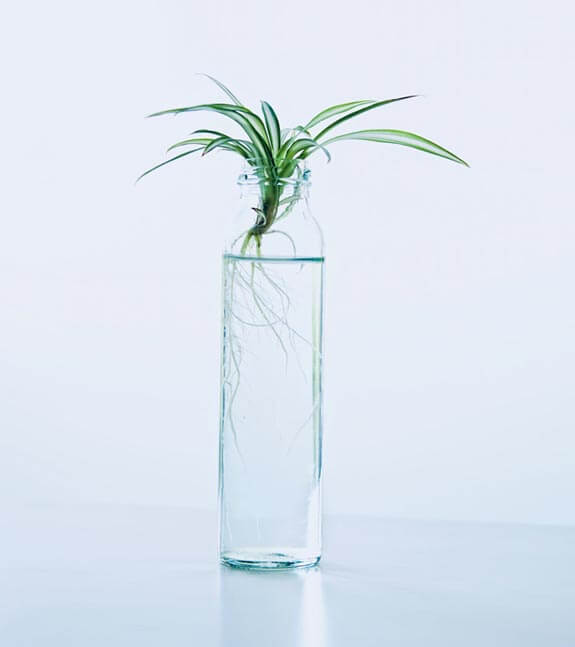
They root easily in water as shown in Jon Li's photo
- Method Three - The methods described above are the simplest. However you can also "peg" the babies into nearby soil with them still attached to the flowering stem (and therefore the parent). Rooting should take place in a few weeks, at which point you can cut them away from the flowering stem.
Whichever method you pick, in about two or three months you will have something like the picture below. Spider Plants are fast growers!
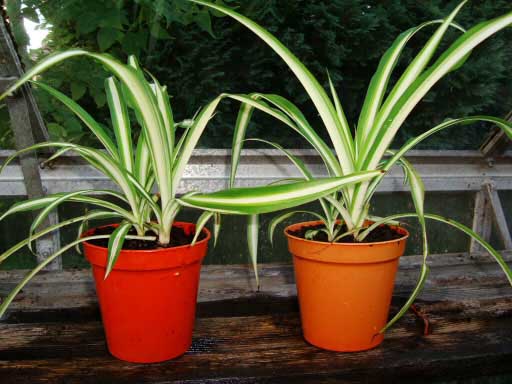
Growth can be very fast. These Spider Plants were only propagated two months prior to this photo being taken.
Did you know?
These plants are so prolific and grow so fast your original baby could be producing large numbers of babies of its own within a year.
You might be wondering what you should do with all these new plants! The good news is that you don't need to remove every new plantlet that is produced. They can just be left where they are for several years as part of the mother plant. Or because they make super cheap and easy gifts, you could remove some and share them with family and friends too.
Why Is My Spider Plant Not Producing Babies?
Spider Plants usually produce baby plants when they are mature and growing well. If yours isn't making plantlets, the most common reasons are:
- The plant is still too young.
- It isn't receiving enough light.
- It needs feeding during the growing season.
- The pot is too large (or too small).
- The plant has recently been moved or stressed.
A healthy Spider Plant doesn't need special treatment to produce babies, but good light and regular care will greatly improve your chances.
How Fast Do Spider Plants Grow?
The Spider Plant is one of the fastest indoor growing plants you can find. Providing you give it good light levels and just the right amount of water as detailed above, then it will burst into growth and keep churning out new leaves at a very rapid pace.
It's not unusual to go from having a small cutting to a mature adult plant producing its own plantlets within a space of a year or less.
Height / Spread
The maximum height and spread of most Spider Plants is around 30cm / 12in. If they have cascading stems (see below), this will add significant length to the plant's appearance.
Repotting
If ideal care has been provided, you'll need to repot a Spider Plant into a bigger pot every Spring until it reaches maturity after about 2 to 5 years. If grown in a small pot it will eventually stop growing, so you do need to upsize every so often if you want it to get bigger.
You can just use standard houseplant or garden compost. Check out our repotting guide if you need some help with repotting your plant.
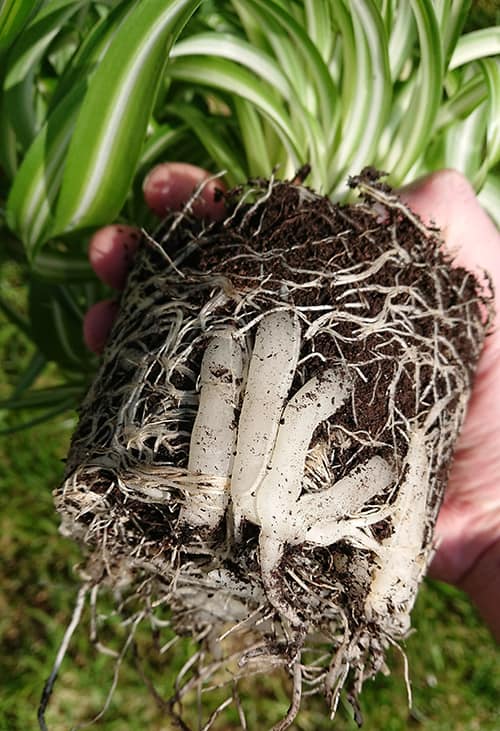
Even though this might look congested, this plant could stay in the existing container for another six months easily. But you can also repot it into a bigger planter at this point too.
If you're worried your plant is too big already and you aren't able to move it to a different location, don't repot into a larger container and this will restrict its growth
Flowers
Mature plants will produce a rapidly growing flowering stem on which small white flowers appear. The flowers are pretty small and don't have a strong scent. They'll last a few weeks before fading, and then baby plants start to form where the flowers were a week or so later.
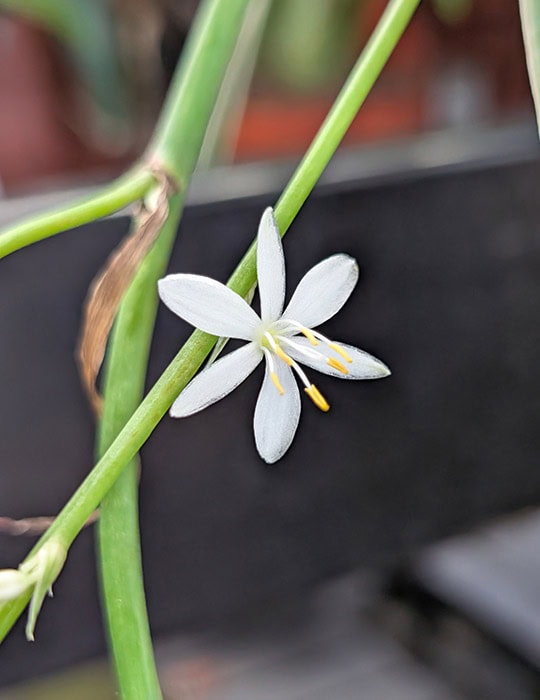
If your spider plant is blooming, it means its environment is spot on. Keep doing what you're doing, and watch for "baby" plantlets to form along the same stems soon.
Are Spider Plants Poisonous?
No Spider plants are not toxic so they're very safe to have around people, cats or dogs.
Anything else?
If you have a large enough hanging basket, you can plant several babies together to create a future cascading waterfall of babies! Very effective in a conservatory or anywhere where you have height, such as the top of cupboards or wall shelves.
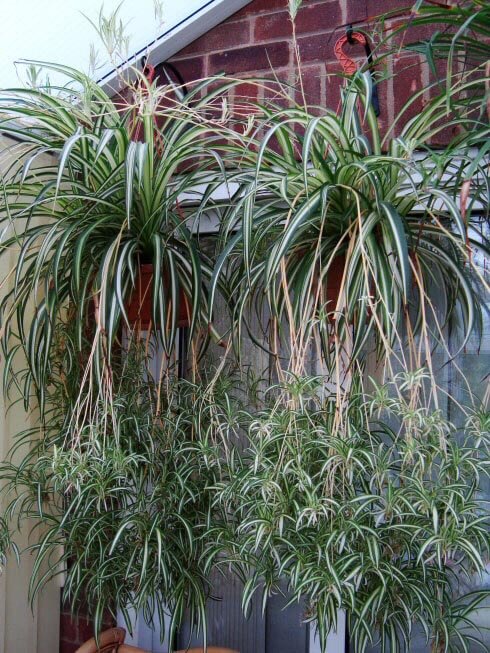
Mature Spider Plants with a cascading waterfall of Spider Babies in my parents conservatory / Sunroom.
Caring for Spider Plants Recap
-
Moderate Light Levels An adaptable houseplant that will grow well in both light shade or brightly lit spaces.
-
Moderate Watering They can go for long periods without water but growth and overall health will suffer. Try to water at least once a week in Summer. Less often in Winter.
-
Moderate Temperature Pick rooms in your home to grow your plant in that are warm.
-
Feeding Provide feed to the soil once every month. No need to feed during periods of no growth, for example during Winter.
- Avoid harsh direct sunlight which can scorch the leaves.
Spider Plant Problems
Why Does My Spider Plant Have Brown Tips?
One of the most common problems you'll face. It's normally caused by excessively hot air (i.e. if it's above a hot radiator) that causes low humidity. It can also be caused by underfeeding. You should aim to feed it at least once a month during the growing seasons.
Once the ends go brown they stay brown, so nip the tips off with a pair of scissors.
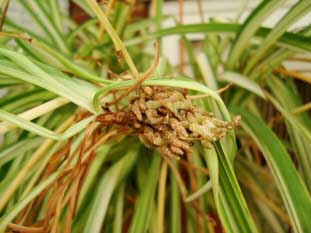
Scale Insects.
If you notice lots of brown disc like objects on the leaves, then it's likely to be Scale insects. They can be a real problem with these plants, as they're so darn tasty and attractive to them. Scale can spread and multiply easily and Spider Plants are so tough they can actually cope with them for a long time before the plant starts to suffer.
They're clearly not ideal though and need to be sorted out if you want to return your plant back to full health. You can use various methods to get rid of them, and I have a full write up on my pests guide.
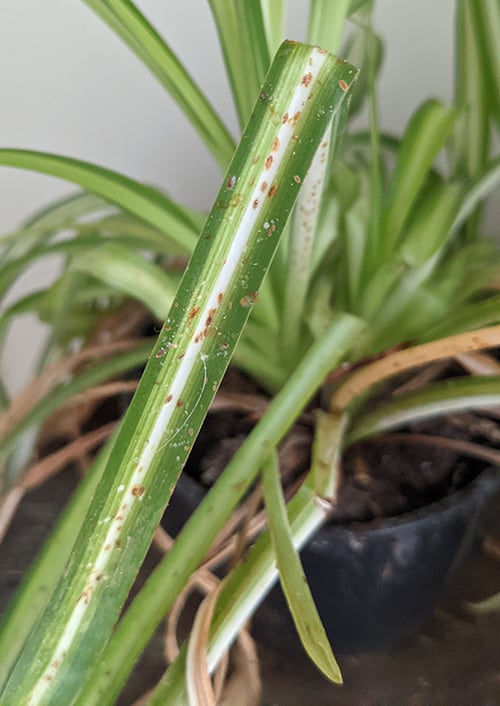
A particularly bad case of a Scale infestation.
Why are my Spider Plant leaves splitting?
In general, all plants which are grown outside tend to be stronger and sturdier than those grown indoors. Quite simply they've "toughened up" and become acclimatised to cooler temperatures and the increased air movement (wind) that exists outside.
Some houseplants, and in particular Spider plants, seem to suffer long term when grown in "perfect" indoor conditions. This means they're nice and happy with lovely warm temperatures and little air movement all the time.
In my experience, I've found that in these perfect indoor conditions young plants grow really fast and robustly for about 6 months to a year. Then when they get to a decent size and produce their first flowering stem the plant seems to get sluggish and the leaves can be weak or even split lengthways. It's like they've given up.
To fix this, once the risk of cold snaps has passed, I do something horrible to them and put them outdoors for two or three weeks in late Spring or Early Summer and this helps massively.
The leaves and stems thicken and have increased waxiness. This restores the plant to a robust looking beauty. If you can't put your plants outside, then try relocating them next to an open windows for several hours a day.
Leaves with brown streaks (normally in Winter).
This is likely a watering fault. You don't need to water as frequently in Winter as the plant is hardly growing at this time of the year.
Leaves curl with spots of brown / yellowing and leaf fall.
In the growing months this is typically caused by too little water. It usually means you have allowed the soil to completely dry out and then left it like that for another few weeks.
In winter though this could be a sign of overwatering. You'll have to judge what's happening by feeling the soil. Wet or damp soil is almost certainly a nod towards overwatering and a very dry potting mix would indicate Underwatering.
Spider Plant has very pale droopy leaves.
Again caused by too little water with too much sunlight. Try to water your plant more often, or if that's not possible move it to a spot with less light.
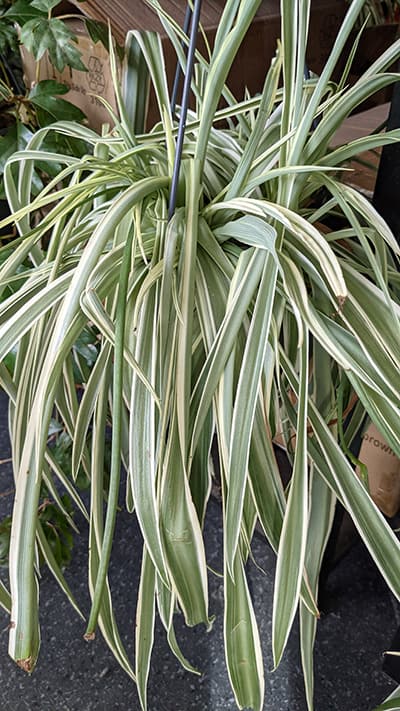
When underwatered the leaves become washed out, almost gray looking. This plant should perk up again a day or so after it's been watered.
No Spider Babies Growing.
Quite likely this is because your Spider Plant is too young. Flowers and therefore babies, only appear on more mature plants, it also needs to be getting some bright light for a few hours every day.
A reasonably sized pot is needed too. If your Spider plant has not been repotted for a long period, then it's probably time for a size upgrade.
Remember - Thriving not Surviving. Taking good care of your Spider Plant is the best way to get it to grow and produce new spider plants.
Popular Spider Plant Varieties (Chlorophytum cultivars)
Spider Plants are available in several cultivars, with differences mainly seen in leaf colour, stripe patterns and growth habits. Care requirements are almost identical, so choose the one you like the look of.
Chlorophytum Comosum 'Vittatum' - The Original Variegated Spider Plant.
Chlorophytum Comosum "Vittatum" - or Spider Ivy, this was the first variegated cultivar of the Spider Plant and was the most popular until the late 1990s. It has light green striped leaves with a broad central white stripe.
It's often displayed somewhere high or in a hanging basket to show the numerous plantlets or Spider Babies that form on mature plants. The long stems on which the Babies hang are yellow / white.
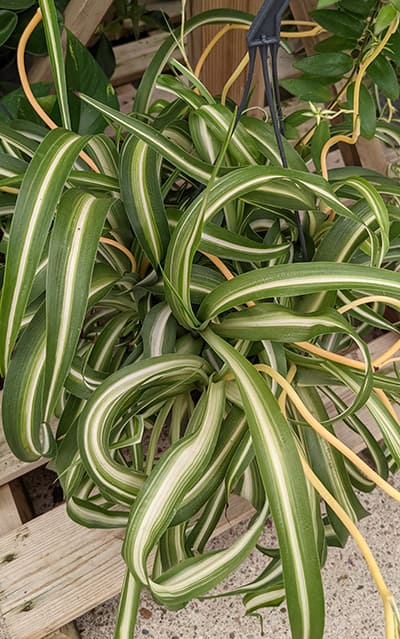
Chlorophytum Comosum 'Bonnie' - The Curly Spider Plant.
Chlorophytum Comosum "Bonnie" - has the traditional green with the white stripe variegation of the ‘Vittatum’, but its leaves curl and bend.
The flowering stems are yellow and plantlets are curly like the parent. It's become a popular variety because it tends to be compact in size and is ideal if you want a Spider Plant but don't have masses of space to show it off.
Chlorophytum Comosum 'Variegatum' - The Modern Variety.
Chlorophytum Comosum "Variegatum" - This version is newer than the 'Vittatum', and has dark green leaves with white edge margins. It's generally more compact than the 'Vittatum' but the leaves tend to be wider and a little thicker.
The long stems which support the offsets are often green. It's a striking plant and has generally replaced the popularity of the 'Vittatum' in garden centers and department stores. It can go by several names and there are also other cultivars of this variety, look out for names like "Ocean" or "Airplane Plant".
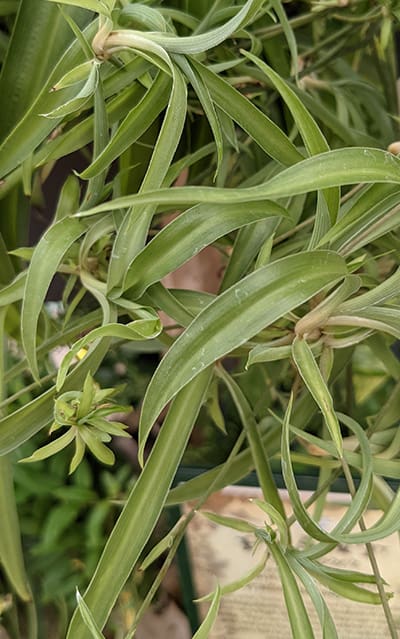
Chlorophytum Comosum - All Green Variety - The Original Spider Plant.
Chlorophytum Comosum - This was potentially the original Spider Plant. Its leaves are all green with a subtle light green shade running through the center.
Although it's better adapted to darker positions than the variegated versions, it's the least common. You will struggle to find this type in the average garden center, so if you decide you want it you may have to search it out. I've also seen it called "Hawaiian Spider Plant".
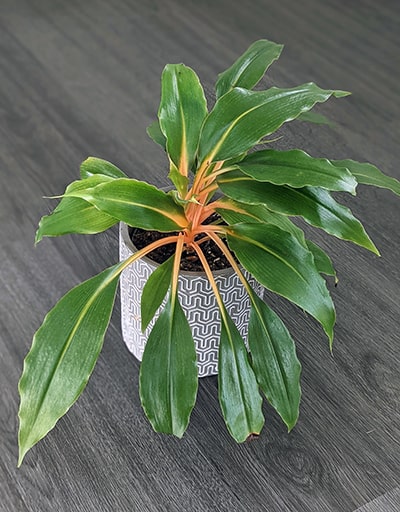
Chlorophytum Orchidastrum 'Green Orange'.
Chlorophytum Orchidastrum 'Green Orange' or "Fire Flash" is often sold as a Spider Plant, but it isn't one. Orchidastrum is a different species, although it falls within the Chlorophytum genus, so similarities exist in terms of care with its Comosum cousins.
It has wide solid dark green leaves with yellow or orange stems that push into the leaf center. It also doesn't have "Spider babies" to show off.
Mislabeled?
The common name of "Spider Plant" might have been confused with the Rabbit's Foot Fern because it also has "Spider" connections on account of its "Tarantula Leg" rhizomes.
After comparing your own Spider Plants leaves with the pictures you may find yours isn't listed. This is likely because new cultivars for these popular houseplants are hitting the market all the time, and you have one of the less common varieties.
However, in all cases Chlorophytum have very similar care requirements so the care information further down the page will still be relevant to you.
About the Author
Over the last 20 years, Tom has successfully owned hundreds of houseplants and is always happy to share knowledge and lend his horticulture skills to those in need. He is the leading content writer for the OurHouseplants Team.
Also on Ourhouseplants.com
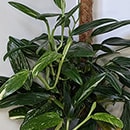
(Article / Gallery) Photo credit of the Spider Plant rooting in a water vase - Jon Li