
Jade Plant Care Guide (Crassula ovata)
Jade Plant: Easy to Grow, Easy to Overwater
Jade Plant, or Crassula ovata, is a long-lived succulent with thick glossy leaves and woody stems. It is also called a Money Plant in some countries, although that name is also used for several completely different houseplants.
It is one of the easier indoor plants to grow, especially in a bright position. The main thing to avoid is keeping the potting mix wet for too long: Jade Plants tolerate a missed watering far better than constantly damp soil.
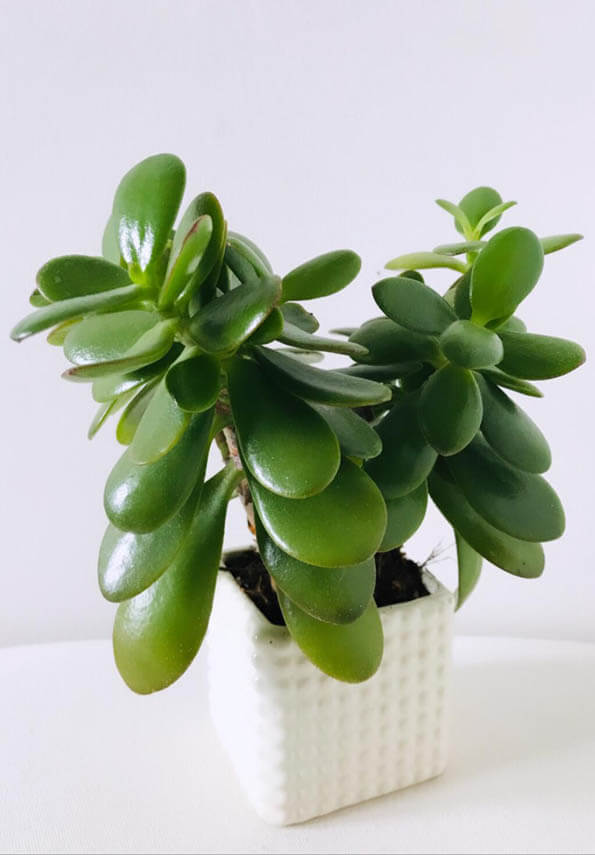
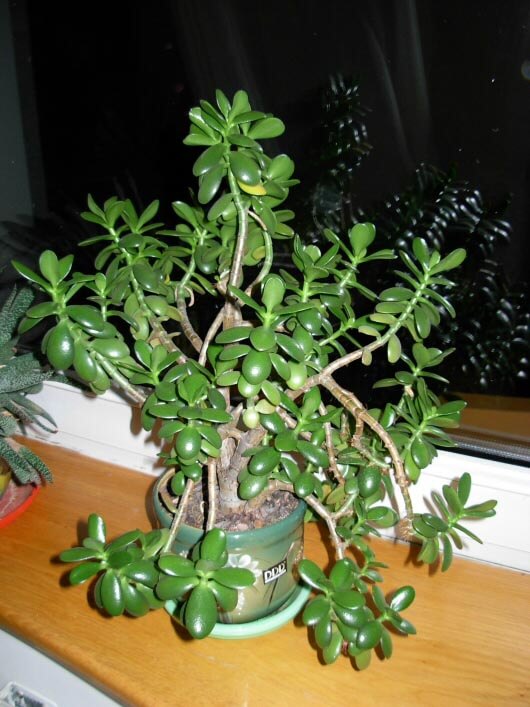
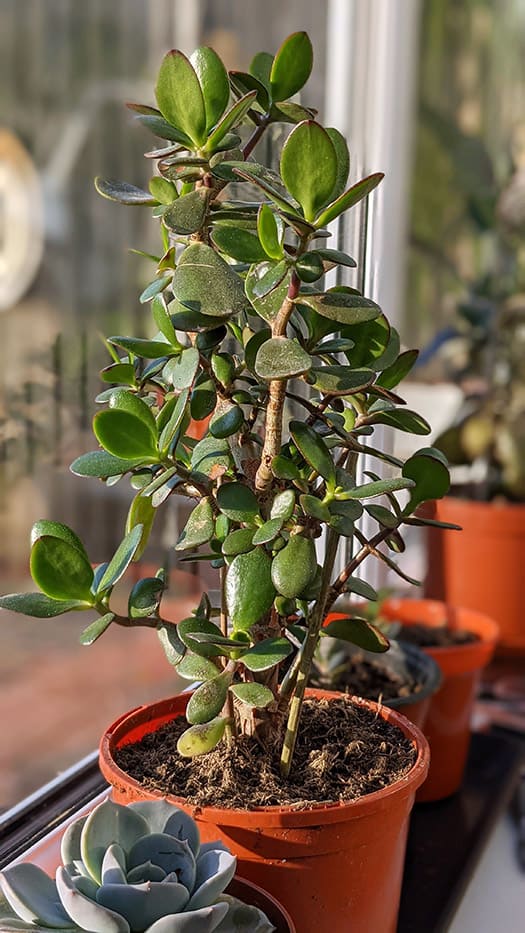
A young Jade Plant, also commonly called a Money Plant, growing indoors in a cream-coloured pot.
Quick takeaway
Give a Jade Plant bright light, water it well only when the potting mix has mostly dried out, and use a pot with drainage holes. It grows slowly, can live for decades, and will become heavy and woody with age. Constantly wet soil, cold conditions and low light are the main causes of trouble.
Very easy to look after with amazing longevity it was somewhat more popular in the past than it is today. The insulting phrase "old fashioned" might be slung around when describing this Crassula, but as with anything, fashions go around.
So if you like it, pay no attention to the insults, instead be proud and display your Jade Plant boldly.
How do you pronounce Crassula ovata correctly?
Say: KRASS-you-luh Oh-VAY-tuh
Is a Jade Plant the Same as a Money Plant or Money Tree?
Sometimes. Jade Plant is one of several houseplants commonly called a Money Plant, particularly in the UK. Its botanical name is Crassula ovata, and it is a succulent with thick oval leaves and woody stems.
However, "Money Plant" can also refer to very different plants, including the braided Money Tree (Pachira aquatica) and the round-leaved Chinese Money Plant (Pilea peperomioides). They are not the same plant and do not have identical care needs.
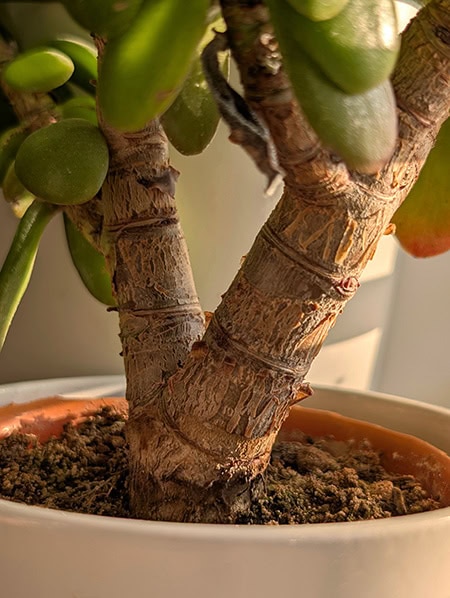
Jade Plant is also sometimes called a Money TREE because mature specimens develop a trunk-like shape. But it is a succulent, not the braided Pachira Money Tree sold in many shops.
Why Is It Called a Money Plant?
So yes the money aspect of its name. A plant which has grown and combined with so many small nuggets of rumor, myths and truths it's hard to break it down into one simple answer. So I'm are just going to lay it out there, and hopefully you'll make the connections.
There are two main "money plants", one is the star of this page: The Jade (commonly known as the Money Plant) and the other is Pachira Aquatica (commonly known as the Money Tree).
Both plants are commonly associated with Feng Shui, the traditional Chinese practice of arranging spaces to create balance and harmony.
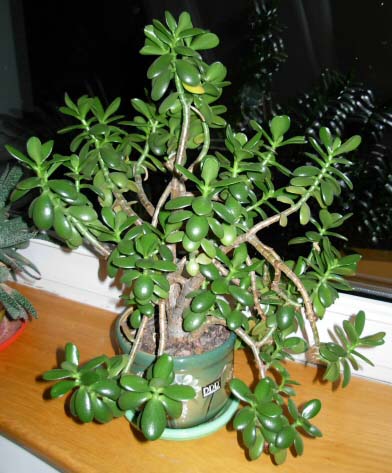
The Jade Plant is one of several houseplants linked with the Money Plant name.
In this context, healthy new growth and a well-rooted plant are often seen as symbols of prosperity and steady progress. Placement of the plants are chosen to hopefully reflect this growing energy in your own bank balance.
You'll often also find these plants in oriental takeaways, shops and restaurants, which is generally due to their ability to thrive under artificial light and being able to take the hot room temperatures that are created in these places.
In some countries they were frequently given as wedding presents or as house warming gifts. Their longevity meant they were still with the recipients some 50 years later. Who are now somewhat richer both financially and through life experiences.
So will the Money Plant increase your bank balance, help you pay off your mortgage sooner, clear your credit cards, or maybe help your rainy day savings grow? Possibly. But possibly not.
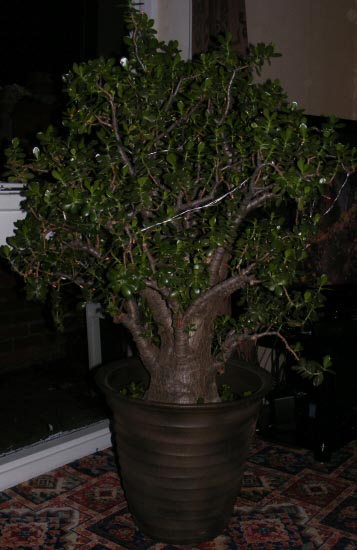
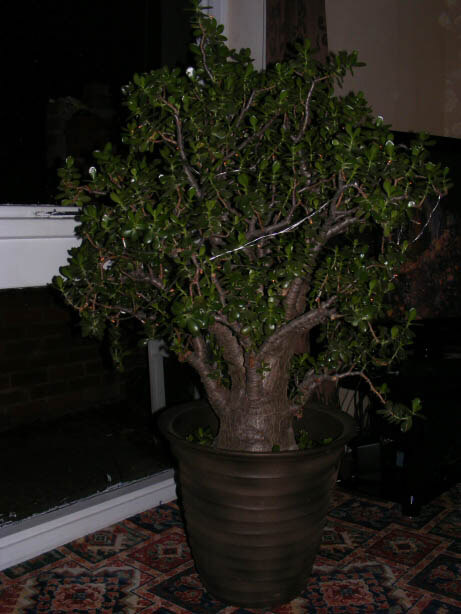
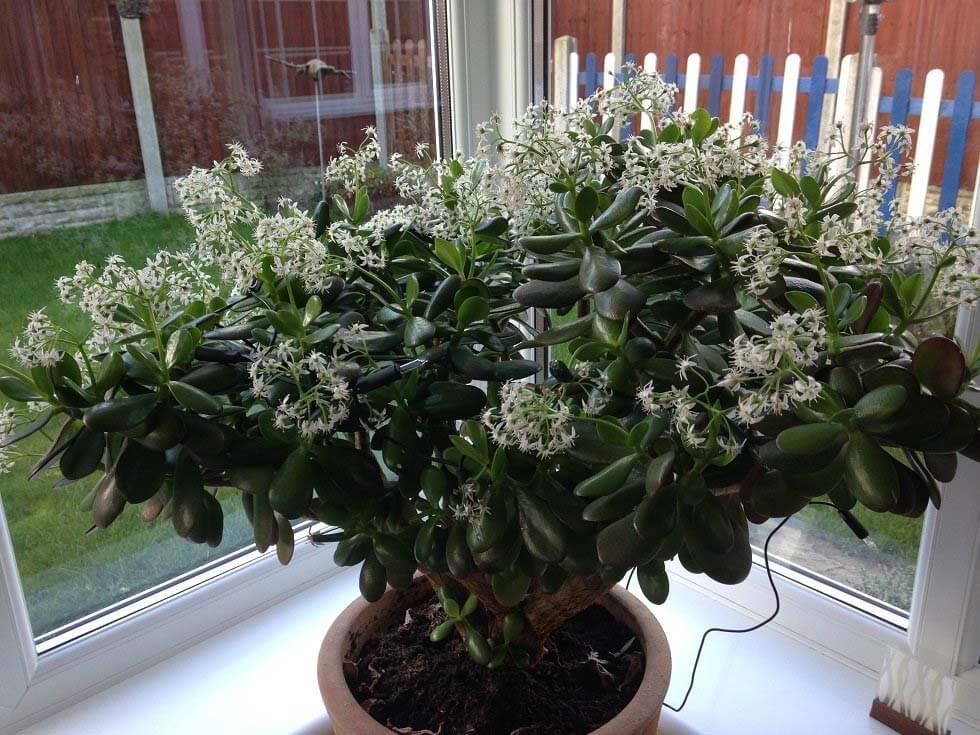
A 55-year-old Jade Plant showing the thick woody growth these plants can develop over time.
However they can live for many, many years. If you received this plant as a young person, then it could be in your life into old age. Moving homes with you, perhaps watching any children you might have grow, and generally sharing all your home life experiences.
As a result maybe one day when you are old and casually glance over and see it in the corner looking back, you might think your Jade Plant is one of your most priceless and treasured living possessions.
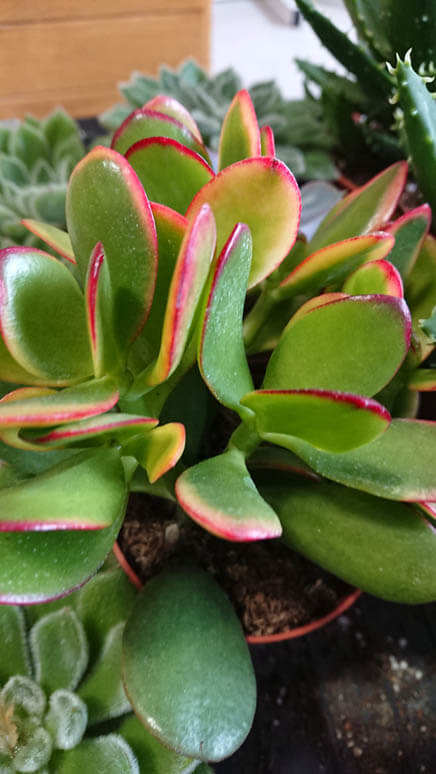
With age it will have thick tree like branches with fleshy, glossy and smooth, leaves. They are coloured jade green (hence its name) with many having a slightly red tinge towards the edge of leaves when exposed to high light levels.
New stem growth will be the same colour and texture as the leaves, in time they will become brown and woody. As a result this plant can be pruned and trained making it a great bonsai, especially for the beginner.

Hi, I'm Tom!
If you're like me and enjoy the challenge of growing houseplants and getting them to thrive, then OurHouseplants can help. This website shares my knowledge and years of growing plants and provides my advice on properly caring for your indoor plant friends.
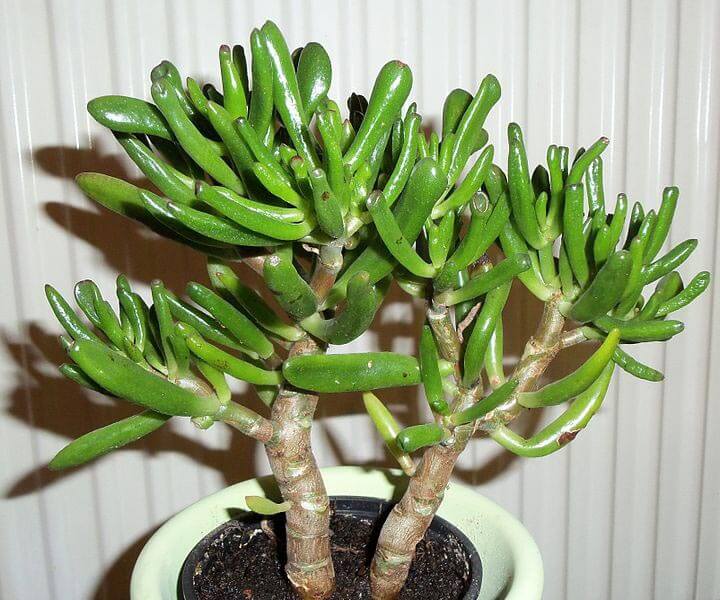
Jade Plant Photos

Jade Plant Care Guide
How Much Light Does a Jade Plant Need?
Jade Plants grow best in a bright position and appreciate several hours of direct sun, especially once they have gradually adjusted to it. More light usually means sturdier growth, better leaf colour and a fuller-looking plant.
Top Tip
If the sunlight is too harsh it can bring out red edges or deeper red-purple tones in Jade Plant leaves. This is fairly normal. However, pale bleached patches, brown scorch marks or suddenly shrivelling leaves can mean the plant has been moved into intense sun too quickly.
Introduce direct sunshine gradually, particularly in late spring and summer. If you prefer a greener plant, move it slightly further back from the window.
They can tolerate less-than-perfect light for a while, but prolonged low light often causes weak, stretched growth and increases the risk of watering problems because the potting mix dries much more slowly.
Great growth will come from being placed in a position with a great deal of natural sunlight. However the plant will get by in slightly darker places and will even do okay in a windowless room (it would obviously need artificial lighting!).
How Often Should You Water a Jade Plant?
Water thoroughly, then wait until the potting mix has dried out almost completely before watering again. Jade Plants are succulents and are far more likely to suffer from frequent watering than from a short dry spell.
In winter, when growth slows and light levels are lower, watering may only be needed occasionally. Check the potting mix rather than following a fixed calendar schedule.
Humidity
No special requirements are needed in terms of humidity.
Feeding
Feed established Jade Plants every three months during the growing season. Nothing fancy here, an all purpose general houseplant feed is all you need to be using.
Temperature
A well ventilated area is required for the Jade Plant. If you can do this then there is no upper temperature found in the home that will be fatal.
You do have to watch it doesn't get too cold though, occasional dips below 10°C (50°F) won't be a deal breaker, but try to see this as the minimum temperature and you can't go wrong.
Jade Plants love warm and bright locations. This one is growing in a conservatory / porch (and it loves it!)
Repotting
Jade Plants are happy to be slightly pot-bound and do not need frequent repotting. This is quite an advantage, because older plants can become very large, heavy and awkward to handle.
However, the potting mix won't last forever. Repot in spring if the compost has become compacted, takes an unusually long time to dry, the plant is unstable or roots are tightly filling the pot. Move up only one pot size and use a free-draining succulent or cactus mix. After repotting, be cautious with watering until you see fresh growth.
Propagation
Propagation is easy from leaf cuttings or stem cuttings. If a leaf or stem breaks off, allow the damaged end to dry and callus over for a few days before planting.
Place the exposed end into a dry, gritty, free-draining compost mix. Keep the cutting warm in bright light, protected from harsh direct sun. Do not soak the compost; after a short settling period, give only a very small amount of water occasionally until roots have formed.
The part you are "burying" needs to be the exposed end that was attached to the stem. Keep warm, provide bright light protected from direct sunlight, keeping the soil barely moist.
All being well, new tiny plants will start poking out of the soil around the base of the leaf cuttings from a few weeks to a few months later. Before you know it you will have loads of new babies to give to family or friends.
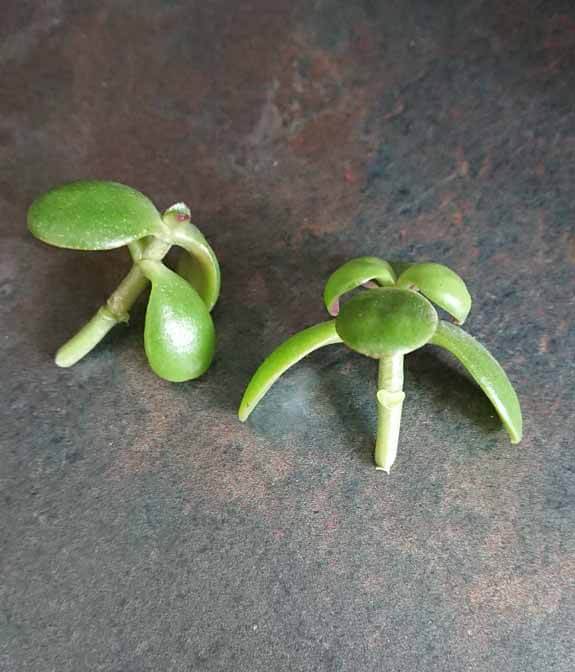
Jade Plant stem cuttings ready to be planted and grown into new plants.
If you go for the second option then Stem cuttings need to be treated in exactly the same way as Leaf cuttings (described above).
The only real difference is you are burying part of the stem rather than any leaves. This way of doing it is probably more likely to work (and is quicker) than leaf cuttings.
Speed of Growth
In good light conditions with a reasonable watering routine you can expect slow to moderate growth in the early years. Once it has reached maturity no matter what you do, growth will be slow.
Height / Spread
Jade Plants can live for decades and, given enough time, become substantial indoor specimens with thick woody trunks and branches. Most houseplants stay much smaller than their potential outdoor size, but a mature Jade can still become well over 1m tall and wide enough to need a stable floor position.
However if you have a small one you don't need to worry because it will take a good while to reach these proportions. And who knows, by the time it needs more space it might have encouraged your bank balance to grow, paid off your mortgage and afforded you a bigger home to help house it!
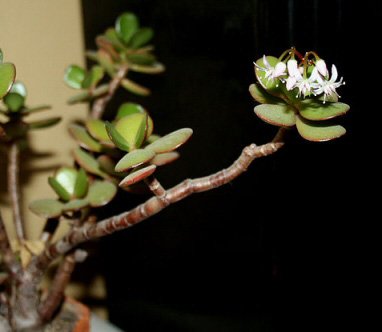
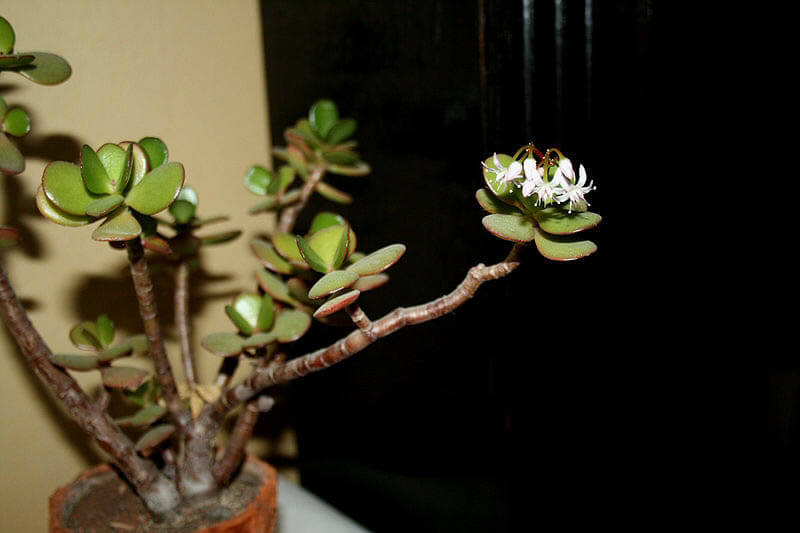
Older, well-established Jade Plants can produce clusters of small flowers in autumn or winter.
Do Jade Plants Flower Indoors?
Yes, mature Jade Plants can flower indoors, usually from late autumn into winter. Flowering is more common on older, well-established plants that have had plenty of bright light during the growing season, followed by cooler nights, shorter days and less water in autumn.
It's never guaranteed, especially in a centrally heated home, but a large old Jade Plant in a bright porch or conservatory has a much better chance than a young plant on a dim shelf.
Are Jade Plants Safe Around Pets?
Jade Plants are toxic to cats and dogs if eaten. The most commonly reported signs are vomiting, diarrhoea, lethargy and lack of coordination. Keep the plant out of reach if a pet is likely to chew it.
Pruning and Shaping a Jade Plant
Jade Plants naturally become more tree-like as they age, but they can be pruned to keep them compact, encourage branching or correct a lopsided shape. Make clean cuts above a pair of leaves, then allow the cut to dry. New growth often develops from below the pruning point.
Do not remove too much very old woody growth in one go. A mature Jade Plant can usually handle pruning, but cutting it back too severely risks leaving you with bare stumps that are slow to reshoot.
Anything else?
Top heavy plants are an accident waiting to happen in homes. One little slip and you have a huge mess on your floor. Therefore ensure you invest in a heavy container for your Jade and its pot to sit in. This will give stability, prevent damage and reduce the possibility of mess all over your carpet or floor.
If it does ever happen pick up the majority of the soil with your hands then wait a day for the rest to dry out. Then you can whip out the hoover without the worry of staining.
How to Care for the Jade Plant Recap
-
Bright Light Good amounts of light are ideal, some sun if possible. Semi shade will be tolerated but not deep shade.
-
Low Watering Water well and then wait until the soil is almost dry before watering again.
-
Average Temperature Not lower than 10°C (50°F).
-
Low Feeding You only need to feed Money Plants occasionally. We feed ours three times a year, once in Spring, Summer and Fall.
- Don't overwater.
- Stems will become brittle over time so take care when handling a mature plant to prevent damage.
Jade Plant Problems
Aphids on Jade Plants
These pests land and set up large colonies on the leaves which if left can get out of control, spreading disease in the process.
Follow our dealing with pests guide if you need help, although you must not use any chemical sprays which contain malathion. This is harmful to a lot of plants belonging to the Crassula genus, including the Jade Plant.
Mealybugs on Jade Plants
Like Aphids, Mealybugs can be a nuisance. Make sure you deal with them promptly, although as above never use malathion containing products if you opt for the chemical route.
Why Is My Jade Plant Dropping Leaves?
Leaf drop is often caused by a sudden change in conditions: overwatering, low light, cold draughts, repotting shock, or a plant being moved from one environment to another. It is especially common when the compost remains wet for too long.
Check how quickly the potting mix dries and make sure the plant is getting good light. If the soil stays wet for a long time, move it into a brighter place and consider repotting into a more free-draining mix when the season is right.
Why Are My Jade Plant Stems Soft or Rotting?
Soft, dark or collapsing stems are usually caused by overwatering, cold conditions, or both. Act quickly: remove the plant from the pot, cut away any soft or blackened roots and stems with clean tools, and allow healthy cuttings to dry before trying to propagate them.
If rot has reached most of the main trunk or root system, saving the original plant may not be possible as Stem Rot may have set in. Healthy leaves or stem pieces can still often be used for propagation allowing you to try and salvage the legacy of the plant.
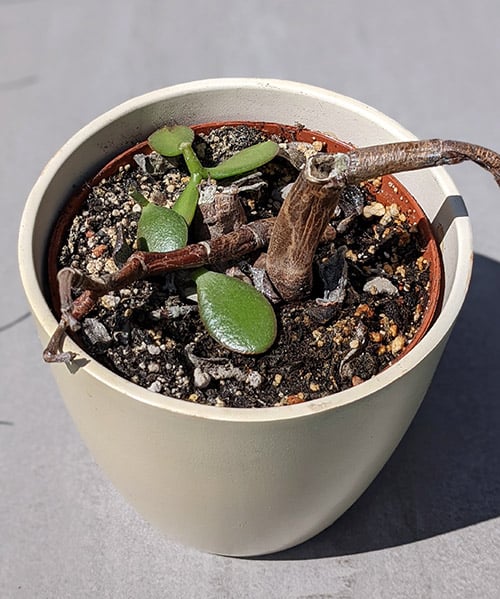
This plant has had it, but those fallen green leaves look healthy. They could be propagated and turned into replacement plants.
Why Is My Jade Plant Leggy or Lopsided?
Weak, stretched or one-sided growth is almost always caused by insufficient light. Move the plant gradually into a brighter position and rotate the pot occasionally so one side is not doing all the work.
If it is already very leggy, you can prune stray growth to improve the shape or cut it back more firmly to encourage new branching. Do this with caution: new shoots may appear from old wood, but cutting too hard into a very old stem can leave you with a bare stump that is slow to recover.
Why Are My Jade Plant Leaves Wrinkled or Shriveled?
This could be a sign of watering too much or not watering enough (Your Jade Plant is parched, give it some H2O!). If you're not sure between the two, look at my "Why are my succulent leaves shriveling?" article for the signs to look out for.
About the Author
Over the last 20 years, Tom has successfully owned hundreds of houseplants and is always happy to share knowledge and lend his horticulture skills to those in need. He is the leading content writer for the OurHouseplants Team.
Also on Ourhouseplants.com
Credit for first Jade Plant Photo - Article / (3rd in Gallery) - Piotrus
Credit for 55 Year old Jade Plant Photo - Article / Gallery - Tompaul82