
Hoya carnosa Care Guide (Wax Plant)
About Hoya carnosa
Hoya carnosa, better known as the Wax Plant, is one of those houseplants that has been around for a very long time. It has thick glossy leaves, long wandering stems and, if you get things right, large clusters of star-shaped flowers that look almost too perfect to be real.
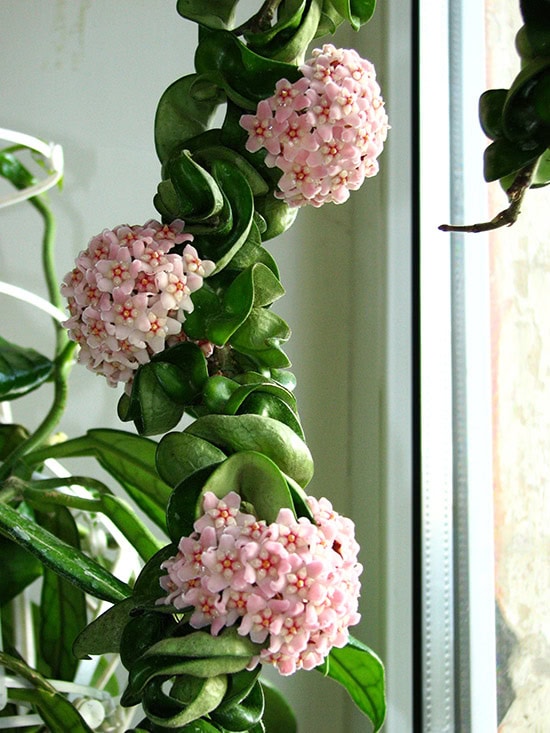
It's also called the Porcelain Flower, which makes sense once you have seen it in bloom, something that can happen several times a year. Each flower has a waxy, almost artificial look to it, and the individual stars are grouped together in rounded heads.
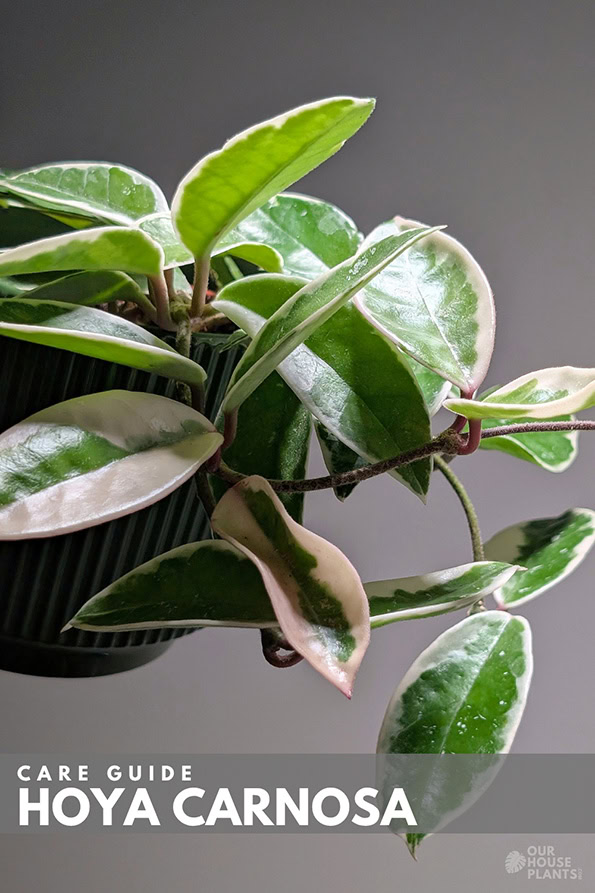
A mature Hoya carnosa isn't always a neat little windowsill plant. Given time, it produces long wandering stems that can trail from a shelf, loop around a pot or simply head off in whichever direction it feels like.
There are lots of different Hoyas, but this guide is about Hoya carnosa and its close cultivars. That includes the plain green Wax Plant, the variegated types often sold as Krimson Queen and Krimson Princess, plus the wonderfully strange Hoya carnosa 'Compacta'.
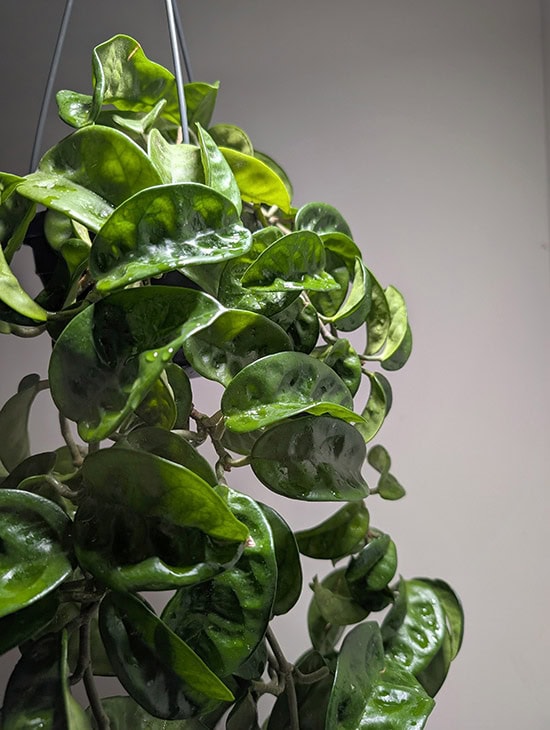
Another favourite that I've grown for years is Hoya carnosa 'Krinkle 8'. The dimpled leaves give it a completely different look, although it's another cultivar of the same species with very similar care needs.
How do you pronounce Hoya carnosa correctly?
Say: HOY-ah kar-NOH-suh
A Houseplant With Some History
Hoya carnosa is not a newly discovered social-media houseplant. It was actually one of the classic indoor plants that appeared in plenty of homes during the 1970s, often trailing from a macramé hanger or sitting in a sunny kitchen window.
Like many of those older favourites, it lost some of its appeal for a while when it became seen as a little old-fashioned. But Hoyas have made a big return in recent years, partly because there are now far more unusual species and cultivars available, and partly because people have rediscovered just how good (and easy) the original Wax Plant actually is.
Old-fashioned does not mean outdated
There is a reason Hoya carnosa survived every changing houseplant trend. It's attractive, long-lived, forgiving of the occasional missed watering and becomes ever more impressive as it matures.
The genus name "Hoya" honours Thomas Hoy, an English gardener who worked for the Duke of Northumberland in the late 1700s.
The plant is sometimes given an exotic, slightly difficult reputation today, but the familiar Hoya carnosa is still one of the tougher and more straightforward members of the group.
It is also one of those plants that people often keep for years. A small cutting can turn into a proper established specimen with long stems and regular flowers (if you give it enough time and the right care).
Why Grow a Wax Plant?
There are plenty of reasons why Hoyas have remained popular for so long. They're tough, attractive, reasonably forgiving and much less thirsty than a lot of the leafy tropical plants sold as houseplants today.
The leaves are thick because the plant stores moisture in them. That gives it a useful bit of protection if you forget to water for a while, but it also means it doesn't want to be treated like something that needs permanently wet compost.
For me though, the flowers are the main reason a Wax Plant earns its place. They are produced in rounded clusters and each individual bloom looks like a small waxy star. Some people love the scent, others find it a little too sweet, but either way they are hard to ignore.
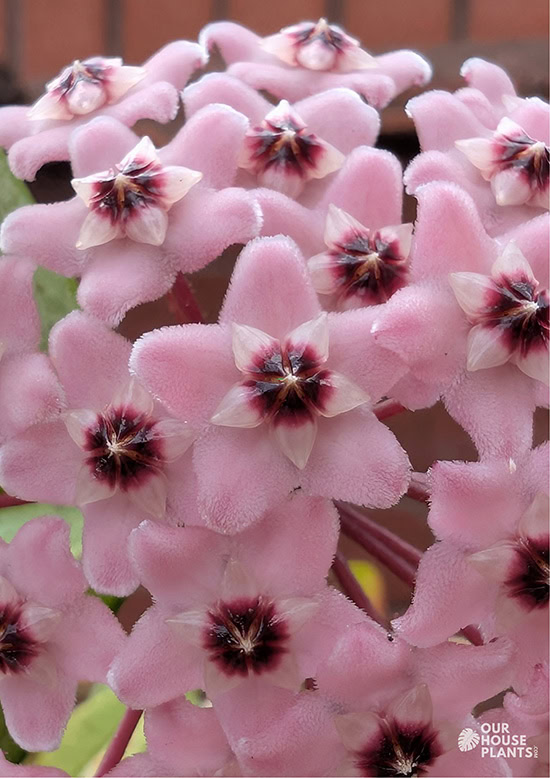
Porcelain Flower - Each flower has a waxy, almost artificial look to it. The scent is usually stronger at night and has a pleasant floral smell.
The flowers can also produce sticky droplets of nectar. This is perfectly normal, but it is worth putting a flowering plant somewhere that won't leave a sugary mess on a shelf, windowsill or piece of furniture below it.
Is Hoya carnosa Easy to Care For?
Yes, I think so. It isn't indestructible, but it's easier than you might expect. The biggest mistakes usually come from trying too hard: watering too often, repotting too quickly or moving it around whenever it pauses growing.
The key things to follow are to give it good light, allow the potting mix to dry down between waterings and don't panic if it grows slowly. Once you have learned its rhythm, a Wax Plant is usually very straightforward.
Quick takeaway
Grow Hoya carnosa in bright light, with some gentle sun if possible. Water thoroughly when the potting mix has mostly dried, then let excess water drain away. Use a free-draining mix, keep it warm and avoid constantly moving or repotting an otherwise healthy plant. Mature plants can flower well indoors, but patience is needed.

Hi, I'm Tom!
If you're like me and enjoy the challenge of growing houseplants and getting them to thrive, then OurHouseplants can help. This website shares my knowledge and years of growing plants and provides my advice on properly caring for your indoor plant friends.
Hoya carnosa Photos
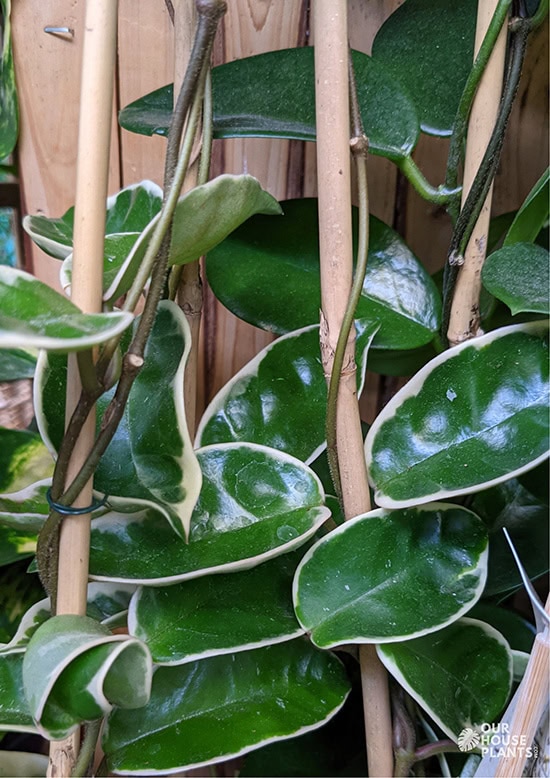
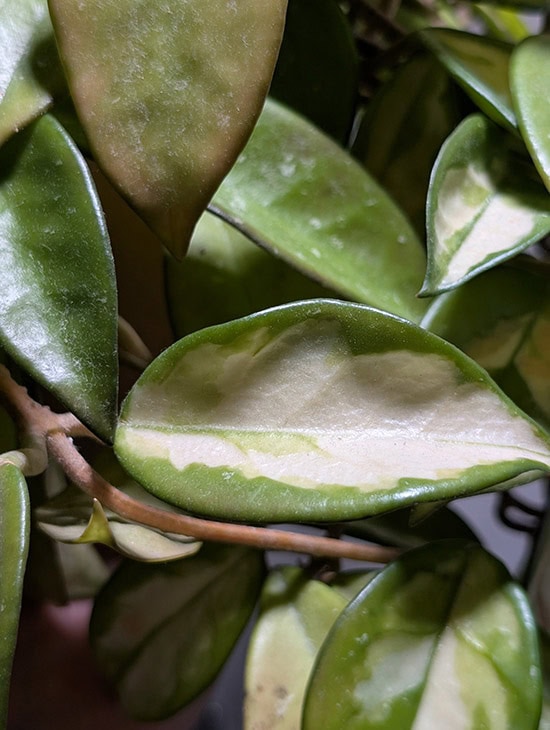

Hoya carnosa Care and Growing Guide
How Much Light Does a Hoya Need?
Light is probably the biggest factor in how well your Hoya carnosa grows and whether it flowers. Bright light is the goal. It doesn't need to sit in blazing sunshine all day, but a gloomy corner won't get the best from it either.
A position close to an east, west or bright south-facing window is usually ideal. A little early-morning or late-afternoon sun can be very helpful, especially for a mature plant you want to encourage into flower.
Plain green Hoya carnosa plants are generally more forgiving of lower light than variegated forms. Variegated leaves contain less green chlorophyll, so varieties such as Krimson Queen and Krimson Princess need brighter conditions to remain healthy and colorful.
More light usually means more flowers
If your Hoya has been growing happily but never produces flowers, better light is often the first thing to consider.
That doesn't mean suddenly putting it outdoors in full midday sun. Make changes gradually, particularly if the plant has been sitting in lower light for a long time.
A few hours of harsh summer sunshine can scorch the leaves. Even a south-facing windowsill can cause reddening or sun damage if the light is intense, especially in summer. It isn't a true succulent, so full sun isn't needed to grow it well.
Hoya carnosa 'Compacta', commonly known as the Hindu Rope Plant or Crinkle Kurl will flower frequently if the light levels are good. Photo by Kor!An
How Often Should You Water Hoya carnosa?
Hoya carnosa prefers to dry out more between waterings than many common houseplants. The thick leaves store moisture, so it can tolerate a little neglect better than constant attention.
Water thoroughly when the compost has mostly dried out, then let excess water drain away. Don't leave the pot standing in water and don't keep the compost permanently damp.
In a warm bright position during summer, you might be watering every week. In winter, especially in a cooler room with less light, it could be much less often. The exact timing doesn't matter nearly as much as checking the potting mix first.
The best watering routine isn't "every Saturday morning". It's watering when your Hoya actually needs it.
Lift the pot if you can. A dry pot is noticeably lighter than one full of damp compost. You can also push a finger into the top few centimetres. If it still feels clearly damp, wait a few more days.
Underwatering a Hoya occasionally is usually easier to recover from than overwatering it over and over again. The leaves may become a little soft or wrinkled if it stays dry for too long, I also find the leaves lose color and look dull when mine need a drink. They tend to bounce back easily from underwatering, but constantly wet roots are much more serious.
Drying out is not the same as drought
Letting the potting mix dry down is good. Leaving it bone dry for weeks is not. Hoya carnosa has fleshy leaves, but it isn't a cactus and it still needs regular water while it is actively growing.
Humidity
Hoya carnosa comes from warm parts of Asia and Australia, so it appreciates humid air. But it is also one of the more adaptable Hoyas and generally copes well with average household humidity.
You don't need a humidifier or daily misting routine to grow a healthy Wax Plant in a normal home. Focus on good light and sensible watering first, because those will make a much bigger difference.
Very dry air from central heating can make watering more difficult and may slow growth a little, but I wouldn't get too worried about chasing a specific humidity percentage. If your home is comfortable for you, it is usually comfortable enough for your Hoya.
Temperature
Normal indoor temperatures suit Hoya carnosa very well. Somewhere between 18°C and 27°C (64°F and 81°F) is ideal for active growth.
It will tolerate slightly cooler conditions, especially in winter, but it doesn't enjoy cold draughts or sitting against freezing glass. Try to keep it above around 10°C (50°F) and away from open doors, unheated porches and cold windowsills.
Feeding
Feed lightly during spring and summer when your Hoya is actively growing. A balanced liquid houseplant fertiliser, diluted to around half strength, every four to six weeks is plenty.
You will sometimes see very specific advice about bloom-boosting fertilisers for Hoyas. They can be useful, but they aren't magic. A mature plant in strong light with healthy roots is far more likely to flower than one sitting in a dark room, regardless of how much fertiliser you give it.
Don't feed a plant that is sitting in poor light, struggling with root problems or not growing at all. More fertiliser isn't the answer to every slow-growing houseplant, make sure the standard care points are checked off first.
How Fast Does Hoya carnosa Grow?
It depends on the variety, age of the plant and growing conditions. The plain green form can grow reasonably well in good light, while heavily variegated plants are often slower.
Growth is usually strongest in spring and summer. In winter, it may pause completely, particularly if light levels are lower. That's normal and isn't automatically a sign that something is wrong.
Long bare runners are also normal. Hoyas often send out a searching stem first, then produce leaves later. You can let it trail naturally, wind it around a hoop or trellis, or gently pin it around the edge of the pot if you prefer a fuller-looking plant.
A long bare Hoya vine can look a bit odd at first, but don't be too quick to cut it off. Leaves will often appear later as the stem matures.
What Soil Should I Use for a Hoya?
Hoya carnosa needs a potting mix that drains freely and doesn't stay soggy for long. Standard houseplant compost can work, but it is usually better when opened up with extra drainage material.
The aim is a mix with air around the roots
Hoyas don't want their roots sitting in heavy wet compost for weeks. A free-draining mix helps prevent that, while still holding enough moisture that the plant isn't drying out every day.
A simple mix of regular houseplant compost with perlite and fine orchid bark is a good starting point. You can also use pumice, coco chips or a ready-made chunky houseplant mix.
Always use a pot with drainage holes. A decorative cache pot is fine, but the actual growing pot needs somewhere for excess water to escape.
Repotting
Hoyas are often happiest when they are a little snug in their pots. There is no need to rush into repotting a newly bought plant just because roots are visible.
Repot when the plant is clearly root-bound, the compost has started breaking down, or it is drying out so quickly that keeping up with watering is becoming difficult. Spring and summer are the easiest times, as the plant should recover more quickly.
When you do repot, move up only one or two pot sizes. A huge pot full of fresh compost may stay wet for too long around a relatively small root system.
Hoya carnosa can tolerate fairly tight roots, but don't take that as a reason to leave it badly root-bound forever. The goal is a healthy established root system, not a plant struggling in a tiny pot. Plants in small pots will survive easily, but they will often stop growing completely until you give them more space.
How to Get Hoya carnosa to Flower
Getting a Wax Plant to flower is often the part people become most obsessed with. But the truth is that there isn't a quick trick I can give you. Flowering depends on maturity, good light, healthy roots and the plant being settled in one place.
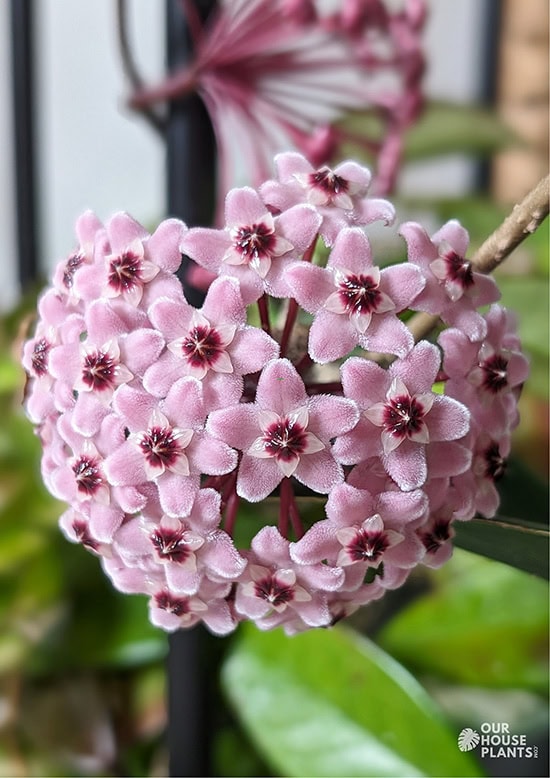
Hoya carnosa flowers are produced in rounded clusters. Once they fade, leave the little flower spur behind as it may bloom again.
A young cutting may take years before it is mature enough to produce flowers. A larger established plant can still refuse if it's kept too dark, overwatered or moved around regularly.
Bright light is the most important thing. A little gentle direct sun can help too, provided the plant has been introduced to it gradually. Once you have found a good position, try not to keep moving it around every few weeks.
Don't cut off old flower spurs
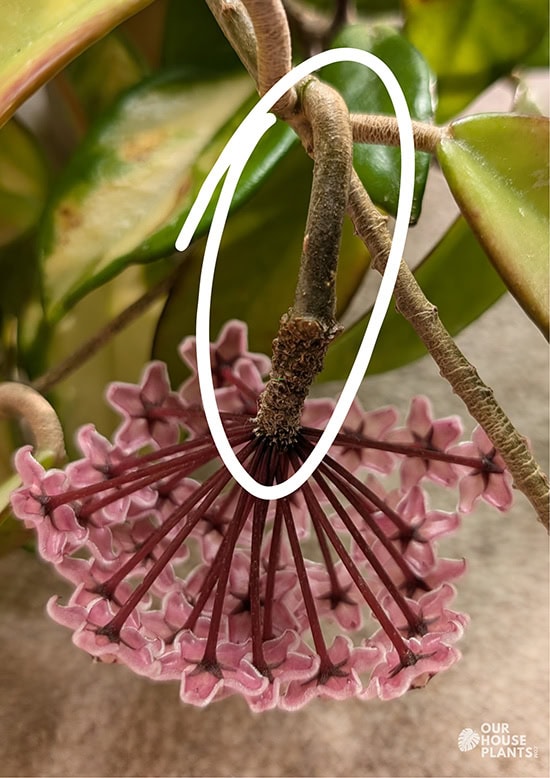
Hoya flowers grow from small stalks called peduncles. When the flowers fade, leave these spurs alone.
The same peduncle will often produce flowers again in future. If you cut it off, you are removing a potential flowering point and making the plant start from scratch.
The flowers don't last a great deal of time, once they open they will normally start to go over within a week or so. But unlike many other types of houseplants that only flower once a year, it's normal for semi mature Hoyas to bloom several times a year. Mature plants will often produce mutiple blooms at the same time which prolongs the display.
Once they fade, leave the little flower spur (called a peduncle) behind as it may bloom again in a few months time.
Popular Hoya carnosa Varieties
There are many named forms of Hoya carnosa, but these are the ones you are most likely to come across in garden centres, houseplant shops and online. I've added photos of most of these to the gallery section in this article.
- Hoya carnosa. The classic plain green Wax Plant. Thick oval leaves, long trailing stems and usually one of the easiest forms to grow.
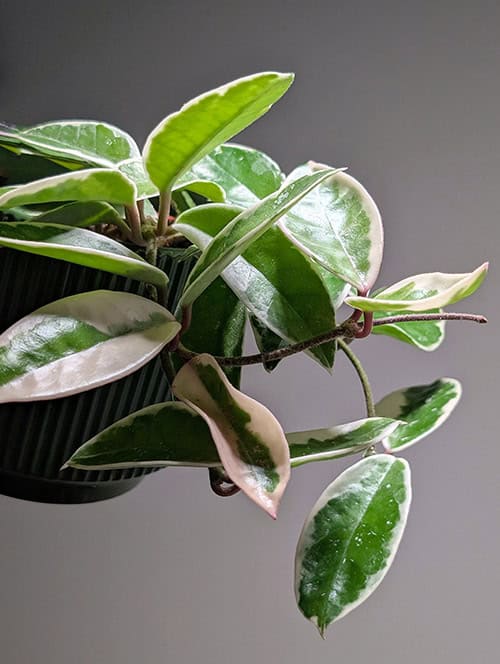
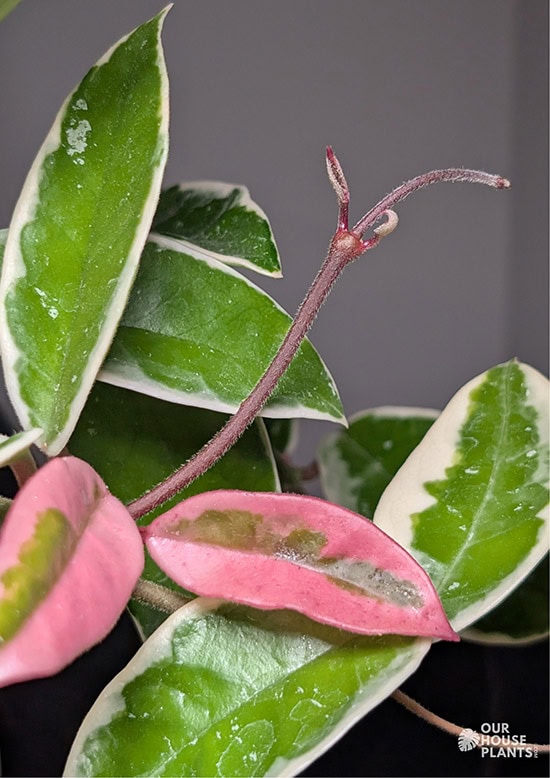
- Hoya carnosa 'Krimson Queen'. Has green leaves with creamy white or pink variegation around the edges. New leaves can emerge bright pink before fading as they mature.
- Hoya carnosa 'Krimson Princess'. Has pale cream or yellow variegation through the centre of the leaf rather than around the edges. It is sometimes also sold as 'Rubra'.
- Hoya carnosa 'Compacta'. Often called the Hindu Rope Plant because the leaves are tightly curled and twisted together. It grows more slowly and pests can be harder to spot between the folded leaves.
- Hoya carnosa 'Chelsea'. A popular form with slightly cupped, dimpled leaves. It is still very much a Wax Plant, just with a little more texture.
- Hoya carnosa 'Krinkle 8'. A cultivar with shallow dimples across its leaves. It sits somewhere between the plain-leaved Wax Plant and the heavily curled Compacta. Read my full Hoya carnosa Krinkle 8 care guide here.
Hoya Krinkle 8 in a hanging basket under a strong grow light
The care is broadly similar for all of them, although variegated plants usually need brighter light and the Compacta benefits from regular close checks for Mealybugs hiding in the curled foliage.
Propagation
Hoya carnosa is one of the easier plants to propagate from stem cuttings. Take a cutting with at least one node, ideally with a pair of leaves attached. The node is the important bit, because that's where new roots and growth will come from.
You can root cuttings in water, sphagnum moss or a light free-draining potting mix. Water propagation is satisfying because you can watch the roots develop, but transfer the cutting into compost once there is a reasonable root system rather than leaving it in water forever.
Keep new cuttings warm, in bright indirect light, and don't let the rooting medium become bone dry. They can take a while to establish, so patience is needed.
Is Hoya carnosa Safe Around Pets?
Hoya carnosa is generally regarded as non-toxic to cats and dogs. That said, “non-toxic” doesn't mean it is a good snack. Chewing any houseplant can still cause a mild upset stomach, and long trailing stems may be particularly tempting to playful cats.
How to Care for Hoya carnosa Recap
- Give It Bright Light
A bright room close to a window is ideal. Gentle early or late sun can help encourage stronger growth and flowering. Avoid intense full sun or the leaves may wash out or turn red. - Let the Compost Dry Down
Water well when the potting mix has mostly dried, then allow excess water to drain away. Don't keep it permanently damp, but don't leave the roots dry for weeks either. - Use a Free-Draining Potting Mix
A mix of houseplant compost with bark, perlite or pumice gives roots the air they need and helps prevent overwatering mistakes. - Don't Rush to Repot
Hoyas are usually happy slightly snug in their pots. Only move up a size when the roots have clearly filled the current container. - Be Patient With Growth
Slow growth and long bare runners are often normal. A Hoya may take its time, then suddenly put out several leaves or a long new vine. - Never Cut Off Flower Spurs
Once the flowers fade, leave the old peduncles in place. Hoya carnosa can flower again from the same little spur.
Our Story With Hoya carnosa
I have always liked Hoyas because they are quite different from the typical thirsty tropical houseplant. They are sturdier, calmer and generally more forgiving if life gets busy and you are not checking every pot every few days.
A common argument online that I kept finding myself in has been the difference between Krimson Queen and Krimson Princess. They can look very similar at first, but here is an easy way to tell them apart.
The Krimson Queen wears her variegation like a crown, and the Krimson Princess wears hers like a gown.
Most of mine have never been grown up moss poles or elaborate trellises. I tend to leave them in pots and let the stems do their own thing. Some trail over the edge, some loop around nearby plants and some produce a long runner that seems determined to head off in a completely random direction.
That is part of their charm. A Hoya carnosa doesn't always look perfect and symmetrical, but a mature plant with thick glossy leaves and a few winding stems feels established and full of character.
Pests
Hoyas are very susceptible to Mealybugs unfortunately, but the good news is that even a long term infestation seems not to harm the plant too much, one of mine continued to produce blooms and new leaves even when the peduncle was covered in them! The even better news is that Mealybugs can be banished.
If you can give it decent light and resist the temptation to overwater, I think the Wax Plant is one of the better houseplants for beginners and experienced growers alike. And if it eventually flowers for you, it's a very nice bonus.
If yours is yellowing, wrinkling, dropping leaves or refusing to grow, then you need to check out my Hoya carnosa problems and issues guide which will be published before the end of 2026.
About the Author
Over the last 20 years, Tom has successfully owned hundreds of houseplants and is always happy to share knowledge and lend his horticulture skills to those in need. He is the leading content writer for the OurHouseplants Team.


