How to Get Rid of Mealybugs
Got Mealybugs?
Mealybugs are easy to recognise, unpleasant to find, and a sight no houseplant lover wants to see. Their white waxy coating makes them stand out, but they're still very good at hiding on your plants.
You remove a few, spray the plant, and feel quietly pleased with yourself. Then, a week or two later, you notice another small cluster of white fluff hiding in a leaf joint.
Having grown houseplants for many years, I have dealt with plenty of Mealybugs or “Mealies”, as many houseplant owners call them. They're not my most feared pest (that honour goes to Thrips) but they are certainly one of the ugliest and most persistent.
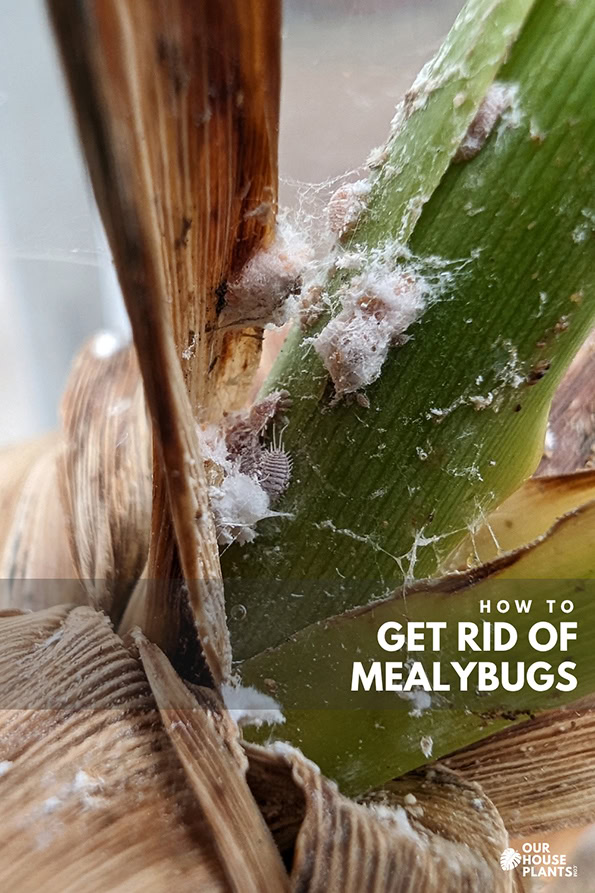
Mealybugs are small sap-sucking insects covered in a waxy white coating. They often gather in leaf joints, on stems and around fresh growth.
The good news is that they are usually more unpleasant than devastating. They can weaken a plant if left untreated, and their sticky honeydew can make everything feel grubby, but most houseplants recover well once you get the numbers down and deal with the stragglers.
This guide shares what has worked for me: reduce the numbers first, wash the plant if it's practical, spray thoroughly, then come back and treat again before the survivors rebuild.

Hi, I'm Tom!
If you're like me and enjoy the challenge of growing houseplants and getting them to thrive, then OurHouseplants can help. This website shares my knowledge and years of growing plants and provides my advice on properly caring for your indoor plant friends.
Before you get started
Did you know?
That cotton-wool look is a waxy coating produced by the Mealybug. It helps protect the insect and can hide its shape, which is one reason a new infestation can be mistaken for dust, mould or a bit of damaged plant tissue.
First, make sure you are actually dealing with Mealybugs. They usually look like tiny pieces of white cotton wool, fluff or wax stuck to the plant.
You will often find them tucked into sheltered places: where a leaf joins a stem, in new unfurling leaves, around flower stalks, or underneath foliage where they are easy to miss.
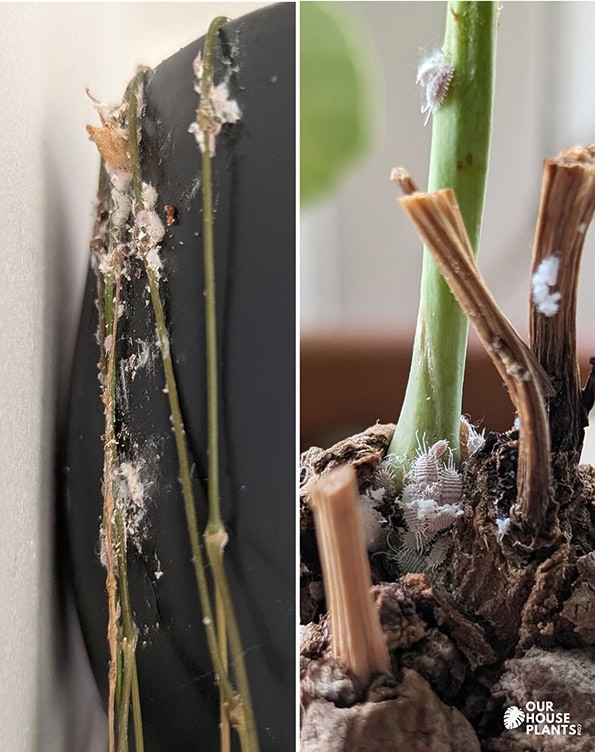
Left - Mealybugs with the classic "cotton wool" look on a String of Hearts plant. Right - "Naked" Mealybugs looking like white Woodlouse insects on my Stephania erecta plant last year.
They feed on sap. One early clue can be sticky leaves, stems, pots or surfaces beneath the plant. This is honeydew, which is the waste product after an insect has digested the plant sap. In short, it's just bug poop.
It’s not harmful by itself and can be wiped away with a damp cloth, but it’s messy and annoying. It can also encourage fungal growth, which may sometimes lead to a dark, sooty coating on leaves or nearby surfaces.
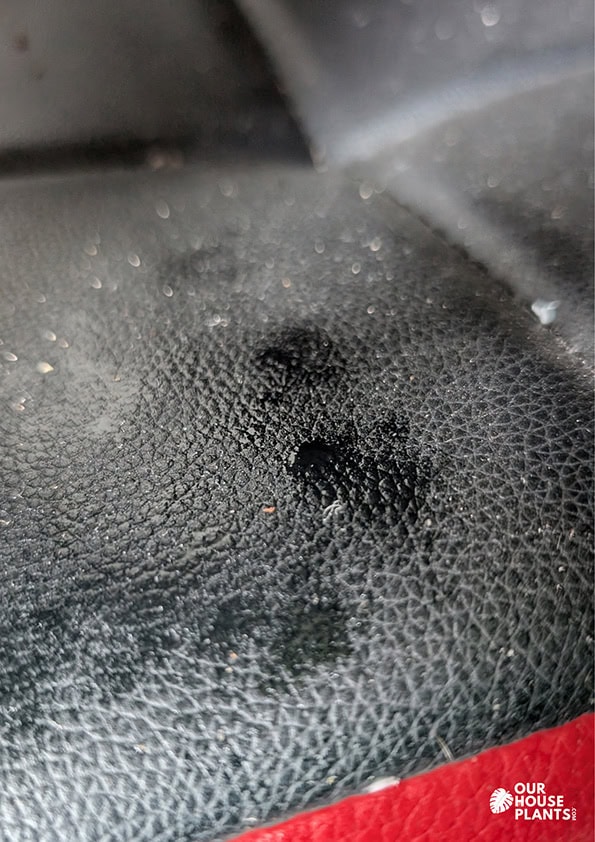
I have a number of houseplants growing on my dining room table, a few developed a Mealybug problem and the honeydew dropped onto the chairs below the table. It's easy to wipe off, but their presence can create a mess and be sticky and unpleasant.
If you find Mealybugs on one plant, inspect the plants around it too. They don't spread through the house nearly as fast as Thrips, but they can spread between close-together plants, especially if foliage is touching.
Do not panic
Mealybugs are annoying, ugly and surprisingly stubborn. But they are not usually a reason to give up on a plant. Most infestations can be brought under control with steady treatment and a little patience.
My honest view on Mealybugs
They are more of a persistent nuisance than an instant plant-killing emergency. The key is to tackle them promptly, then return for another round rather than assuming one spray has solved everything.
How to get rid of Mealybugs: A Step by Step Guide
There is rarely one single thing that gets rid of Mealybugs for good. What works best for me is reducing the visible numbers first, then using a suitable spray, and then returning to deal with the ones I missed or any newly hatched bugs.
You do not need to use every step below in every situation. But combining several of them gives you the best chance of getting the infestation under control.
1 Move the Plant Away from Others
Once you know you have a problem that needs sorting out, if possible, move the affected plant away from the rest of your collection while you deal with it. A bathroom, kitchen, spare room or simply a separate corner can work.
This makes it easier to inspect and treat the plant properly, while reducing the chance of Mealybugs finding their way onto a nearby plant.
2 Wash the Plant Off
For plants with sturdy foliage, a gentle shower or rinse can make an immediate difference. It will not solve the problem alone, but it can knock off a surprising number of Mealybugs and wash away the sticky honeydew they leave behind.
Pay particular attention to the undersides of leaves, leaf joints, stems and fresh growth. Try not to blast delicate leaves with a powerful jet of water or soak the potting mix unnecessarily.
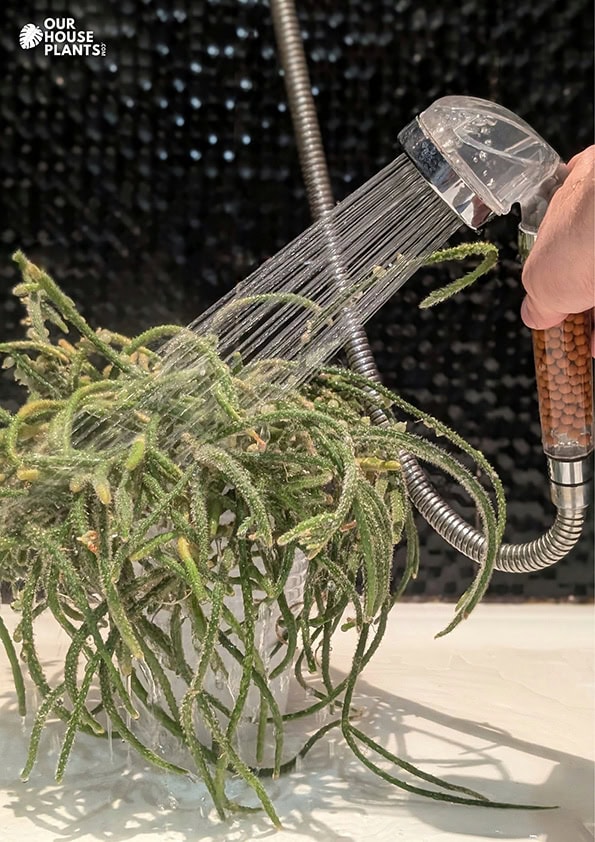
A gentle shower will not eliminate all Mealybugs by itself, but it's a quick way to reduce their numbers and clean off sticky residue.
3 Remove the Obvious Clusters
After washing, inspect the plant again and remove any obvious clusters you can still see. A damp cloth, cotton bud, soft brush or your fingers can all work.
Many houseplant owners also use 70% isopropyl alcohol, sometimes called rubbing alcohol, on a cotton bud to dab individual Mealybugs in awkward places. It can be especially helpful in leaf joints or around stems where a cloth cannot easily reach.
Be cautious, though. Alcohol can mark or damage some foliage, particularly on delicate plants, so test it on a small, hidden area first. I only use it for spot treatments rather than coating the entire plant.
I have tried the finger-squish approach. It removes the bugs in front of you, but it feels fairly gruesome (to me at least) and rarely feels like a complete solution when more may be hiding nearby. Still, removing a large cluster is worthwhile because every bug you take off is one fewer feeding and reproducing.
4 Prune the Worst Areas if Necessary
If one leaf, flower stalk or small section is heavily covered, it can be simpler to remove it. This is particularly true if it is already yellowing, badly damaged or spoiling the appearance of the plant.
Do not start cutting away healthy growth because you spotted one or two Mealybugs. But removing one heavily infested area can quickly reduce the number you are dealing with. Dispose of it straight away.
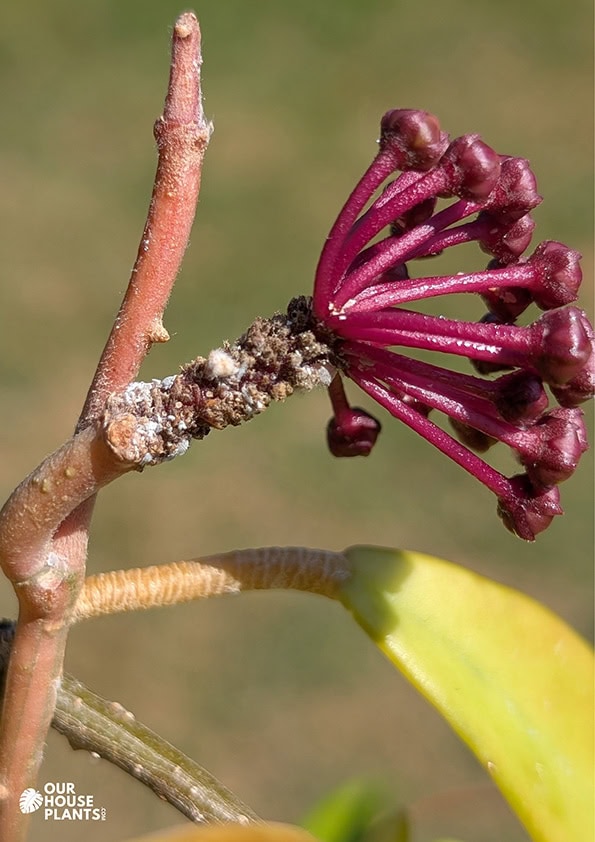
Mealybugs often gather around Hoya peduncles and flower parts, where there can be lots of sugary sap to eat. There are only a few insects here, and because a flowering Hoya is a special event, its sometimes best to try and treat the problem instead of removing the flower.
5 Use a Suitable Insecticidal Spray
Once you have reduced the visible numbers, use a treatment labeled for Mealybugs and suitable for indoor plants. What you can buy depends heavily on where you live, so I’m keeping things brand-neutral.
Always follow the label
Test any new treatment on a small, less noticeable area first if you can. Some plants react badly to certain sprays, particularly if they are already stressed, have delicate foliage, or are sitting in strong light.
The important thing is coverage. Mealybugs are very good at hiding, so spraying only the upper surface of a few leaves is unlikely to work. Treat stems, leaf joints, leaf undersides and crowded new growth where they may be tucked away.
Do not assume a treatment is harmless simply because it's described as natural. Use every product carefully and exactly as directed.
There are two main types of chemical treatments to consider.
Contact treatments
Contact treatments work when the spray reaches the insect itself. This is why coverage matters so much with Mealybugs: you need to reach leaf joints, stems, leaf undersides and crowded new growth, not just the visible white patches.
Insecticidal soaps, horticultural oils and Neem oil are common contact-treatment options. They can be useful for smaller infestations or as part of a repeat-treatment routine, but they usually stop working once they dry. Because of this, you'll probably need to treat the plant again to catch hidden bugs or new hatchlings.
Neem oil is popular with houseplant owners, although it still needs to be applied carefully and may not suit every plant. If you are considering it, see my guide to using Neem oil on houseplants.
Systemic treatments
Once sprayed on the foliage, systemic insecticides are absorbed by the plant and can affect pests when they feed. The effect can sometimes last for a month or more from one spray which can be very useful and reduce the need to keep spraying the plant. They can also be very helpful where Mealybugs are tucked into awkward places or where a contact spray alone has not been enough.
6 Clean the Area Around the Plant
Wipe down the pot, saucer, shelf, windowsill or plant stand. This removes honeydew and any bugs dislodged while you were washing or moving the plant.
It also makes future checks easier because fresh stickiness or new white clusters will stand out much more clearly.
7 Come Back and Treat Again
This is the part people understandably dislike, but it matters. Mealybugs can hide in awkward places and a treatment may not reach every egg or newly hatched crawler on the first attempt.
Inspect the plant again after the interval stated on your chosen product's label. If you see fresh Mealybugs, repeat the washing, removal and treatment process.
For me, this is usually the difference between thinking a treatment has failed and actually getting control. The first treatment reduces the problem and the follow-up deals with the surviving Mealies and late arrivals.
Why Mealybugs can seem to come back
Mealybugs do not always return because the first treatment has failed. A plant can have Mealybugs at different stages of development at the same time, including eggs, tiny newly hatched young and larger visible insects.
The obvious white clusters are usually the easiest ones to spot and remove. But smaller young Mealybugs can be missed, and eggs or insects hidden in tight leaf joints may escape the first treatment.
This is why a follow-up inspection matters. You are not necessarily starting again from scratch; you are catching the bugs that survived, hatched later or were hiding where the first treatment did not reach.
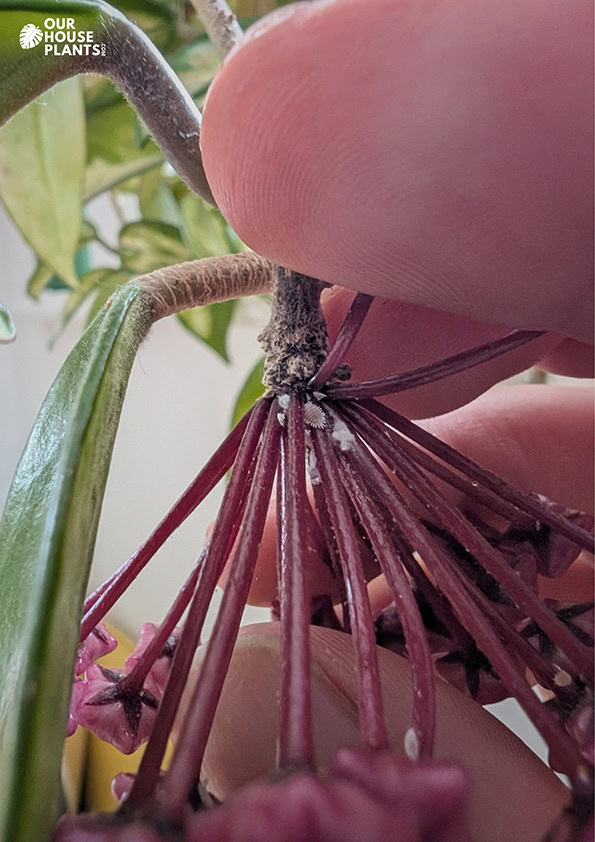
This Hoya was heavily infested and treated a month earlier. After following all the steps above, I was disappointed to spot Mealybugs again (but super encouraged that there were far fewer of them).
What to Avoid Doing
- Treating the plant only once.
Mealybugs hide in leaf joints, tight growth and underneath leaves. One treatment can make a plant look much better, but follow-up checks are what keep them from coming back. - Spraying only the obvious bugs.
If you only treat the white clusters you can see, you will probably miss bugs hiding elsewhere. Inspect the entire plant, including stems, leaf undersides and new growth. - Ignoring nearby plants.
You do not need to treat your entire home, but inspect nearby plants carefully, particularly if foliage is touching or they have been grouped closely together. - Using too much treatment or treating too often.
More is not always better. Stronger concentrations or repeat applications too close together can damage the plant as well as the pest. - Giving up on the plant too quickly.
A bad Mealybug infestation can look horrible, but most houseplants can recover. Keep reducing numbers, keep checking, and give the plant time to bounce back.
How to Prevent Mealybugs
You cannot make your home completely Mealybug-proof. New plants, cuttings and gifts can all introduce pests. But a few habits can make it much less likely that a small problem turns into a stubborn one.
Inspect New Plants
Before buying a houseplant, check leaf joints, stems, new growth and the undersides of leaves. Mealybugs are often easier to spot than other pests because of their white waxy coating.
Pay extra attention to crowded plants and anything sitting close to an unhealthy-looking neighbour in the shop.
Give New Plants a Short Quarantine Period
If you have the space, keep new plants separate from the rest of your collection for a little while. You do not need a laboratory-style quarantine room; simply placing them away from your main display while you inspect them regularly is useful.
Look Closely While Watering
Most Mealybug problems are easier to deal with when caught early. While watering, take an extra minute to check where leaves meet stems and look underneath a few leaves.
Keep Plants Clean
Occasionally wiping leaves or showering sturdy plants is not a guarantee against pests, but it makes them easier to spot. A clean leaf gives Mealybugs fewer places to blend in.
Frequently Asked Questions
These are some common questions people have when they discover Mealybugs on their houseplants.
Do Mealybugs kill plants?
They can weaken a plant if the infestation is severe or left untreated for a long time, especially if the plant is already struggling. But in my experience they are usually more of an ugly nuisance than a total lost cause. Most plants recover well once the Mealybugs are removed and treatment is repeated consistently.
Why do some Mealybugs look like little insects while others look like cotton wool?
The white fluff is a waxy, cottony covering produced by the Mealybug, rather than fungus or mould growing on the plant. Many Mealybugs cover themselves in a waxy, powdery coating that helps protect their soft bodies and makes them harder to dislodge.
Larger Mealybugs are usually the obvious white, oval-shaped insects people notice on leaves and stems. Younger stages can be much smaller and easier to miss, especially when hidden in new plant growth. Depending on the species and life stage, you might see a clearly defined insect, a small white oval, or what looks more like cotton wool.
Why do Mealybugs keep coming back?
Mealybugs do not always return because the first treatment did nothing. Often, the plant simply had bugs at different stages of development. So the usual reason is that some were missed. They can hide in tight leaf joints, under leaves, around stems and inside fresh growth. This is why repeating treatment and inspecting closely afterwards is so important.
Can I wash Mealybugs off in the shower?
Yes. For many houseplants, this is a useful first step. A gentle shower can knock off lots of visible bugs and wash away honeydew. Think of it as reducing numbers rather than a complete cure: you will still need to inspect the plant carefully and usually follow up with another treatment.
Should I use rubbing alcohol on Mealybugs?
Yes, 70% isopropyl alcohol (often called rubbing alcohol) can be useful for dabbing individual Mealybugs with a cotton bud. It is most practical for small clusters or insects hiding in awkward places. Test it on a small area first, as some plants can react badly.
Do Mealybugs live in houseplant soil?
Most Mealybugs you find will be on the plant itself: leaves, stems, leaf joints and fresh growth. Root Mealybugs do exist, but they are a different and less obvious problem. I would not unpot a plant immediately just because you found a few ordinary Mealybugs on the leaves.
Can Mealybugs spread to other plants?
Yes. They can move between close-together plants, especially where foliage is touching. This is why it's sensible to separate an infested plant while you treat it and inspect nearby plants at the same time.
Are Mealybugs worse than Thrips?
For me, no. Mealybugs are persistent and unpleasant to look at, but Thrips are more destructive and can cause more obvious leaf damage quickly. That said, a small Mealybug cluster is much easier to deal with than an established colony across several plants, so act when you spot them.
About the Author
Over the last 20 years, Tom has successfully owned hundreds of houseplants and is always happy to share knowledge and lend his horticulture skills to those in need. He is the leading content writer for the OurHouseplants Team.