Anthurium vittariifolium Care Guide (Strap Leaf Anthurium)
About Anthurium vittariifolium
Anthurium vittariifolium, often called the Strap Leaf Anthurium, is an unusual tropical houseplant with long, narrow leaves that hang down rather than grow upright. It's not the sort of Anthurium bought for dramatic heart-shaped leaves or big colorful flowers. This one is all about the foliage, and the leaves can become impressively long once the plant settles in.
It looks exotic and slightly fussy at first glance, but it is not especially difficult if you can give it warmth, bright indirect light and a potting mix that stays lightly moist without becoming heavy and sodden. The biggest practical challenge is usually finding somewhere to display it where the leaves can hang freely.
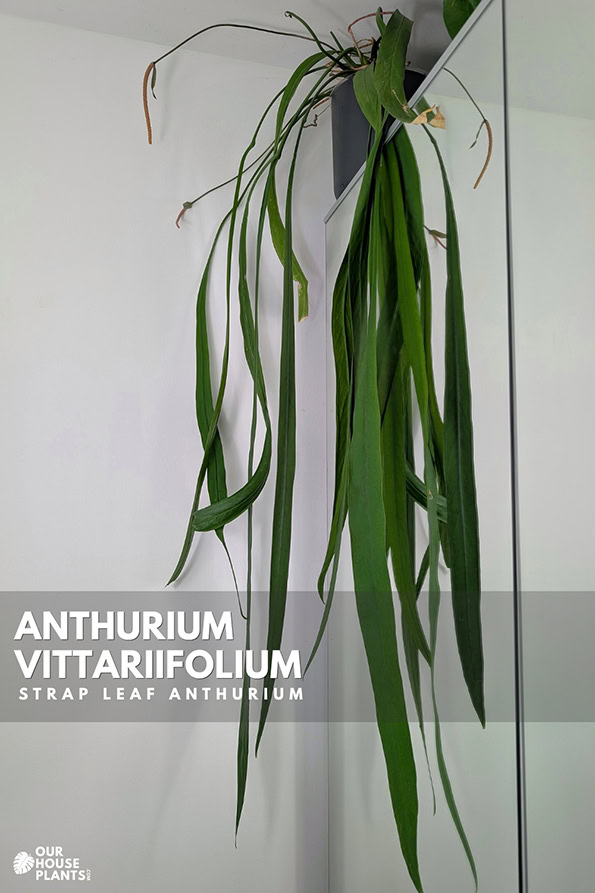
A mature Strap Leaf Anthurium needs a high position so its long leaves can hang freely without being bent or damaged.
How do you pronounce Anthurium vittariifolium correctly?
Say: an-THUR-ee-um vit-tar-ee-FOH-lee-um
Why Grow a Strap Leaf Anthurium?
Anthurium vittariifolium is a bit different from the more familiar Anthuriums sold in supermarkets and garden centres. There are no broad waxy leaves, no red flower-like spathes and no compact little mound of foliage that will sit neatly on a windowsill.
Instead, the Strap Leaf Anthurium produces long, leathery green leaves with a central ridge. The leaves emerge from the crown, gradually lengthen and then hang down. With maturity, a good plant can look like a small green waterfall.
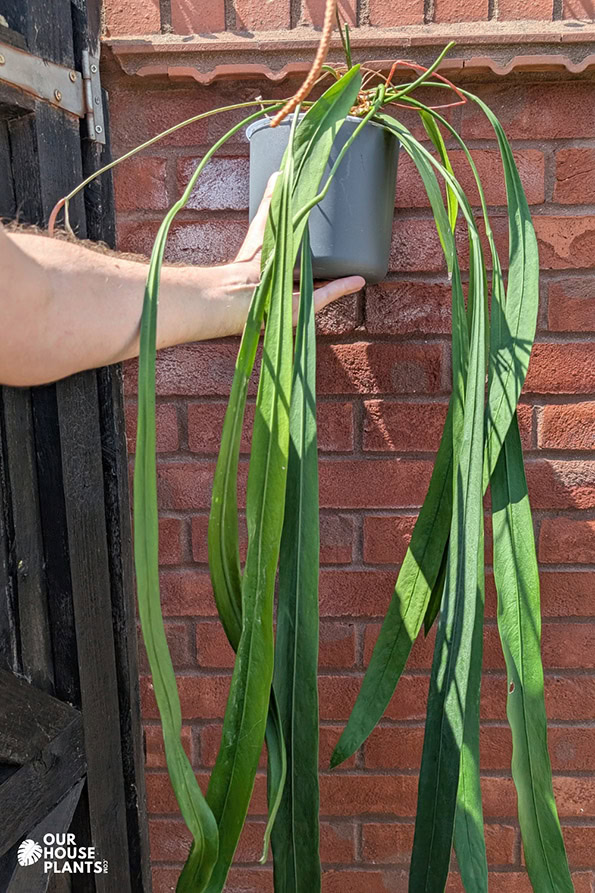
Anthurium vittariifolium has long, narrow leaves that hang down in a curtain-like display.
It's a collector-type houseplant, but not necessarily a difficult one. If you already grow Philodendrons, Monsteras or other Anthuriums successfully, its basic needs will feel familiar: an airy aroid-style potting mix, regular watering, warmth and reasonable humidity.
Where Does Anthurium vittariifolium Grow Naturally?
Anthurium vittariifolium is native to wet tropical parts of South America, including Colombia, Ecuador, Peru and Brazil. It grows as an epiphyte, meaning it can grow supported by trees rather than rooted directly in the ground. That explains both its airy root system and its unusual pendant growth habit.
Don't keep moving or folding the leaves out of the way. They can mark, crease or tear, and a damaged Strap Leaf Anthurium leaf stays damaged.
It's sometimes called a Necktie Anthurium because of the shape of the leaves.
You may also see it sold simply as Anthurium vittariifolium. Spelling variations are common too: Anthurium vittarifolium, with one "i", is often used by sellers and searchers. The accepted botanical spelling used by Kew is Anthurium vittariifolium, with a double "i".
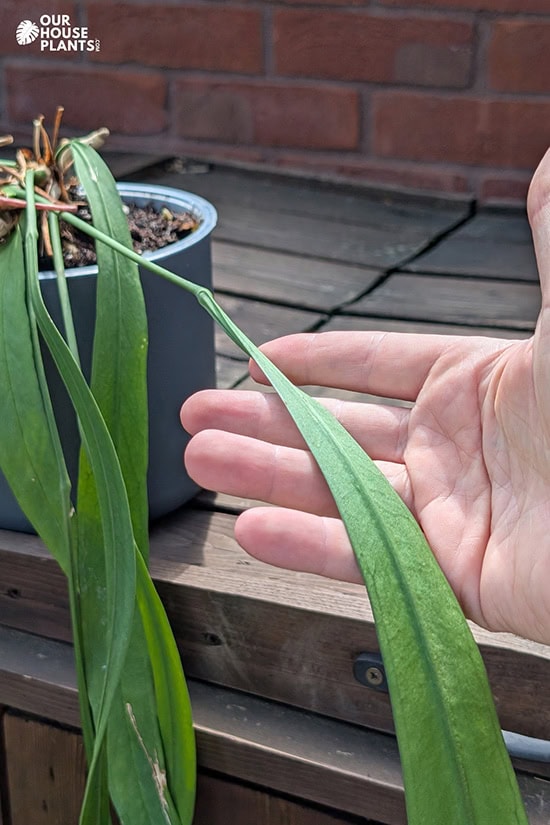
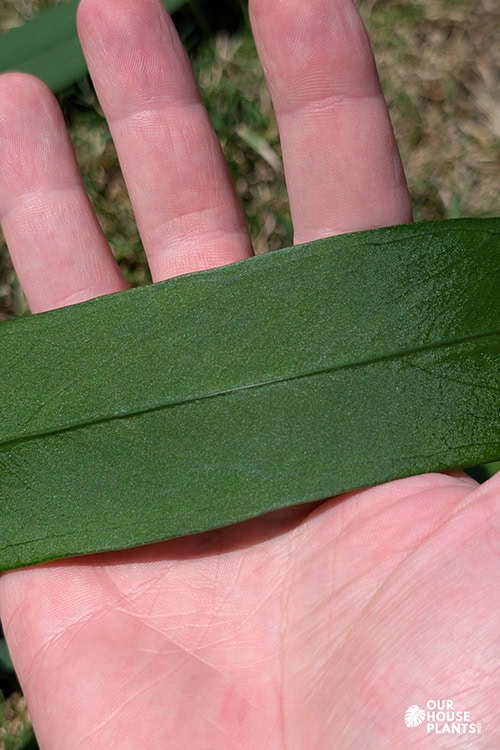
This photo demonstrates why the plant is sometimes known as the "Necktie Anthurium". You can see how the leaf is narrow when it emerges from the heart of the plant, before it gradually gets wider to resemble a Tie.
Is Anthurium vittariifolium Easy to Care For?
I would put it in the middle ground. It's much easier than some of the temperamental velvet-leaved Anthuriums, but it's not quite as forgiving as a Pothos or ZZ Plant.
The Strap Leaf Anthurium does not like prolonged cold, dry air, deep shade or being left completely dry for extended periods. But equally, it doesn't need constant misting, daily watering or complicated care routines. Once you find the right position and get used to how quickly the potting mix dries, it should be a fairly steady plant.
Quick takeaway
Grow Anthurium vittariifolium in bright light (no harsh direct sun), warmth and moderate to high humidity. Water when the top section of the potting mix is beginning to dry, but don't allow the root ball to become bone dry. Use a chunky, free-draining aroid mix and give the long leaves enough room to hang freely.

Hi, I'm Tom!
If you're like me and enjoy the challenge of growing houseplants and getting them to thrive, then OurHouseplants can help. This website shares my knowledge and years of growing plants and provides my advice on properly caring for your indoor plant friends.
Anthurium vittariifolium Photos
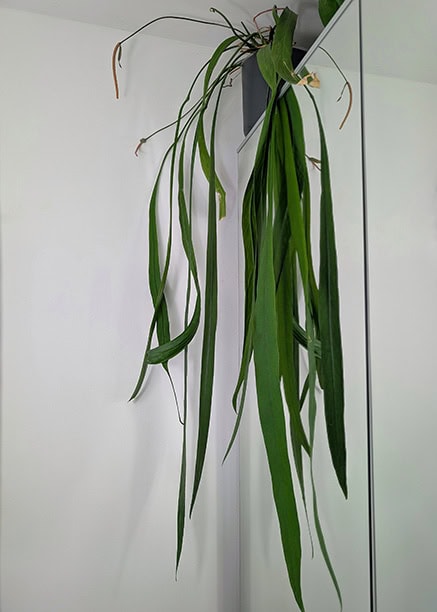
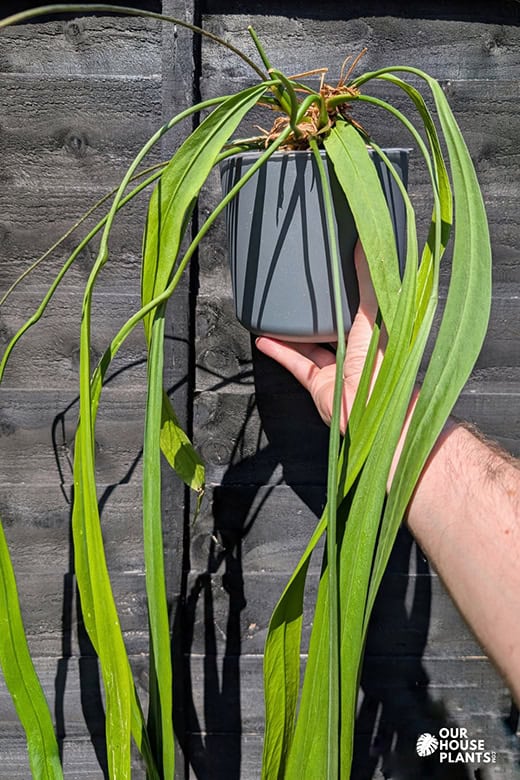

Anthurium vittariifolium Care and Growing Guide
How Much Light Does a Strap Leaf Anthurium Need?
After growing mine for a while I was surprised to discover that they don't need masses of sunlight to do well. My plant was set back a few feet from a window and it grew steadily. They're not low light plants though, and bright light should be the goal for the best growth. This means a well-lit room fairly close to a window, but without strong sun hitting the leaves for hours each day.
A little gentle early-morning or late-afternoon sun is unlikely to cause much trouble, but hot direct midday sunshine can scorch the leaves. The long narrow foliage is attractive because it stays clean, green and fairly unmarked. Brown bleached patches are hard to ignore once they appear.
Not a low-light plant
It will tolerate lower light for a while, but don't confuse tolerance with happiness. In poor light, growth will slow, new leaves may be smaller and the potting mix will stay damp for much longer. This is where root problems often begin.
A bright room with filtered light is a much safer choice than a dark corner.
If your home is naturally quite dark, a grow light can be useful during winter. You don't need to blast it with intense light all day. The aim is simply to give it a bright, reliable growing environment when natural daylight is limited.
How Often Should You Water Anthurium vittariifolium?
Water when the top section of the potting mix is beginning to dry out, but before the entire root ball becomes completely dry. This is a plant that generally prefers a little more consistent moisture than many common houseplants, especially while it's actively growing.
It can cope with being dry for a few days occasionally, but try not to make that the routine. Repeatedly allowing the root ball to dry out completely can stress the plant. Equally, it does not want permanently wet soil: its roots still need air, and constantly saturated compost can lead to yellow leaves, root rot and a general decline.
Water thoroughly, allow excess water to drain away, and then check the potting mix again after several days. In a warm bright room, it may dry reasonably quickly. In winter, or in a cooler low-light position, it could take much longer.
The best watering routine is not "every Sunday". It's checking the potting mix and watering when your plant is actually ready.
A useful rule is to push a finger into the top few centimetres of the potting mix. If it still feels clearly damp, wait. If the top has dried and the pot is becoming noticeably lighter, it's probably time to water again.
Humidity
This is one of the more forgiving Anthuriums when it comes to average household humidity. In nature, Anthurium vittariifolium grows in wet tropical forest, so it will not object to humid air. But unlike some thin-leaved or velvety Anthurium species, its tough, leathery Strap Leaves are usually much better able to cope with ordinary home conditions.
Mine has not needed a humidifier to grow well. If your home is reasonably comfortable for you, it will probably be comfortable enough for this plant too. I focus more on getting the light, watering and potting mix right than trying to chase a specific humidity percentage.
Top Tip
Try to keep water off the foliage when you can. A quick splash or misting now and then will not destroy the plant, but leaving leaves wet for long periods in a cool stagnant room is asking for marks and possible disease problems.
Very dry heated air can still make any tropical houseplant harder work, especially if it's also getting strong light or is drying out too quickly. But I'd not rank high humidity as a requirement for growing Anthurium vittariifolium successfully in a normal home.
Temperature
Warm indoor temperatures suit this plant best. Aim for somewhere comfortably above 16°C (61°F) for most of the year, with warmer conditions encouraging stronger growth.
It is not frost hardy and will not enjoy cold windowsills, unheated rooms in winter or a sudden blast of cold air from an open door. If temperatures drop close to 10°C (50°F), growth will slow right down and the risk of damage increases.
Feeding
Feed lightly during the active growing season, usually from spring through to early autumn. A balanced liquid houseplant fertiliser, diluted to around half the recommended strength, is plenty.
Once every four to six weeks is a reasonable starting point if the plant is growing well. If it's sitting in low light, struggling with cold conditions or not producing new growth, there is little point feeding heavily. More fertiliser is not the answer to every slow-growing plant.
Overfeeding can lead to brown leaf tips and a build-up of salts in the potting mix. If you suspect this has happened, flush the pot through with water and ease back on the fertiliser.
What Soil Should I Use?
A chunky, airy aroid mix is ideal. The roots need moisture, but they also need air around them. Standard all-purpose houseplant compost on its own can become too dense and hold water for too long.
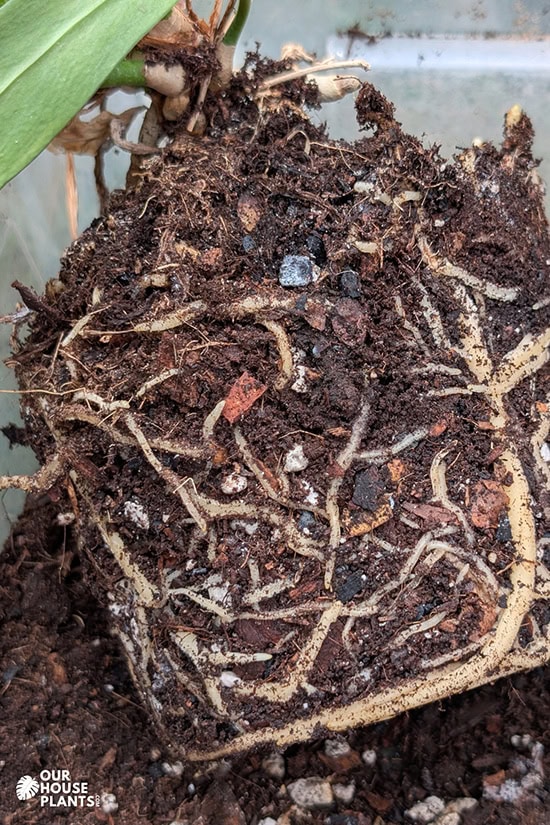
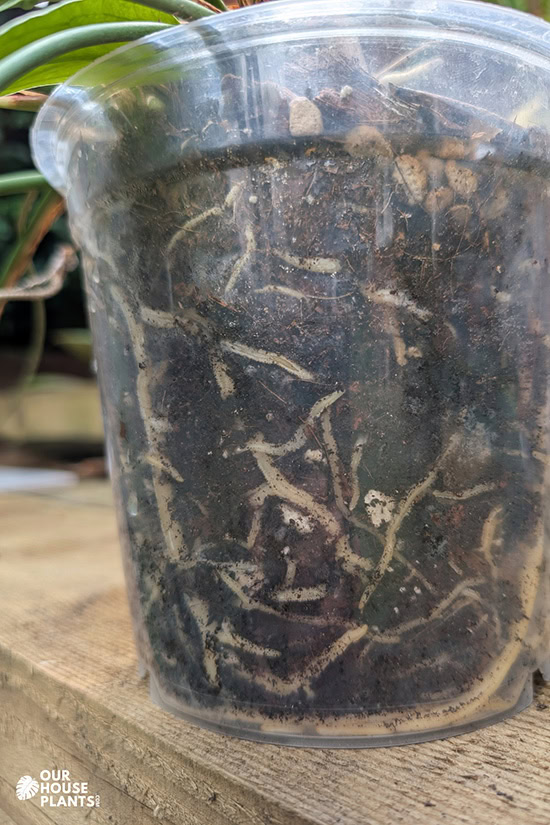
Like many Anthuriums, the Strap Leaf has fairly thick roots that prefer chunky aroid mixes over dense potting compost. This gives the roots moisture and the air they need to do well.
You can use a ready-made aroid mix, or make your own by combining regular houseplant compost with materials such as orchid bark, perlite, pumice, coco chips or a small amount of sphagnum moss.
The aim is balance
A potting mix that is too dense stays wet and starves the roots of air. A mix that is extremely coarse and dries in a day can make watering a constant chore.
You want a mix that holds some moisture, drains freely and does not collapse into a soggy lump after a few months.
Always use a pot with drainage holes. Decorative pots are fine as outer covers, but the plant itself should be growing in a nursery pot or container that allows excess water to escape.
Repotting
Repot when the plant has clearly filled its pot with roots, the potting mix is breaking down, or it's drying out far too quickly after watering. Spring and summer are the easiest times because the plant is actively growing and should recover faster.
These plants have a "face" which means leaves will only grow on one side of the plant. When they get larger with lots of leaves this can make them unbalanced, so use a heavy container to stop them tipping over as easily.
Move up only one pot size at a time. A very large pot full of unused wet compost can stay damp for too long, especially if the plant has a relatively small root system.
When you repot, check the roots. Healthy roots should be firm and pale or light brown. Trim away any that are black, soft or clearly deteriorated before placing the plant into fresh mix.
I love clear containers for some of my rare houseplants, as you can check moisture levels and the health of the roots with just a quick glance. This can drastically reduce overwatering mistakes and prevent root rot.
Propagation
The easiest way to propagate a mature Strap Leaf Anthurium is usually by division. This only works if the plant has produced separate growth points or offsets with their own roots.
Carefully remove the plant from its pot and look for a natural place where it can be separated into two rooted sections. Each section needs healthy roots and at least one active growth point. Pot the divisions up individually and keep them warm, lightly moist and out of harsh sun while they settle.
Propagation from seed is possible if you have a flowering plant and successful pollination, but it's slower and much more of a project. Stem cutting propagation can work too, but it's not the first method I'd choose unless you have a suitable piece with a node and aerial roots.
Height and Spread
Anthurium vittariifolium is not a tall houseplant, but it can take up a surprising amount of vertical space. Its narrow Strap Leaf Anthurium leaves grow outward and then hang straight down, so a mature plant needs room below the pot rather than above it.
Give it hanging space
This is the important bit that's easy to overlook when buying a small plant. The leaves don't trail like a vine; they grow long and then hang down from the plant itself. A high shelf, plant stand, hanging basket or tall cabinet is much better than a low table where the leaves will drag across the floor.
- Leaf length. Mature leaves commonly reach around 90 cm to 1.5 m (3 ft to 5 ft) indoors once the plant is well established. In exceptional tropical conditions, they can become much longer.
- Leaf width. The leaves stay narrow for their length, usually only around 5 cm (2 in) wide, which is why it's often called a Strap Leaf Anthurium or Necktie Anthurium.
- Overall height. The growing point itself remains relatively compact. Most of the plant's size comes from the long pendant leaves hanging below the pot.
- Display space. A shelf, wall-mounted planter or hanging basket works far better than a floor-standing pot. Put it somewhere the leaves can hang freely without hitting furniture, the floor or people walking past.
This is one of those plants that becomes more impressive with age. A young plant can look modest, but a mature Strap Leaf Anthurium with several long leaves has a dramatic waterfall effect that few other houseplants can match.
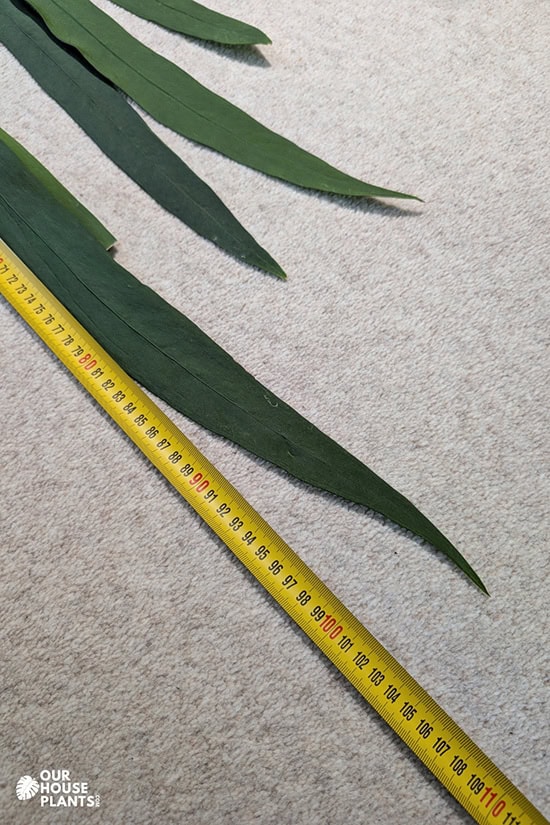
The longest leaf on my Strap Leaf Anthurium is 105 cm (41 inches) and here is the proof. If yours is longer, show me in the comments.
Speed of Growth
In good conditions, Anthurium vittariifolium can grow quite steadily through the warmer, brighter part of the year. A new leaf may not look dramatic when it first emerges, but it can continue to lengthen as it matures.
Don't expect every new leaf to immediately be longer than the last, particularly with a young plant. Size is influenced by light, warmth, root health, feeding, humidity and how well established the plant is.
As it matures, the leaves can become the main event. This is where the display space really matters. A plant kept on a tall stand can look impressive. The same plant forced onto a cramped shelf can quickly become awkward.
Do Strap Leaf Anthuriums Flower?
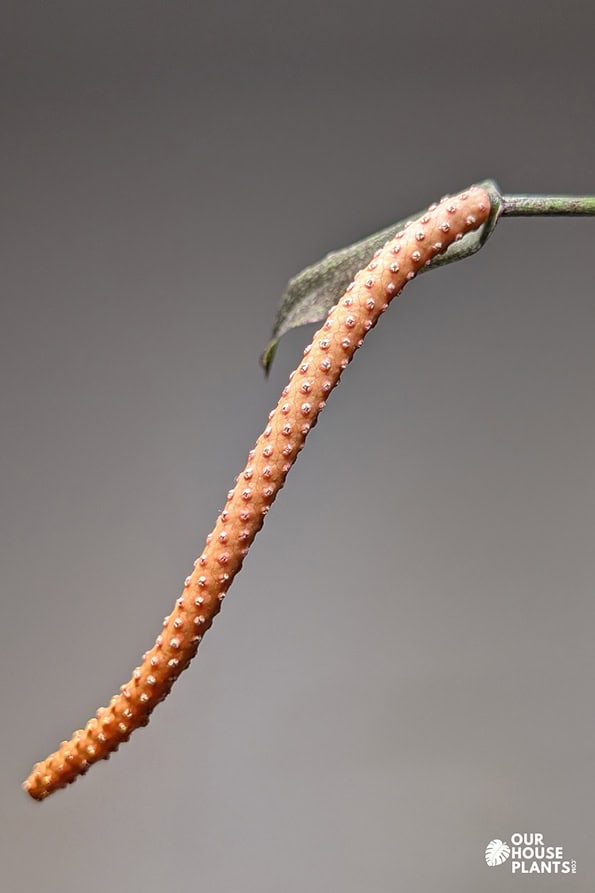
Yes, mature plants can produce flowers indoors, although the flowers are not usually why people grow this species. The inflorescence is much more understated than the bold red or pink spathes of the common Flamingo Flower Anthuriums.
The flowers of Anthurium vittariifolium are subtle, but they are an interesting bonus on a mature well-grown plant.
Expect a narrow spathe and a slender spadix rather than a big showy bloom. If pollinated, flowers can eventually form colourful berries containing seeds.
For me, flowers on this plant are a bonus. The long hanging leaves are still the reason it earns its place in a collection.
Is Anthurium vittariifolium Safe Around Pets?
No. Like other Anthuriums, it's not considered pet safe. The plant contains insoluble calcium oxalate crystals, which can cause irritation if chewed or swallowed by cats, dogs or people.
Keep it out of reach of pets and young children. This should be fairly easy with a Strap Leaf Anthurium because it generally looks best displayed higher up anyway, but do remember that the long leaves can hang down into tempting reach.
How to Care for Anthurium vittariifolium Recap
- Bright Indirect Light
Give the Strap Leaf Anthurium a bright position close to a window, but protect the long leaves from prolonged harsh direct sun. - Keep the Potting Mix Lightly Moist
Water well when the top section of the potting mix has started to dry. don't allow it to stay permanently wet, but avoid leaving the root ball completely dry for long periods. - Warmth and Moderate Humidity
Average warm household conditions are fine, but avoid cold draughts, frosty windows and very dry air from radiators. - Chunky, Free-Draining Soil
Use an airy aroid mix that holds some moisture while still allowing plenty of air around the roots. - Give the Leaves Space
This is not a compact windowsill plant. Display it high enough that the leaves can hang naturally without being bent, crushed or dragged along the floor. - Avoid Strong Sun and Constantly Wet Soil
Direct hot sun can mark the leaves. Overwatering and dense compost can damage the roots. Both problems are easier to prevent than fix.
Problems and Common Issues
Why Are the Leaf Tips Turning Brown?
Brown leaf tips are commonly caused by physical damage, very dry air, inconsistent watering, too much fertiliser, hard water or a combination of several smaller stresses. The long narrow leaves make damage more obvious than it is on many other houseplants.
Check whether the potting mix is drying out too much between waterings. Keep the plant away from radiators and cold draughts, and avoid feeding more often than necessary. If your tap water is very hard, rainwater or filtered water may help reduce mineral build-up over time.
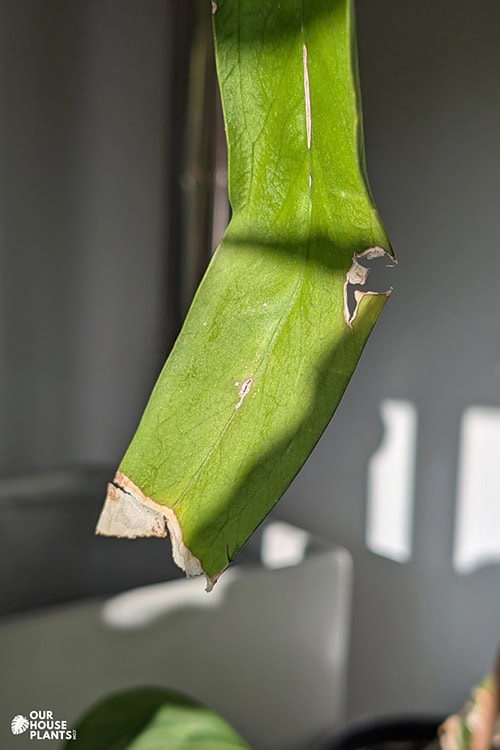
A Strap Leaf Anthurium with brown tips and historical damage to the side of the leaf which is also browning.
Why Are the Leaves Developing Brown Patches?
Brown patches can be sun scorch, physical damage, leaf-spot disease or water sitting on the foliage for too long. Look at where the marks are and whether they are spreading.
A large pale or brown patch on the side facing a sunny window is often sun damage. Small wet-looking spots that spread may be more serious, especially in cool humid conditions. Remove badly affected leaves with clean scissors, improve air movement and avoid wetting the foliage unnecessarily.
Why Are the Leaves Yellowing?
One older leaf yellowing slowly is often normal. Several leaves yellowing at once, especially if the potting mix is wet, points more strongly towards overwatering or root trouble. (If only parts of the leaves are going yellow see the next problem).
Check the roots and the condition of the compost. If it's dense, smelly or staying wet for a very long time, repot into fresh airy mix and remove damaged roots. Make sure the new pot has drainage holes.
Leaves are mottled / yellowing
If the entire leaf goes yellow quickly (within a week or so) refer to the above problem. If the leaf goes yellow slowly and in patches, then it's likely caused by a little too much light or a nutrient deficiency. A third possibility is pests.
Why Is My Strap Leaf Anthurium Not Growing?
Slow growth is usually caused by low light, cool temperatures, a root-bound plant, lack of nutrients or a recent change in environment. It may also simply be taking time to settle after being bought or moved.
Move it into brighter indirect light, keep it warm and check that the potting mix is not staying wet for weeks at a time. If the plant has been in the same pot and compost for a long time, a repot during the growing season may give it a useful reset.
Messy center
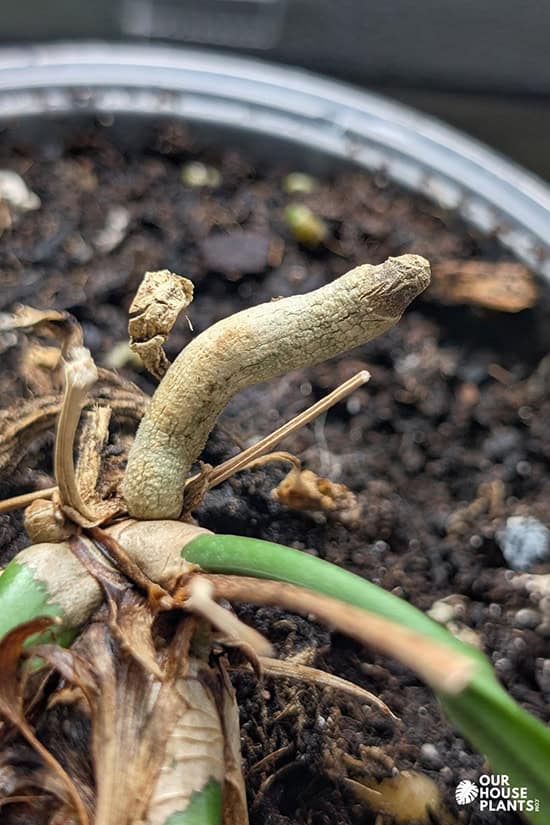
As the plant matures, the centre can become a little untidy. Old leaf stems and spent flower stalks gradually dry out and collect around the crown. This is normal, and you can carefully trim away anything that is fully dry and papery using clean, sharp scissors or secateurs.
There is no need to pull at material that is still firmly attached or showing any green. Leave that alone and let it dry naturally before removing it.
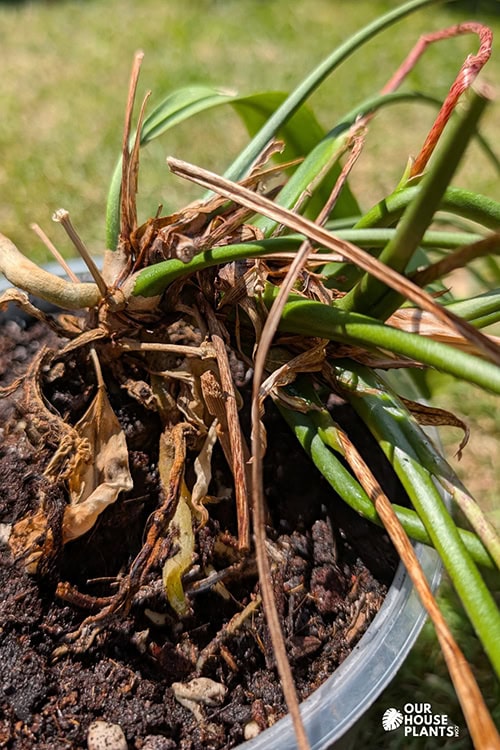
The centre can become a little untidy over time as old leaf stems and spent flower stalks dry out.
Pests
Spider mites, thrips, mealybugs and scale insects are all possible, particularly if the plant is stressed or sitting in dry air. Check under the leaves, around the leaf bases and along the stems whenever you water.
Early action is much easier than trying to rescue a heavily infested plant. Isolate it from other houseplants if necessary, wipe pests away where possible and use an appropriate treatment from my houseplant pest guide.
Our Story With Anthurium vittariifolium
I was a little nervous about buying one of these at first. Strap Leaf Anthuriums used to be much harder to find, and their price made them feel like a plant that would need specialist care and constant attention. In reality, mine has been super straightforward. I don't fuss over it very much, yet it has settled in well and continues to grow perfectly happily with a handful of new leaves every year.
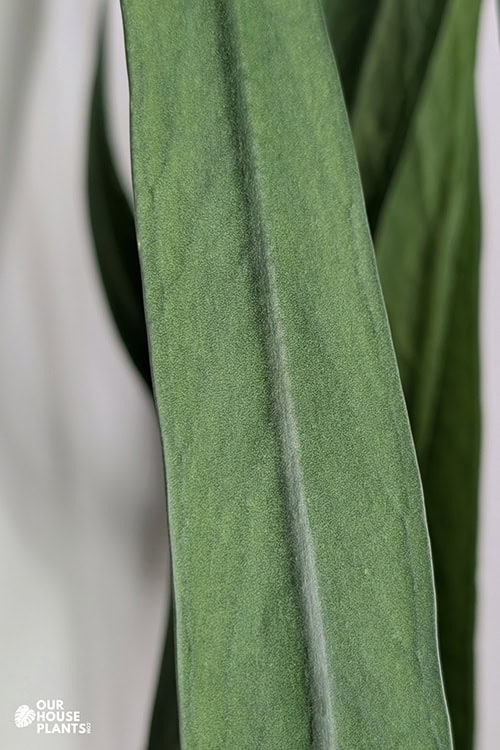
It also looks unlike almost every other houseplant I own. The long leaves really do feel strap-like: thick, firm and slightly dry or leathery to the touch, with a raised rib running down the middle. Their length and shape remind me of an actual Tie.
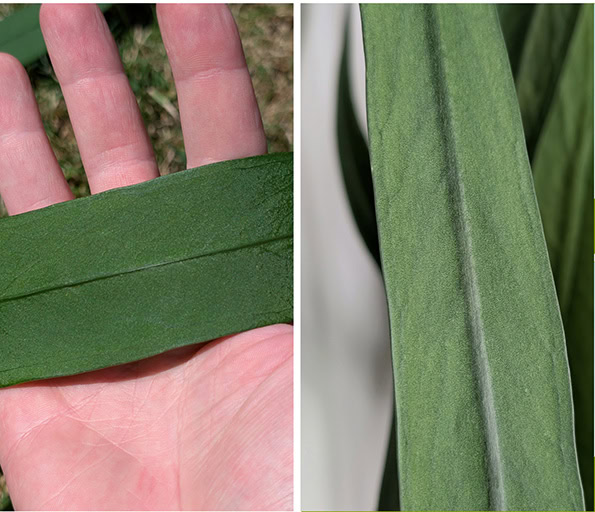
The leaves really are like straps: long, thick and firm, with a raised rib running down the centre.
If you have enough room to show off the long leaves properly, I'd happily recommend Anthurium vittariifolium. It is an unusual and dramatic plant, but it has been far less demanding than I expected. If you already grow one, I'd love to hear how yours is getting on, or see a photo of it in the comments below.
About the Author
Over the last 20 years, Tom has successfully owned hundreds of houseplants and is always happy to share knowledge and lend his horticulture skills to those in need. He is the leading content writer for the OurHouseplants Team.