
Aechmea Fasciata (Urn Plant / Silver Vase Plant)
About the Aechmea
The Aechmea plants (pronounced EEK-me-uh) are popular Bromeliads, with the Urn Plant or Silver Vase Plant (Aechmea Fasciata) being one of the most popular and well known.
It has leathery tough arched leaves, blotched silver and sea green that overlap into a rosette forming a watertight "vase" or "urn" which gives rise to its common name. Easy to care for, they make excellent houseplants when you're looking for something tropical or a bit different.
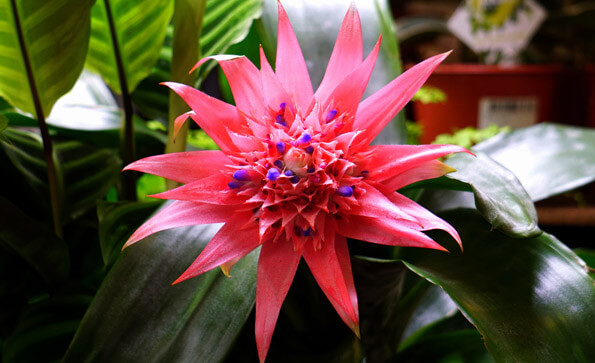
The Urn Plant shows off a standout pink flowering bract - Photo by Mikebirdy
The majority of Bromeliads are desirable because of the flowering bract that they produce called an inflorescence. These are usually large, bold, exotic and tropical looking. This is true of most Aechmea plants, especially the Urn Plant, as well as the Pink Quill Plant and Air Plant.
When an Aechmea Fasciata reaches maturity (after several years) it will send out a bract which gradually turns bright pink. It has a very long flowering period and during this time these plants really reward their owners with the familiar, long lasting inflorescence shown in the photo above.
A series of tiny blue flowers take it in turn to open. If good care is provided the flowering bract will last for up to six months. Look at the Urn Plant photos in our gallery for more pictures.
It's very rewarding and fairly easy to grow a young offset to the flowering stage and in many cases worth the time and effort. However, because this takes several years to do it's far more common to purchase a plant with a flower already blooming.
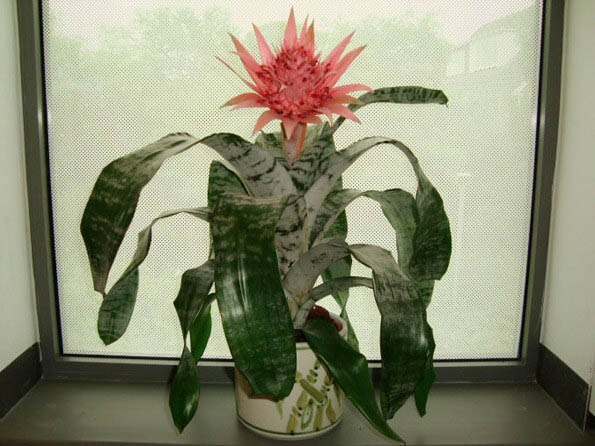
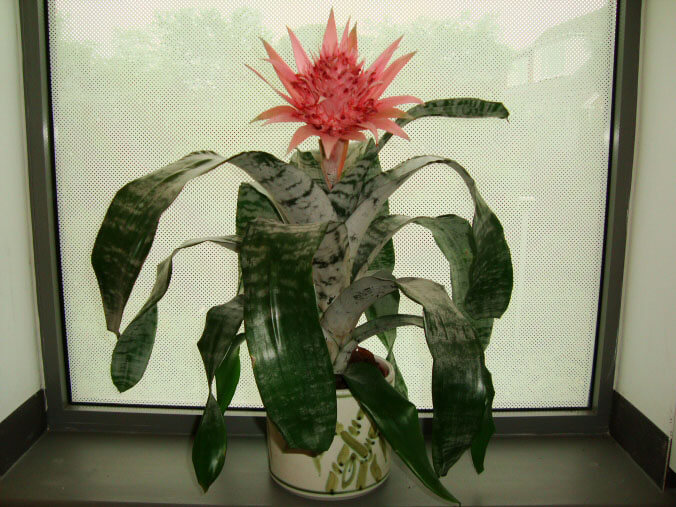
Urn Plant sitting next to a frosted window.
Aechmeas are especially easy to care for, look amazing and can be grown in many locations throughout your home. But before you rush out to buy your own Urn Plant, I'm going to be a party pooper and let you know the negatives points about this plant.
Firstly it takes the commercial grower around four or five years before it starts to flower and therefore for you to be able to go into a shop to buy a plant already in bloom can mean it's expensive to buy.
Secondly, as a result of the time the grower needs to invest in creating a saleable plant, it can be less profitable compared to other houseplants so this can make it difficult to get hold of. If you're not having much luck have a read of our where to buy houseplants guide for some ideas.
Choosing Your Urn Plant.
If you're buying a plant with several other Urn Plant's nearby, a quick check can help you find one that will last the longest. Look for an Urn Plant with a fresh-looking, vibrant pink bract (the showy part) where the small blue flowers haven't opened yet. This is a sign that the bloom cycle has just begun, and you'll get the maximum flowering period for your money.
Lastly, it's important to know that all Aechmea plants are monocarpic. This means the original plant flowers only once and then gradually falls apart and goes brown before you need to discard it.
Don't worry, though - this is a natural and expected part of its life cycle. Instead of re-flowering, the plant's energy goes into producing new "pups" or offsets around its base, which can be grown into new plants.
Although the time they spend in your home might be fleeting the Urn Plant gives you a stunning floral display for months on end and needs very little attention from you during this period. Up next is the full care guide information to keep your Aechmea going for as long as possible.

Hi, I'm Tom!
If you're like me and enjoy the challenge of growing houseplants and getting them to thrive, then OurHouseplants can help. This website shares my knowledge and years of growing plants and provides my advice on properly caring for your indoor plant friends.
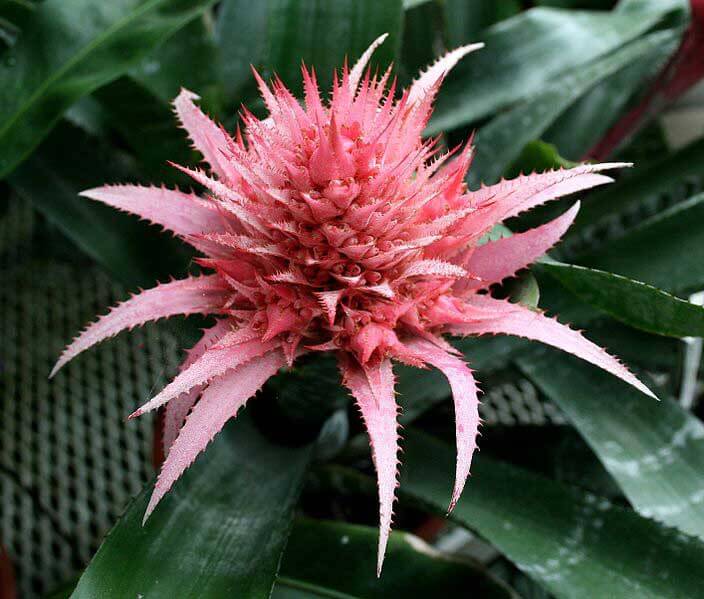
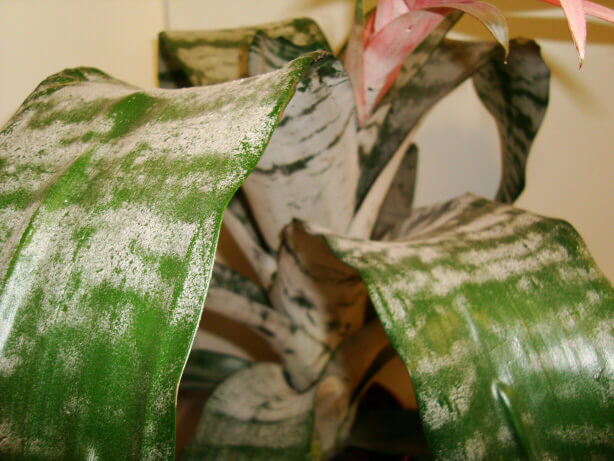
Urn Plant Photos
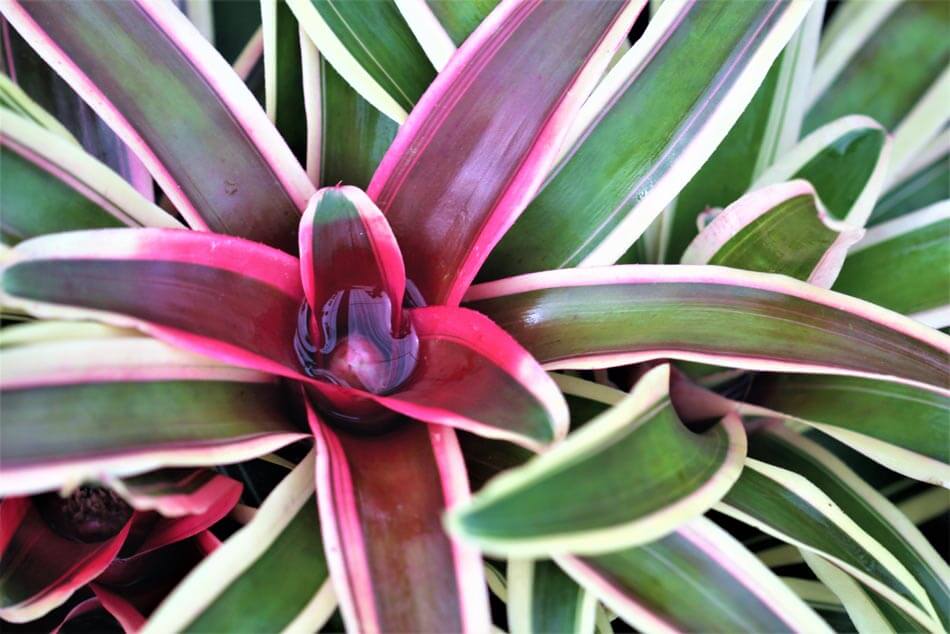

Aechmea Care Guide
Light
Most Bromeliads are epiphytic which means they tend to grow on bigger plants, such as trees. If you can picture how such a plant might grow out in its native environment, think of it grabbing on midway up a tree trunk. So away from the very dark shady spots at the base of the tree but below the canopy and away from the harsh direct sun.
When growing these plants in our homes, we need to try and mimic the naturally preferred light levels by providing bright indirect light. It will do quite well in light shade as well, but you need to avoid deep shade or rooms with no windows.
More light will be needed if you're attempting to grow the plant to flowering stage. In all cases avoid exposure to harsh direct sunlight or you'll risk scorching the leaves and permanently ruining the plant's appearance.
Watering
In their natural environment, Aechmea are opportunistic plants, capturing water in their central "vase" or "urns". The vase is the central container from which the flower bract emerges (see photo).
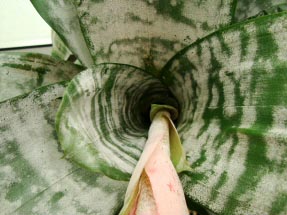
Close up photo of the Urn Plant's water holding vase or "tank".
They don't have a very extensive root system and most of the watering requirements are met by the stored water in their urns.
These houseplants are not overly heavy drinkers so be careful not to over water at any time. If you remember, keep the central vase filled with water, emptying and refilling every month to prevent the liquid stagnating.
If you don't want to water by the vase method, then try to maintain slightly moist soil at all times.
You should only water the soil when it feels completely dry to the touch. The roots are primarily for anchoring the plant, so avoid keeping the soil consistently wet, as this can lead to rot.
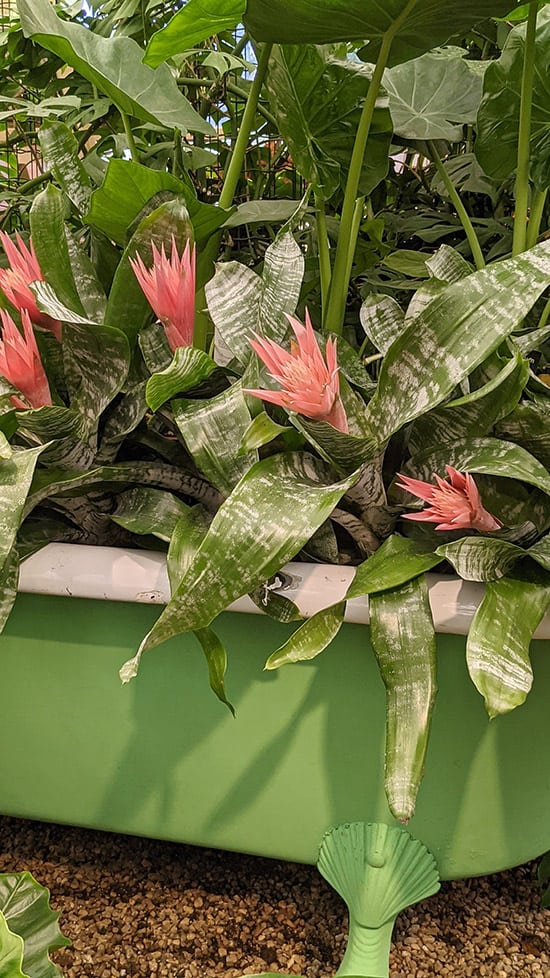
Sometimes quirky plants deserve a quirky display.
Humidity
While the Urn Plant is fairly tolerant of average household humidity, it will truly thrive in a more humid environment. To keep the leaves looking their best and prevent dry, brown tips, consider raise ways to notch the humidity levels up a little, or placing the plant in a naturally humid room like a kitchen or bathroom.
Feeding
These plants are adapted to living on scarce resources so feeding again isn't overly important. However, if you're happy to do so, then provide a feed to the soil (never the vase) once in Spring and again in late Summer.
You can also feed more regularly if you prefer to do this, but using a much weaker solution.
Feed the soil. Never the vase.
Temperature
If given a choice, all Aechmea prefer temperatures to be on the warmer side. But in the main, they're not especially fussy about temperature. 15°C (59°F) - 25°C (77°F).
Repotting
Most Bromeliads do not have extensive root systems and this is also the case with Aechmea plants. Most of the absorption of water and nutrients happen through the leaves and not the roots. If you've bought or inherited an adult plant this means repotting could be something you'll never need to do!
However if you're growing a young plant or offset, repot and upsize the pot slightly every couple of years. You can use a variety of different growing mediums, from garden compost to orchid bark.
Propagation
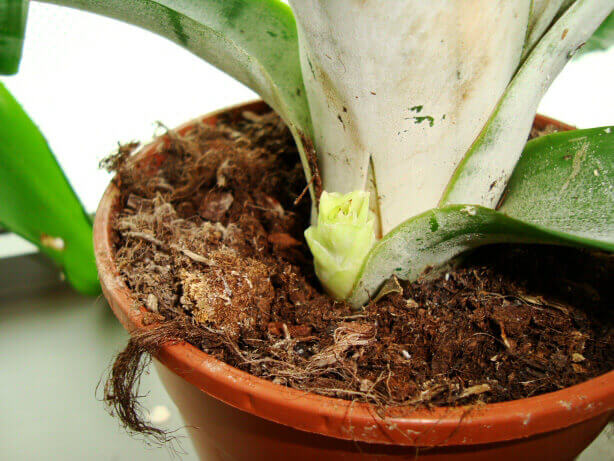
As the adult plant starts to end its flowering cycle, "pups" or offsets will normally appear around the base as shown in the photo here.
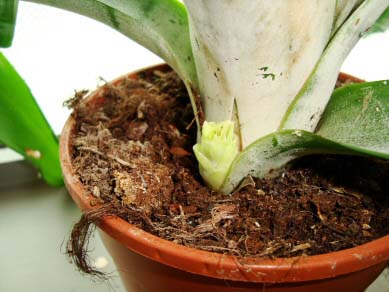
The Urn Plant will eventually produce offsets around the base of its stem like this one has.
Once the flowering bract has finished completely and the adult plant starts to decline, you can remove the offsets for propagation. Try to retain some of their roots when you remove / cut the "pups" away.
Pot them into a small pot using normal compost care for them in the same way as you did for the adult plant. The only difference is that they won't have a fully formed vase for a while so you'll need to keep the growing medium slightly moist.
Speed of Growth
The speed of growth for Aechmeas is normally slow. Fully grown plants might not produce any new leaves during the entire time you have it as a guest in your home.
Height / Spread
The final height can be varied but the Urn Plant should typically be expected to grow to be around 50cm / 19in tall with a spread of 60cm / 23in.
Flowers
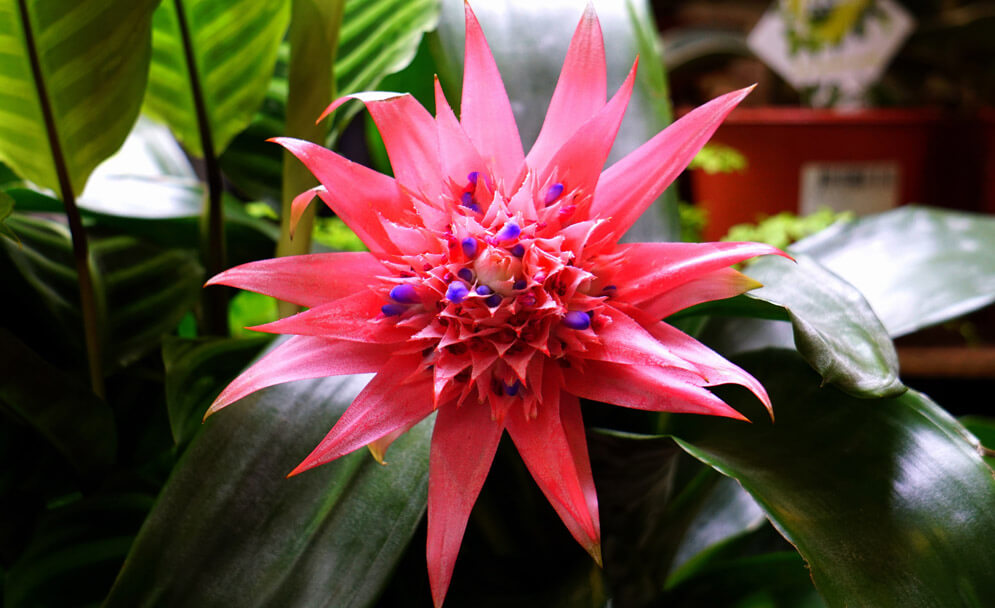
The Aechmea plant definitely has flowers. Although it's the flowering bract or inflorescence which is the real show stopper, the true flowers are actually very small and short-lived.
They're normally purple blue and cautiously poke out of the bright pink flowering bract so they can be hard to spot at a casual glance.
Play the timelapse video below to see how it all happens.
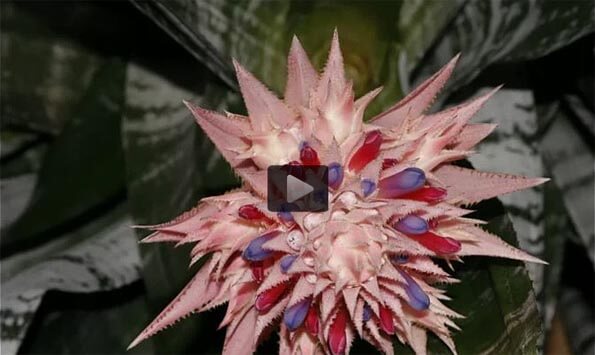
Timelapse by Astrohans
Once flowering is finished the inflorescence will start to look unattractive. You can remove it at this stage without harming the plant.
It's usual to buy Urn Plants already at flowering stage, however, if you're growing a young plant, you can expect them to appear once it's about four or five years old.
Is the Urn plant Poisonous?
The Aechmea Fasciata is not considered to be toxic to pets or people.
Anything else?
Despite its tropical appearance, this is quite a hardy and good natured plant that rewards its owner for a long time with something beautiful. It can, therefore, make an unusual but really nice long lasting present to give as an alternative to a Moth Orchid or Pot Mum.
Caring for Aechmea Plants Recap
-
Average Light Levels An adaptable houseplant that does well in both light shade or brightly lit spaces. Avoid deep shade or in direct sunlight.
-
Low Watering Keep the vase topped up with water and change it once a month. Water the soil once it dries out.
-
Average Temperature Provide temperatures between 15°C (59°F) and 25°C (77°F).
-
Feeding Provide feed to the soil once or twice a year.
- Do not put fertilizer in the central vase
- Do not overwater your plant
Aechmea Problems
Leaves have pale brown patches
If your plant has this problem then it's likely been caused by the sun scorching the leaves. Move to a darker place.
My plant has leaves with brown tips
This could be caused by several things such as:
- Dry air - mist the leaves more frequently or find ways to increase humidity.
- The vase hasn't been filled with water or what was in there has been allowed to completely evaporate and not replaced.
- Brown leaf tips can also occur if you are using hard rather than soft water (you can also use rain or distilled water to help combat this).
Horrid / rotten / stagnant smell
If the water in the vase develops an unpleasant smell, it has become stagnant. This is a clear sign that you need to empty and replace it more frequently - at least once a month.
If the smell is coming from the base of the plant after it has flowered, it's a sign that the mother plant is naturally starting to come to an end. It’s time to remove the pups for propagation and discard the old plant.
Plant passing on
Aechmea plants are monocarpic. So after flowering is over this is to be expected. If it happens sooner than this, then the likely cause is overwatering.
No flowers on my Urn Plant
The Urn Plant will only flower once and only when it is old enough to do so. A rough estimate for this is after four or five years. Although this assumes ideal conditions as outlined above. If it's receiving substandard conditions it will grow slower and may take longer than five years before it's capable of blooming.
About the Author
Over the last 20 years, Tom has successfully owned hundreds of houseplants and is always happy to share knowledge and lend his horticulture skills to those in need. He is the leading content writer for the OurHouseplants Team.
Also on Ourhouseplants.com

Credit for the Urn Plant in flower - Gallery - Allgau
Credit for the Aechmea vase filled with water - Gallery - PEAK99