
Pothos Care Guide: Devil's Ivy (Epipremnum aureum)
About the Pothos Houseplant
Pothos, also called Devil's Ivy, is one of the easiest houseplants you can grow indoors. It's forgiving, fast growing and not especially fussy, which makes it a brilliant choice for beginners or anyone who wants a good-looking trailing plant without too much drama.
Plant care is usually straightforward. Give it bright light (avoiding direct sun) if you can, water when the top of the potting mix has started to dry, and keep it away from very cold rooms. It will also cope with lower light, although growth may slow down and variegated leaves can become less colourful over time.
And I should know, as over the years I've grown at least ten of these handsome plants. Some have trailed from shelves, some have climbed supports, and a few have needed a firm haircut when they got a little too ambitious.
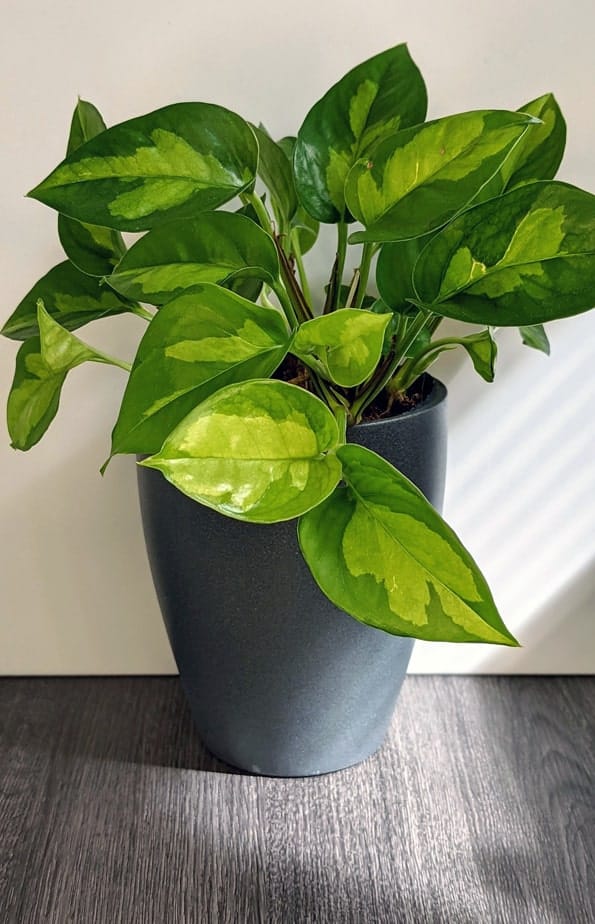
Pothos plant care is easy to get right - give a little light, some water and warmth and it looks after itself.
Given time, a Pothos will creep, trail and cling around anything in its path, spreading and sliding towards sources of light. If this trailing look isn't for you, then the good news is that it also looks beautiful growing up a moss pole.
Is Pothos the Same Plant as Devil's Ivy?
Yes. Pothos and Devil's Ivy are two common names for the same houseplant: Epipremnum aureum. You may also see it sold as Golden Pothos, Ivy Arum or Taro Vine.
To make matters more confusing this plant has suffered from a bit of an identity crisis over the years. For example older books, plant labels and online listings may use the former scientific name Scindapsus aureus. However it's still referring to the familiar trailing Pothos plant, not a different houseplant.
So whether you bought a Pothos, Devil's Ivy, Golden Pothos or a plant labelled Epipremnum aureum, the general care in this guide is the same.
Why Is Pothos Called Devil's Ivy?
Pothos gets the name Devil's Ivy because it is a tough climbing and trailing plant that is difficult to "finish off". In warm conditions it can grow quickly, cling to supports and keep going even when care is less than perfect.
Despite the name, it is not a true ivy. Pothos belongs to the Araceae family, alongside plants such as Monstera and Peace Lilies.
Pothos Varieties
There are now many different Pothos varieties you can grow indoors, including Golden Pothos, Marble Queen, Neon, N'Joy, Jade and several others. The care is broadly similar for most of them, although the more variegated types usually look their best with brighter indirect light.
If you're trying to identify one, or want to choose a new type for your home, I've put together a separate guide covering 14 popular Pothos varieties.
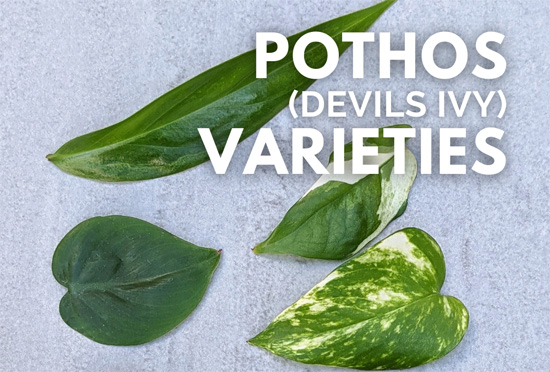
There are lots of different Pothos leaf patterns to pick from. I cover the main ones in my Pothos varieties guide.
For general care though, most types want the same basic treatment: decent light, careful watering, warmth and the occasional trim to keep the vines under control.

Hi, I'm Tom!
If you're like me and enjoy the challenge of growing houseplants and getting them to thrive, then OurHouseplants can help. This website shares my knowledge and years of growing plants and provides my advice on properly caring for your indoor plant friends.
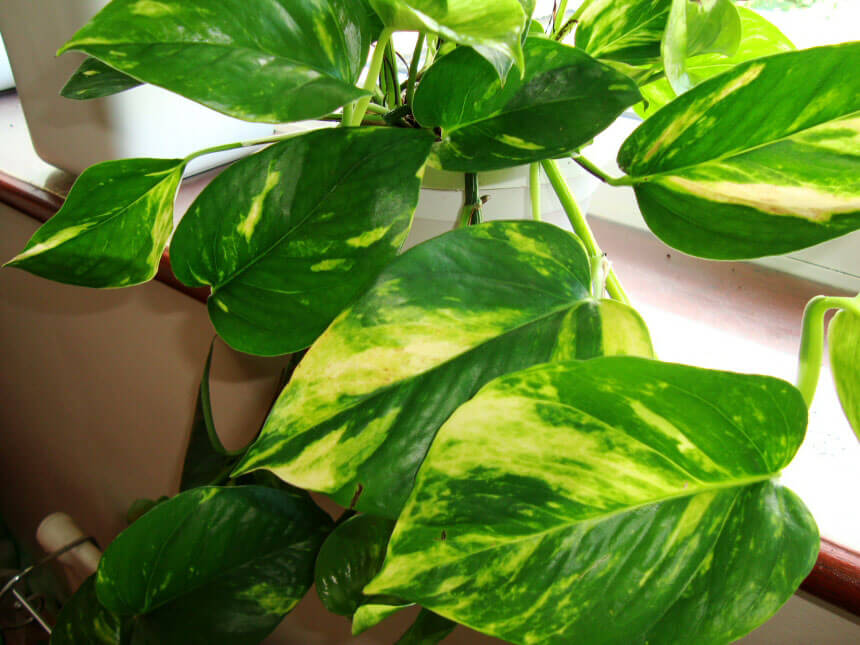
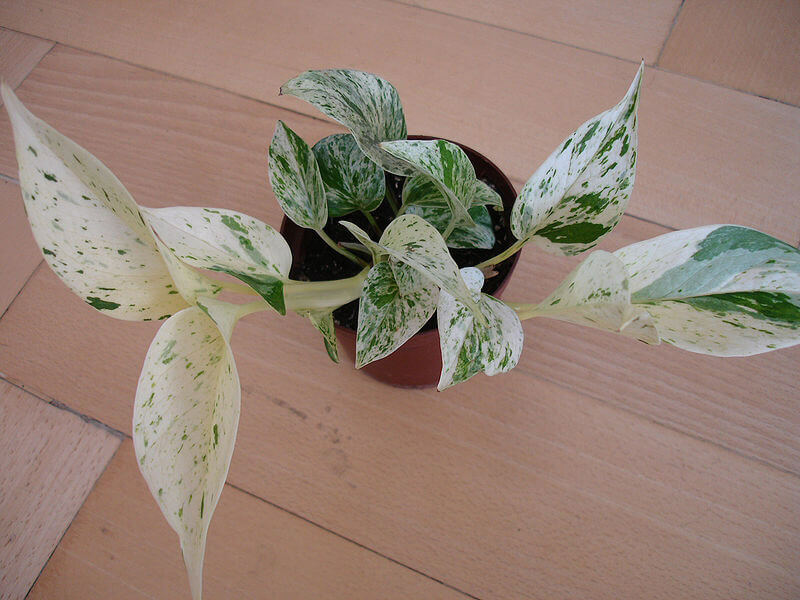
Pothos Photos
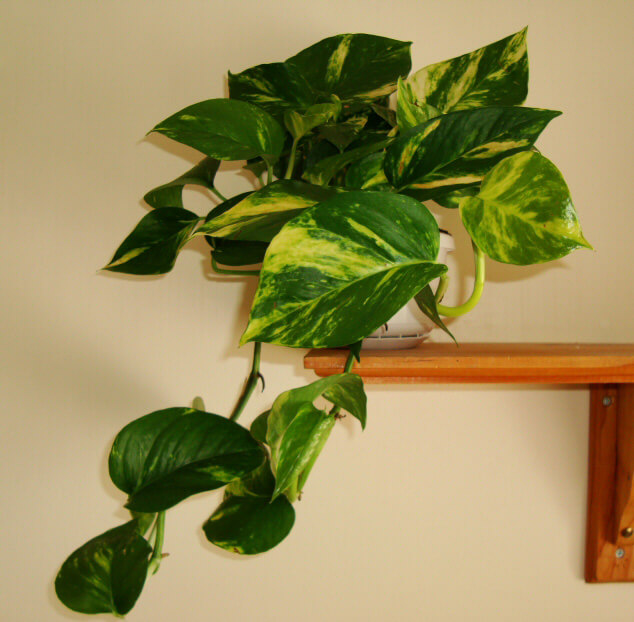

Pothos Plant Care Guide
These are some of the easiest houseplants you can own, but they still do best when a few basics are right. The main things to watch are light, watering and temperature. Get those sorted and Pothos will usually grow happily for years.
How Much Light Does a Pothos Need?
Pothos grows best in bright light, but it's adaptable and can cope with lower-light rooms. The trade-off is slower growth, longer gaps between leaves and less striking variegation on types such as Marble Queen or N'Joy.
Avoid harsh direct sunlight for long periods, especially through a south-facing window, as this can scorch or bleach the leaves. A bright room where you can comfortably read for most of the day is usually a good place to start.
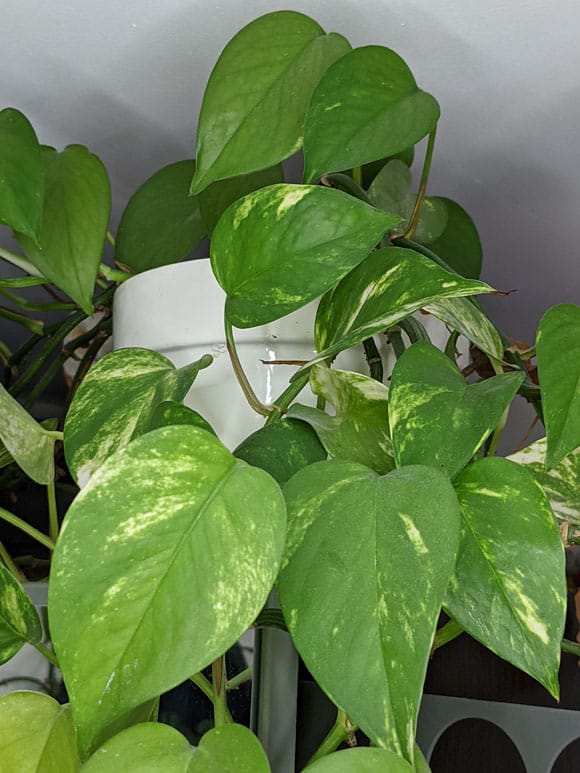
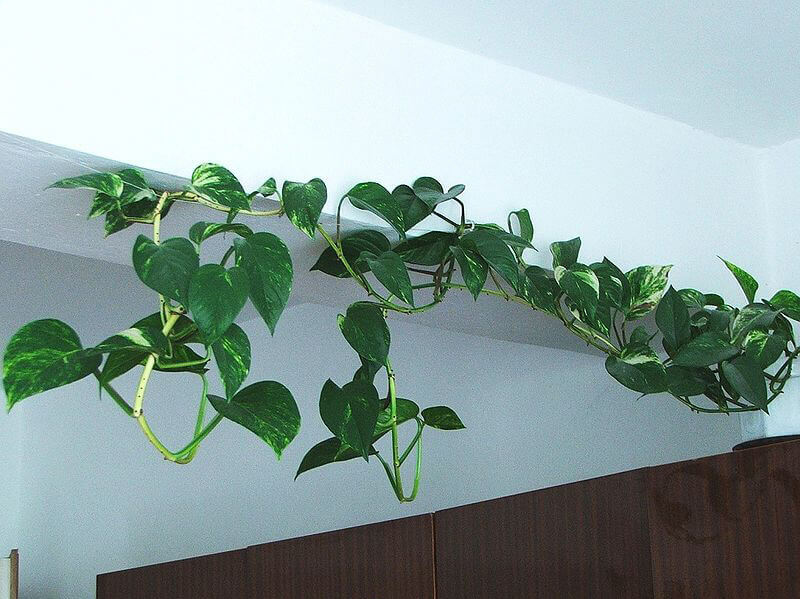
Devil's Ivy is versatile and adaptable. This one is on top of a cupboard growing in low-light conditions.
How Often Should You Water a Pothos?
Water a Pothos when the top of the potting mix has dried out. It will tolerate being a little too dry far better than sitting in constantly wet soil, which frequently leads to a degree of root rot. So overwatering is the mistake to avoid.
A drainage hole in the growing container so water can escape will help a little, but it's really important to let the growing medium dry out at least a little between waterings.
Don't Forget - The soil should never be soggy or wet. If you've given too much, pour any excess water away.
In a bright, warm room this may mean watering about once a week, but there is no fixed schedule. Plants in lower light, cooler rooms or during Winter will need water much less often. However, many factors play a part, with plants in warm rooms and lots of light needing more water than those in cooler spots and receiving less light.
Humidity
If given a choice, your Devils Ivy would choose high humidity due to being tropical plants. However, it's not vital for a healthy plant and they should be equally at home in a location with lower humidity levels.
Feeding
There is no need to feed unless the plant is growing. If you're able to, give your plant a light feed once every two or three months over the Spring and Summer using a general all-purpose liquid fertilizer.
They're not heavy feeders and you really only need to do it semi-regularly, but you'll still get fab results.
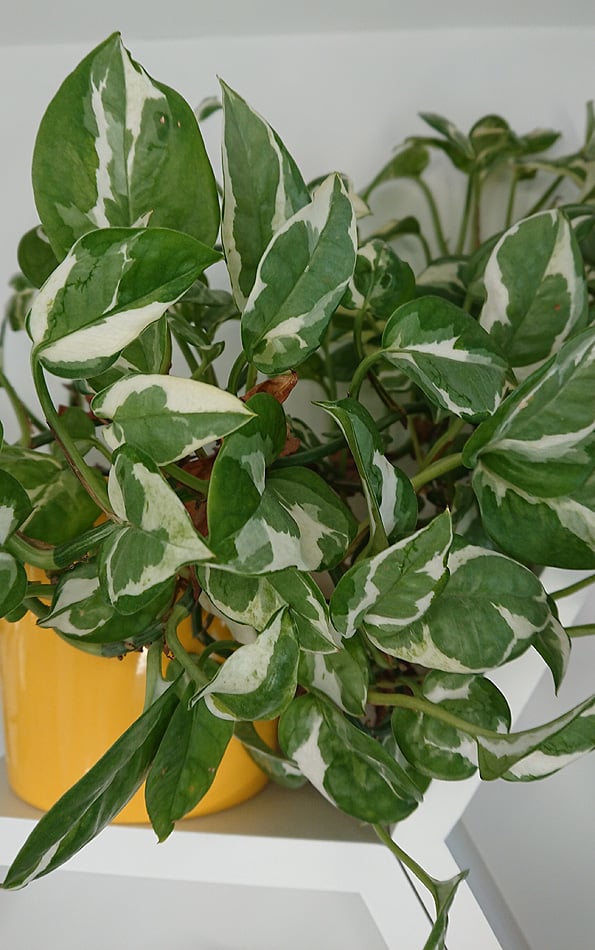
N'joy Pothos in a yellow pot with a number of trailing vines.
Temperature
A reasonable warm temperature is needed here. No lower than 10°C (50°F) in Winter and ideally between 15°C (59°F) and 25°C (77°F) in the other seasons.
Repotting
They do well in a small pot, so you only need to think about repotting your Pothos when the roots are so congested the plant starts to suffer. This will take at least a few years (maybe more) to happen.
No Really...
I'm not kidding about waiting years before you need to repot these plants. My Golden Pothos has been in the same pot for the last 5 (coming up to 6) years and it's still growing like crazy.
The most obvious sign of a repot being needed is when it isn't growing anymore and it's Summer (little to no growth in Winter is normal).
When you come to do it, just everyday potting soil is fine. They do well in alternative growing mediums like coconut coir or a DIY potting mix.
Propagation
Propagating Pothos is incredibly easy. If you want more plants, you should give it a go as it's really difficult to go wrong.
In Spring or Summer, create propagation material by cutting off the tips just below a "node" to create stem cuttings. You then put them in water until they grow roots, or push the cuttings directly into pots of moist compost. They root easily so you should have a good success rate.
Once you get some
root growth establishing, new leaves will start appearing soon afterwards. If you opted for water propagation first it's at this stage you can move them on into some fresh potting soil.
If you're not confident in doing it or don't understand what we've said, then watch our quick video for more. Although we're using a Satin Pothos (Scindapsus Pictus) for the clip, the way to do it is identical.
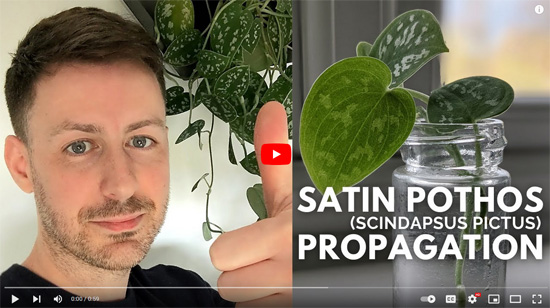
Watch our super short YouTube video if you want a visual propagation guide, including where to cut the stems and clear pictures of the leaf nodes.
Speed of Growth
Pothos is normally a quick growing houseplant providing you treat it well. Different varieties grow at different speeds, with the N'Joy potentially growing the slowest because it has smaller leaves.
All varieties will have slow growth or will stop growing entirely if poor care is provided or if its too cold, like if it's over Winter.
Height / Spread
This depends on how you're growing Pothos and the variety you have. So to address this it's best to explain a little about the eventual length of the vines first. They can reach impressive lengths out in the wild, up to 20m / 66ft.
Devils Ivy Growth Habits
I've found that 'N'Joy' Pothos and the Cebu Blue Pothos stay fairly compact with a little pruning. Neon and Marble Queen Pothos, are a little more adventurous and need more clipping.
The Golden and Jade Pothos on the other hand need a lot more pruning and training otherwise they can quickly spread and look out of control.
They can get very long indoors too but this is rare because although the creeping habit is part of the charm, many homeowners will prune when they become too long and unruly. Ultimately this means the plant can be as tall or as short as you want it to be.
At one stage, this "out of control" look was a highly desirable feature (because you could train its long vines above windows and beams to soften hard lines and edges). Now this can be looked upon as untidy and messy, especially in a modern home.
If this trailing look isn't for you, then the good news is that it looks beautiful growing up a moss stick. To those who don't know what this is, it's a vertical hollow tube made of plastic mesh with wide holes, the inside of the tube is typically filled with moss like material.
The entire "stick" is then placed and firmed into the pot with soil and over time the stick becomes covered and hidden by the growing plant as it grows up it. Once it can climb, the plant will produce aerial roots that support the growth. I cover it all in more detail here.

Moss sticks for sale.
Eventually the pothos vines will hide the supporting moss completely. Thereby the moss stick turns a normally low growing and spreading plant into a compact and vertical column of greenery. Genius.
You can normally buy these sticks from stores if you look hard enough or instead choose to let Pothos clamber over your entire home, failing that you can pinch out the tips regularly and keep it neat and tidy in a simple container.
Moss Sticks for Sale - Struggling to find moss sticks for your plants? Then we'll give the thumbs up to these ones on Amazon.
Flowers
Getting flowers on indoor plants is very rare. To be fair this doesn't really matter, it's only because of the beautiful foliage that these plants are grown indoors.
Is Pothos Poisonous?
The leaves and stems have a sap that contains Insoluble calcium oxalates. If a cat, dog or person ingests this it can result in painful lips, mouth and tongue. If a fair amount of the plant is eaten more significant symptoms such as vomiting are common.
A few further pointers
- Just like English Ivy, you can pinch out the tips of the vines which will create a more compact and bushier plant.
-
Each plant will produce several vines which twine together, this can look quite messy so every now and again gently untangle them.
You can prune back most of your plant to reinvigorate it
- If your Pothos reaches a good age, then a common problem you'll face is bare and leafless vines over large sections. At this point, you could either take cuttings to create brand new plants. Or if you're particularly fond of your existing one, you can cut back most of the plant's vine back towards its base to reinvigorate it.
Make the cut just past a leaf node and a new shoot should sprout within a few weeks.
As an example, we cut our plant back as shown in the photo below. The stump in the middle of the blue circle was where we made the cut. The growth on the right was the existing vine and the growth on the left is the new sprouting vine. It grew robustly and produced a lot of new leaves along the way.
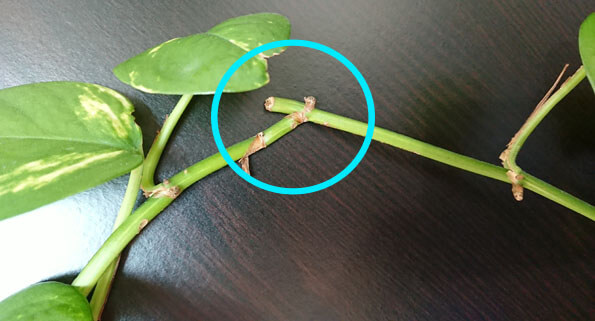
Golden pothos plants can grow long vines that can be easily pruned.
How to Grow Devil's Ivy Recap
- Average to Bright Indirect Light
Pothos is adaptable and will grow in light shade or bright indirect light. Avoid very dark rooms and harsh direct sunlight. - Moderate Watering
Water well, then let the top of the potting mix dry a little before watering again. It will cope with some dryness, but soggy soil can quickly cause problems. - Warm Temperatures
Aim for temperatures between 15°C (59°F) and 25°C (77°F). Avoid anything below 10°C (50°F) if possible. - Only Occasional Feeding
Feed lightly once every two or three months during Spring and Summer. Don't bother feeding if the plant isn't growing. - Avoid Overwatering
Too much water is one of the easiest ways to ruin a Pothos. Never leave the pot sitting in water and avoid keeping the soil constantly wet. - Prune or Train Long Vines
Let the vines trail, train them up a moss pole, or cut them back to keep the plant compact and bushy.
Pothos Problems
Dripping / Crying Pothos leaves (guttation).
After a Pothos plant has been watered well, in warmer months when you wake in the morning you may find water like droplets have formed and collected at the leaf tips. This is known scientifically as guttation and is almost always harmless.
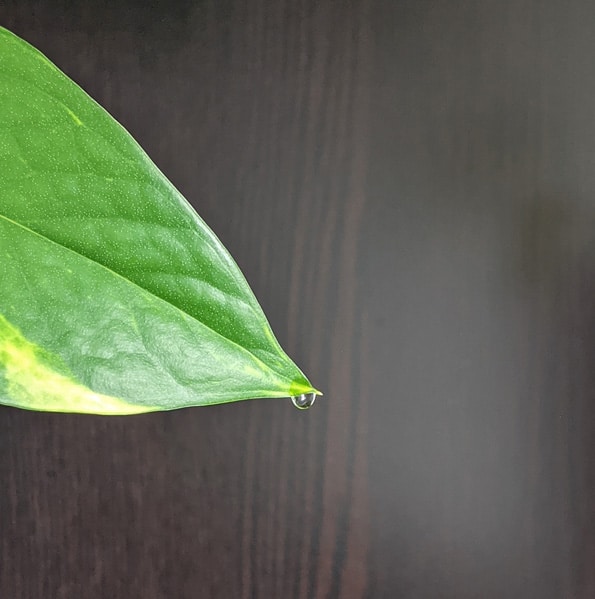
Many houseplants "cry" or drip small amounts of water from the leaf tips.
We say almost because the liquid has leaked out of the tiny pores on the undersides of the leaves called stomata, essentially it's mostly water, but you have to remember it has come from inside the houseplant. This means small concentrations of sugars or waste material may also have leaked out with the water.
There is no need for major concern as guttation is usually only temporary, once the growing medium has dried out after a few days, it will stop. In the meantime just catch the drips with a tissue rather than trying to drink them or something silly.
Why Are My Pothos Leaves Turning Yellow?
A yellow Pothos leaf is often caused by overwatering, particularly if several leaves are changing colour at once and the potting mix stays wet for a long time. Let the top of the soil dry a little before watering again and make sure excess water can escape through drainage holes.
My variegated plant is producing solid green leaves.
When treated as indoor plants, some loss of variegation in the Golden Pothos and Marble Queen is reasonably common.
There is a slim possibility it's happening because the light levels are too low and therefore it's not getting enough light hitting the leaves. But this isn't usually a problem for these plants as they hold on to any variegation fairly well even in low light conditions.
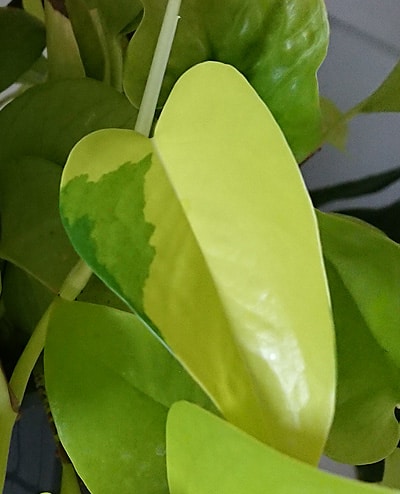
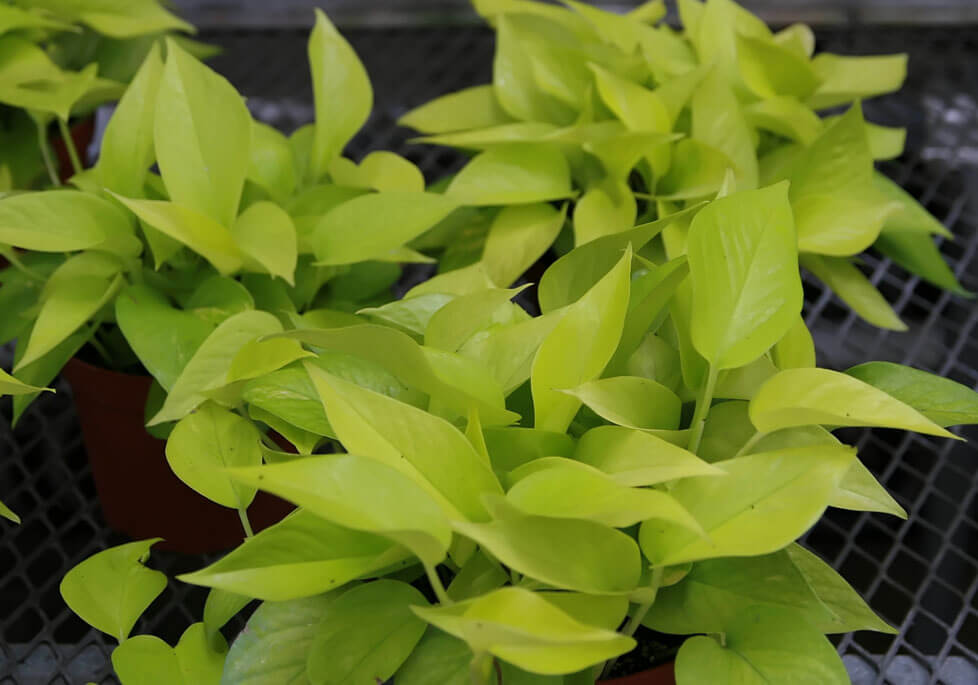
This Neon should have completely lime green leaves. These spreading splotches of darker green shouldn't be here.
Instead, it's more likely the plant is just reverting back to its original "DNA" makeup, which is the solid green, non variegated type. You can see it happening in the photo above with this Neon Pothos.
One or two leaves can be ignored (or just snipped off). If all new growth on that vine is like this (and you don't like it), you will need to snip off the vine back to where the leaves are "normal". The hope here is that when it starts growing more leaves, the next ones will have the familiar markings again.
Variegation fading.
Pothos is adaptable to darker spots in your home, but if it's really dark, the variegation will gradually fade a little. Move it to a place with some bright indirect light and over a few months it should produce new growth that restores the variegated look.
Leggy Pothos With Yellow Leaves.
A few older leaves turning yellow over time is normal. But if the vines are also long, sparse and losing leaves regularly, the plant may be getting too little light, inconsistent watering, or both.
Too much light, and I'm talking direct sunlight here, can also trigger yellowing. Use this houseplants main selling point of being low light tolerant and swap it with a plant that wants more sun.
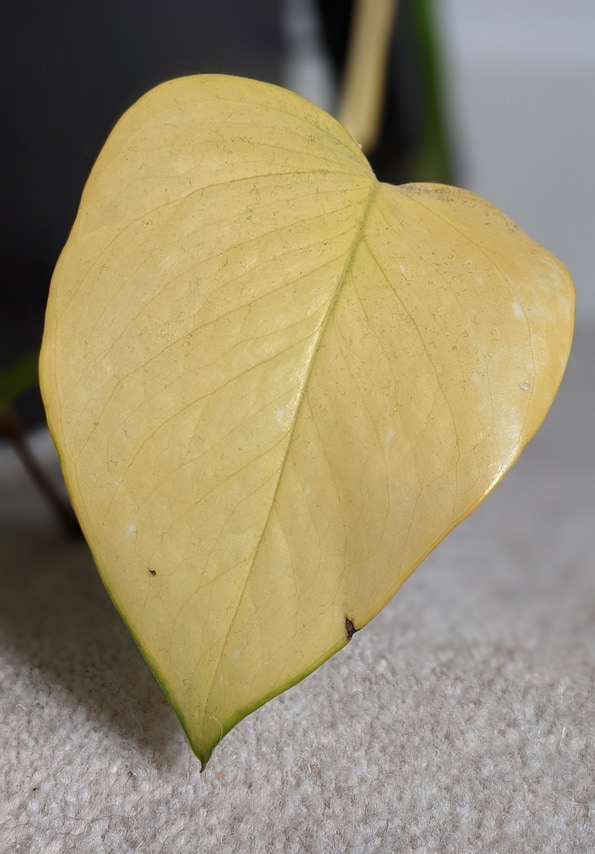
Lots of yellow leaves can be a sign of soggy soil
Over a long period this type of care will ruin and destroy the look of the plant and you'll end up with bare and empty vines. If this happens you can either take cuttings from the tips to produce new plants or cut back everything to start again.
Brown Spots on Pothos Leaves.
Brown spots can have several causes. Dry, crisp patches are often linked to underwatering, very dry air or too much direct sun. Dark brown or black patches, especially when the soil is wet, are more likely to be related to overwatering or damage around the roots.
Check the potting mix first. If it is staying wet for too long, reduce watering and make sure the plant is not sitting in water. If the soil is dry and the plant is close to a sunny window, give it a thorough drink and move it slightly away from harsh sun.
Pothos leaves have dry brown edges / Leaves drooping.
This is usually caused by underwatering. Give it a good drink and the drooping should improve within 24 hours. The brown leaf tips can be cut off.
Pale / Translucence / Scorched leaves.
This is caused by too much light, move it to a darker place or provide some shielding.
About the Author
Over the last 20 years, Tom has successfully owned hundreds of houseplants and is always happy to share knowledge and lend his horticulture skills to those in need. He is the leading content writer for the OurHouseplants Team.
Also on Ourhouseplants.com



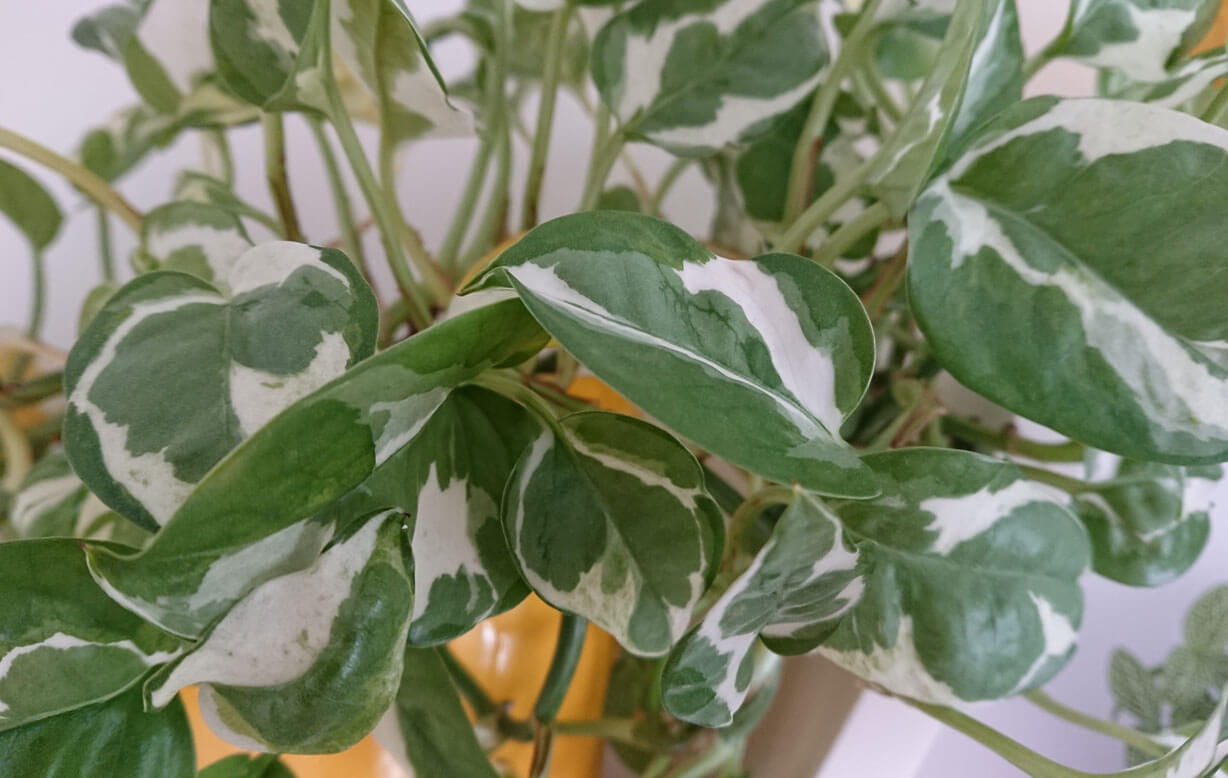
Credit for "Marble Queen" Gallery - LucaLuca
Credit for Pothos "Aureum" growing over a ceiling - Jerzy Opioła
Credit for Pothos Neon - Gallery - David J. Stang