What you need to know about Blue Orchids
Blue Orchids: Are they real or dyed? (And will they stay blue?)
Blue orchids look almost too good to be true, and in most cases, they are.
If you’ve spotted one in a shop or been given one as a gift, you’ve probably wondered: are blue orchids actually real? Will the flowers stay blue? Or has something been done to them?
The truth surprises a lot of people.
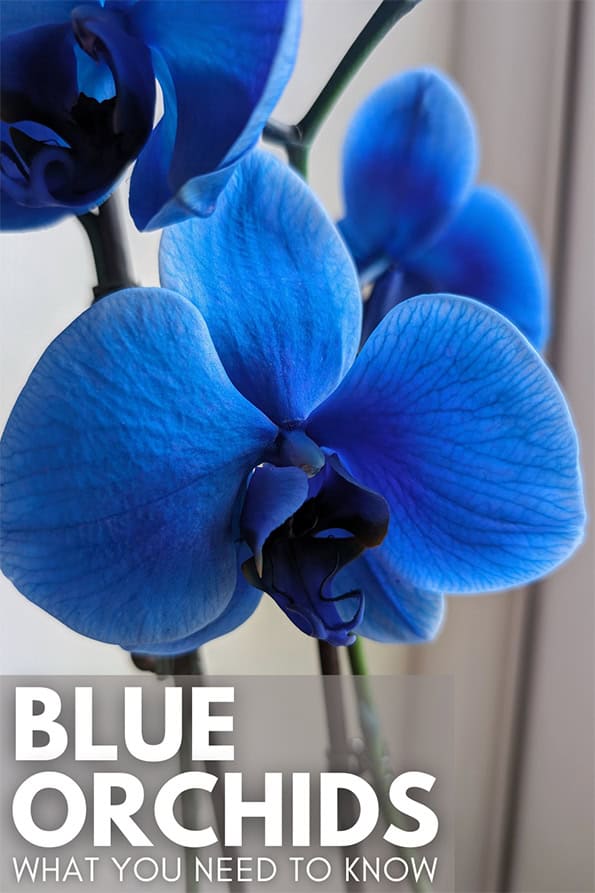
Both novices and experienced plant owners can be confused and surprised by the Phalaenopsis Blue Orchid.
In this guide, I’ll explain exactly what blue orchids are, why they look the way they do, and what to expect after the flowers fade, so you know what you’re really buying (or growing).
Contents of this Guide
- Are blue orchids real or fake?
- What happens after a blue orchid finishes flowering?
- What you need to know about them
- How to grow a blue orchid?
Are blue orchids real or fake?
Most blue orchids sold in shops are real plants, but artificially dyed.
The plant itself is usually a standard Moth Orchid (Phalaenopsis), but the striking blue colour isn’t natural. Growers create it by injecting blue dye into the flower spike, which then colours the blooms as they develop.
True blue orchids do exist in nature, but they are extremely rare and you’re very unlikely to come across them in everyday places like supermarkets or garden centres.
Species such as Vanda coerulea Orchid or the Blue Lady Orchid ( scientific name - Thelymitra crinita) can produce naturally bluish flowers, but even these are typically more violet or pale blue rather than the vivid colours seen in stores.
So the key thing to know about most Blue Orchids is:
- The plant is real.
- The blue colour is not.
This is why blue orchids are often described as "dyed orchids" rather than a naturally occurring variety.
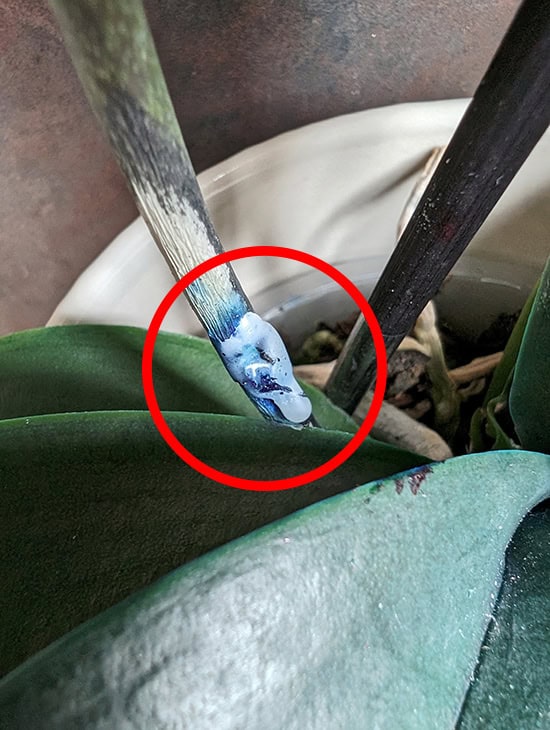
After the flowering stem is injected with dye, the small hole that's created is coated in a layer of wax to keep the dye in the stem. That's the theory anyway, as you can see some has still leaked out over time.
The truth here is that most blue orchids available in stores are actually white orchids dyed blue. This process involves injecting blue dye or ink into the flower spike, creating the vivid blue flowers which attract so much attention.
Injected dye isn't always used and sometimes the grower will use food coloring. It's similar to what most of us will have done as kids just with other types of plants. Food coloring is less often used though as the blue is usually less vivid and takes longer for the grower to achieve.
What happens after a blue orchid finishes flowering?
This is the part most people don’t realise when they first buy one. When a blue orchid flowers again, the blue colour will be gone. The next blooms will almost always be:
- White
- Pale Yellow
- Or Light Pink
- Never Blue
In other words the plant returns to its "natural colour".
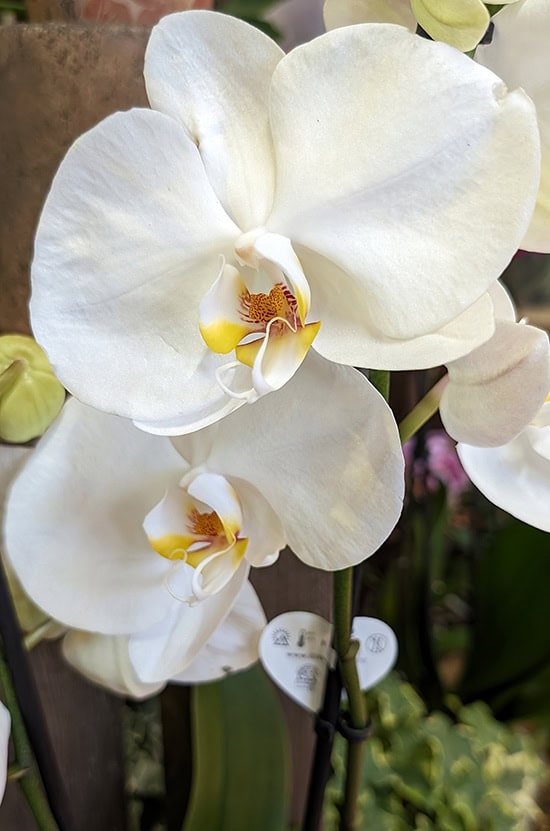
The next time a blue orchid reblooms, the blooms will revert back to their natural color. Often this will be their original color of bright white, pale yellow or light pink.
Why does this happen?
The blue colour only exists because of dye that was added to the original flower spike. Once those flowers fade: the dyed spike either dies back (or is removed) and when a new spike grows naturally in the future there’s no dye left in the plant to colour the flowers. So when the new buds open, they appear in their original, natural shade.
What most people expect vs reality.
Moth Orchids are regular repeat flowering plants and with reasonable care they can be brought back into bloom within 9 months, sometimes sooner if you're lucky. So what people expect is the following:
- Expectation:
“My special blue orchid will bloom blue again next year.” - Reality:
It will rebloom yes, but the flowers will be white (or another natural colour).
Is this a bad thing?
Not at all. In fact, once the dyed flowers are gone, you’re left with a normal, healthy Phalaenopsis orchid that can live for many years, bloom regularly and will often produce longer-lasting flowers than the original dyed ones Many growers actually prefer the natural blooms once they return.
Why Blue?
In theory, Moth Orchids can be dyed almost any colour, but Blue is often picked as it's one of the few colors Moth Orchids don't come in naturally.
Blue orchids don’t stay blue but they’re not a one-time plant.
What you really bought is a regular orchid with a temporary colour treatment, and with the right care, it will continue to grow and flower for years to come.

Hi, I'm Tom!
If you're like me and enjoy the challenge of growing houseplants and getting them to thrive, then OurHouseplants can help. This website shares my knowledge and years of growing plants and provides my advice on properly caring for your indoor plant friends.
What you should know about Blue Phalaenopsis Orchids?
You might be interested in buying one or perhaps have been gifted one and want to learn as much as possible. As a plant lover I've been gifted a fair few over the years, so here are a few things worth mentioning about these plants.
The great things about them.
- Something different and unusual.
A Blue Orchid is a novel and unusual looking plant. Its vivid color draws attention and can make a statement in your home. The blooms should last far longer than a bunch of flowers so they can make brilliant plants to give to family and friends as a present or for a special occasion. - Easily Available.
In the early days they were rare plants. Because only a few orchid growers produced them, they could also be expensive. However today, they're similar in cost to regular orchids and can be picked up in common easily accessible places like grocery stores. - The Orchid itself can live for 5 years (or longer) in your home.
At the next flowering cycle the blue will be gone, but you'll still have a living plant that should have a near normal lifespan for a Moth Orchid grown indoors. Repeat blooms are normal and although they won't be blue, you'll have regular flowers to look forward to. Just make sure you follow the correct care instructions.
The Problems with Blue Orchids.
- Bud Blast and Premature Dropping of the Flowers.
Regular Moth Orchids have individual blooms that will last around a month, but using dye can shorten this period considerably. Sometimes the dye used is pretty harsh on the plants and this can interfere with the flowering process. For example during the bud stage, it's very usual to have buds withering or dropping off before they fully open ("bud blast") and if they do open, to last for a shorter period of time. - Leaf color changes.
Often the artificial dyes are injected into the stems, but it doesn't necessarily just travel upwards and some can go down and back into the central parts of the plant. The leaves are unlikely to go as blue as the flowers, but they can change color. This should gradually wear off, but on some occasions it's permanent and you'll need to wait for the leaf to be replaced. - Staining from the Dye.
After it's been injected into the stem the damage caused is usually sealed to stop it coming back out of the plant stem. But this is often carelessly done and leaking of the ink is common. It's quite potent and it can easily transfer to your hands or nearby surfaces. So take care with where you place the plant and how you handle it. - Shortens Flowering Stem Life.
Most Moth Orchids can be encouraged to repeat bloom from the same flowering spike. This saves energy for the plant and speeds up when the next bloom cycle will start. However the dye is not healthy for the plant and in most cases the stems will only last one blooming period. As soon as the flowering is over they wither and go brown.
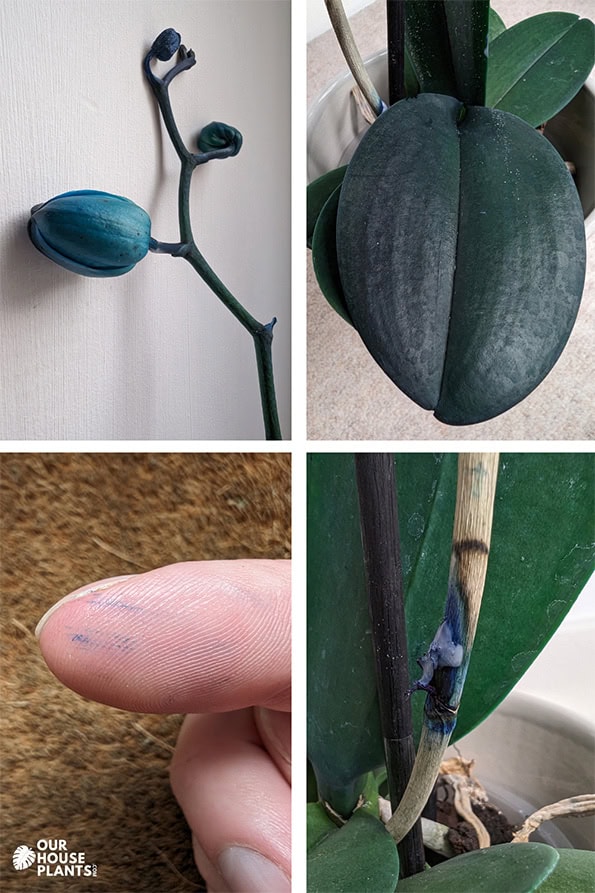
Four common issues that happen to Blue Orchids. From Top left clockwise. Premature leaf drop / Leaf color changes / Dye transfer / Premature flowering stem aging.
Unlike a regular Phalaenopsis, these specialist plants will often come with several issues, that include damage around the injection site on the flowering spikes, a blue tint on the green leaves, and leaking blue pigment. New flowers will also be white, although they'll last longer than the original blue ones.
How to grow a blue orchid?
Growing any Moth Orchid, including the blue ones, can be a rewarding experience. Even if the future flowers won't be blue you can still have a beautiful plant for many years providing you give it proper care.
Light
Moth orchids can cope with medium light levels, but do best and will produce more flowers in bright, indirect light. Avoid direct sunlight, as it can scorch the leaves. A north or east-facing window with their more gentle natural light is ideal.
Watering
Some people use ice cubes to water their Orchids. Although this can work for some it's too fiddly for others. In any case the general rule is to water your orchid when the potting mix has dried out. Good drainage is a must and chunky materials like bark is needed to achieve this.
I have a full and extensive guide with photos to show you when you should water. I've also built a quick quiz to give you a rough idea how often you should be watering based on your growing conditions.
Temperature
They like warm temperatures during the day and slightly cooler at night. Try to maintain a temperature range of 65-75°F (18-24°C) during the day and a little down from this at night.
Humidity
Moth orchids prefer higher humidity levels, around 50-70% which is similar to their natural habitat. You could get away with less, but very low levels can prevent future flowering and lower the life of the flowers.
Feeding / Fertilization
Feed your orchid with a balanced orchid fertilizer on a regular basis every 2-4 weeks during the growing season (Spring and Summer). You can also use a normal houseplant balanced fertilizer, but dilute the fertilizer to half the recommended strength to avoid over-fertilizing.
Other Tips
Good airflow is essential to prevent fungal diseases. Place your orchid in a well-ventilated area, and avoid overcrowding with other plants.
Blue Orchid Specific Care.
Sometimes you can encourage normal orchids to to rebloom quickly with a few tricks, however with Blue orchids you ideally want to remove the dye from the plant by cutting off the stem. Additionally, it's worth saying again that most of the flowering stems won't rebloom if harsh dye has been used.
So after flowering, I recommend removing the flower spike as close as possible to the base of the plant. I have a full guide including pictures showing how to do this here.
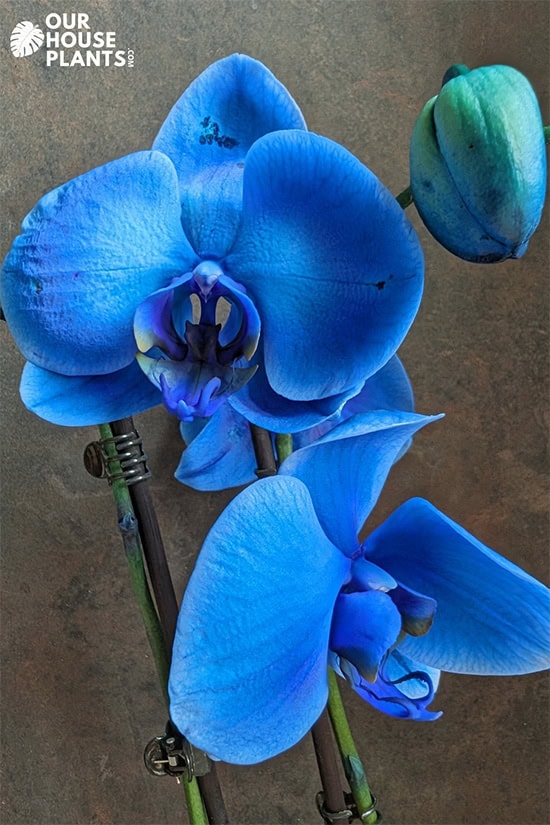
Some Orchid Lovers will adore the look of these plants. Others will just think of them as sporting a bad dye job. What do you think about them?
Other than the future reblooming process they won't need any other special care. All other growing requirements of your Phalaenopsis Orchid are the same as a plant that's not been dyed. If you want to learn more or need further information you can check out my extensive guide for growing Moth Orchids.
About the Author
Over the last 20 years, Tom has successfully owned hundreds of houseplants and is always happy to share knowledge and lend his horticulture skills to those in need. He is the leading content writer for the OurHouseplants Team.