
Cyclamen Persicum (Florist's Cyclamen)
About the Cyclamen
The indoor Cyclamen, sometimes known as the "Florist’s Cyclamen", is a truly captivating houseplant. With its vibrant, swept-back petals and heart-shaped, silver-marbled leaves, it's often called the ballerina of the plant world.
While many houseplants fade as the temperatures drop, the Cyclamen persicum is just getting started. Its blooms are not just striking and colourful, they possess a unique sense of poise and elegance that can brighten even the greyest winter morning.
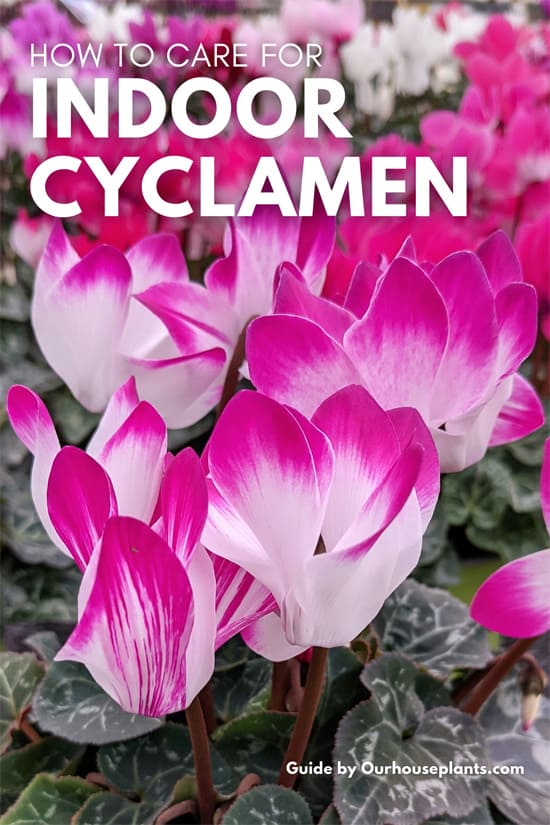
Cyclamens are the perfect indoor plants for brightening homes during the autumn and winter months when many other houseplants are dormant.
Oh yes, I'd agree completely that there are many other houseplants which have unique and interesting blooms that warrant a place in our homes, but the Cyclamen, with its upswept petals holds a special captivating charm.
It's the Ballerina of the plant world, with its petals frozen still as if caught in a graceful dance. Subtly it attracts attention and is usually perfectly offset by the patterned foliage below, providing several months of interest.
Did You Know?.
This is another plant grown from a tuber (though you’ll often hear people mistakenly call it a bulb or a corm). Think of it like a small, flowering potato! Because it's a solid storage organ rather than a layered bulb, it's particularly sensitive to sitting in water, which is the secret behind why so many people accidentally rot them.
This is another "bulb" houseplant, or rather a tuber, that in many cases belongs outdoors in the hands of a gardener. Although it's true that a Cyclamen can't live all year indoors, it can still easily become a temporary indoor plant which is welcomed into homes and offices during the Autumn and Winter months.
When things warm up, the plant retreats back into the tuber and completely disappears, by late Spring it's all but a distant memory.
Fortunately at this point however a tuber by itself is small and requires very little from you until early Autumn when it will burst back into dance and shower you with a constant display of blooms all over again.
This means on the whole it's easy to keep indoors providing you make sure it's kept cool and well watered, if it's too hot or too dry you'll spoil your Cyclamen. I'll talk more about this further into our article.

With a little cool air and careful watering, your 'Ballerina' will keep dancing all winter long.
The prices and types of Cyclamen are quite universal, in that they tend not to be overly expensive and almost all for sale are Cyclamen persicum. However there is still plenty of individuality to be had because the colours you can pick from are varied and there are three groups of sizes from the larger standards to the tiny miniatures.
The leaves are frequently patterned differently too, so although you may only be able to find one main variety the choice is still extensive. Care is quite easy, and after flowering is finished you can either plant your tuber outdoors or store it for next Winter.

Hi, I'm Tom!
If you're like me and enjoy the challenge of growing houseplants and getting them to thrive, then OurHouseplants can help. This website shares my knowledge and years of growing plants and provides my advice on properly caring for your indoor plant friends.
Cyclamen Photos
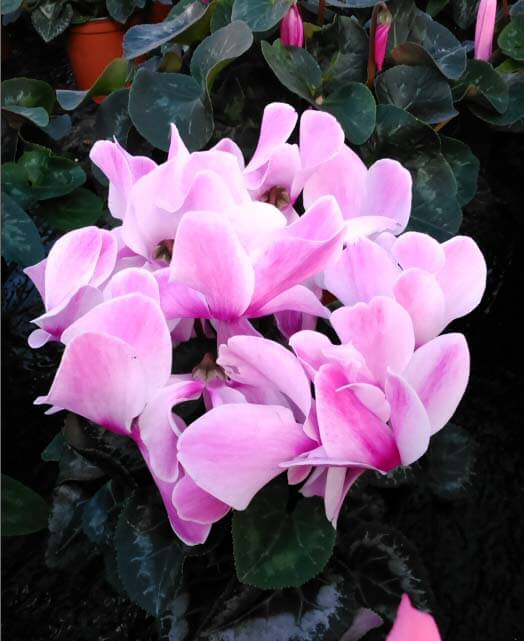

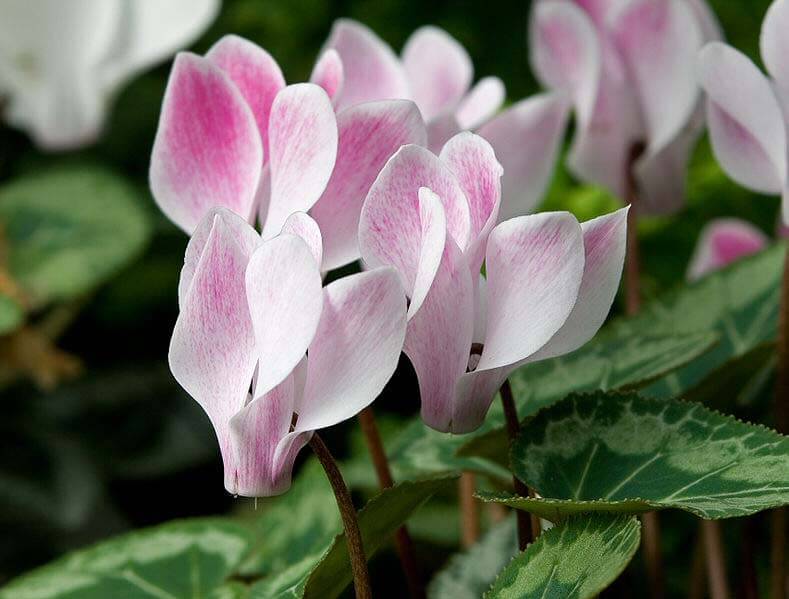

Cyclamen Care Instructions
Light
Bright light away from direct sunlight is essential for a Cyclamen if you want a continuous long lasting flower display. If conditions are too dark the blooms are more sporadic and if things are too bright the flowers and leaves can become faded.
Watering
Whilst your plant is growing, constantly moist soil should be your goal. That doesn't mean you should over water or drown your Cyclamen, if you do there is a high risk the tuber will rot. Letting the soil dry a little is fine, but it should never be allowed to dry out completely whilst in growth.
A Cyclamen is probably not the best houseplant to have in your living room on top of your TV set with a fire roaring nearby
Humidity
Most Cyclamens don't get on well in conditions where the air is dry. It tends not to be the dry air that's the problem but the often associated warmth that comes with it.
Dry air tends to occur in centrally heated rooms or offices, near fires or next to hot electrical goods. A Cyclamen therefore is probably not the best plant to have in your living room on top of your TV set with a fire roaring nearby. Grouping plants together is a simple way to increase humidity levels if it's needed. Avoid pebble trays and misting as they don't work well enough to make a difference long term.
Feeding
Despite some recommendations, you should not feed or "soak" a Cyclamen tuber with fertiliser at any time. Instead feed your plant, if you want to, just before it starts to flower and during the display, this will encourage strong and potentially more blooms.
A normal houseplant feed is suitable and just a small amount every two or three weeks is enough. Never feed a Cyclamen unless it's actually "active" or growing. Many owners will over-fertilize dormant plants which can cause damage.
Commercial growers produce millions of potted Cyclamens each year; choosing a healthy, firm tuber is the first step to success with these indoor plants.
Temperature
The majority of Cyclamens sold are not truly frost hardy. Expose them to harsh punishing frost and they will suffer. That said, as far as "houseplants" go, the Cyclamen will take a real pounding from the cold before dying off when compared to many others, so could suit a porch for example.
Of course, such cold conditions don't occur in the living areas of a normal home so instead your primary concern should be the other end of the scale. Heat. Too much heat and your Cyclamen will decline quickly. They will give a miserable performance, become quite ugly looking and the flower season can be cut from a month or two down to a matter of weeks. 16°C (60°F) or a little below this is the perfect temperature for indoor Cyclamens.
Repotting
Repot in August time using a standard potting mix, just before the tuber starts to sprout new leaves. If sprouting has just started you can still repot, but if you have fully formed leaves or flowers give it a miss and wait until next year.
Propagation
You can attempt to divide your tuber, but this is quite risky and probably left to the expert. It's the same as a potato (also a tuber), if you imagine that when you cut the potato in half you expose the inside which would be susceptible to rotting and therefore makes it a gamble in the hands of an amateur.
If seeds are produced you can try and grow new Cyclamens from these, however the conditions need to mimic outdoor temperatures and it's quite a fussy process. It's normally more cost effective to buy new plants instead or just keep your original tuber from year to year is the most rewarding (and eco-friendly) way to grow them.
Speed of Growth
As with many bulbs or tuber plants, growth can be explosive and fast. A huge amount of energy is stored within the tuber and when required it can be used quickly resulting in rapid growth. Your Cyclamen will belong to a size group (see below for more information on this) and the growth will continue until its final size has been reached. Once achieved its focus will be on the flower production.
Height / Spread
There are typically three groups a Cyclamen can belong to when it comes to size.
- Standards growing up to 30cm / 1ft.
- Intermediates which come in at 20cm / 8in.
- Miniatures which as the name suggests are the smallest, growing no more than 15cm / 6in.
Flowers
Cyclamen flowers are the primary appeal of these plants when grown indoors. The leaves which look like miniature lily pad leaves are interesting without a doubt, but can't compete when compared to the elegance and sheer variety, in both colour and appearance, of the flowers.
The vibrant pink and white flowers of the Cyclamen are often fragrant and can last for several weeks if the plant is kept in a cool, bright environment. Photo by JJ Harrison
Whites, pinks, reds or violets are all common, while you can find more unusual flower styles such as doubles or basic singles, Cyclamen persicum with its five upswept petals are the most frequently sold. The flowering season will last a couple of months if conditions are cool, half that if you've chosen a warm room.
Are Cyclamen Plants Poisonous?
Many plants grown from tubers and corns contain compounds that are toxic if ingested. If a child or pet mistakes a Cyclamen tuber or corn for a treat and eats it you must seek expert help immediately.
Prevention is better than cure, so it might be worth avoiding these plants in your home if you know your pet or child is too curious about houseplants.
Anything else?
Once your Cyclamen goes dormant (Spring) store the tuber in a shady but fairly dry spot in your garden or out building. You can remove it from the pot it's in, or leave it in its pot.
From August onwards start to water your tuber a little and increase the light level, i.e. move it from the shady storage location and place on a windowsill for example. If you kept the tuber loose, make sure you repot it back into a pot at this stage. It needs to sit so the top is just above the soil surface.
Keep barely moist and all being well new sprouts (if they haven't already) should start to poke out from the tuber. Water more heavily when the plant is growing more vigorously but not before, otherwise you'll encourage rotting.
Cyclamen Quick Care Summary
Common Problems and Issues
Why is my Cyclamen wilting?
This is probably a temperature issue. A Cyclamen will flower and grow during the colder months of the year, they detest heat which is why you'll never find one growing properly in summer. To keep one successfully indoors you need to mimic the temperature outside and this means choosing a cool location. Perhaps an unheated room or a cool but bright hallway.
How to fix yellowing leaves on a Cyclamen.
Yellowing leaves is fine in Spring, but if this is happening earlier then chances are it's either been kept somewhere too hot or you've over watered and the tuber / corm has started to rot.

Yellowing leaves (known as chlorosis) happen when the plant can't produce enough chlorophyll. In Cyclamens, this is usually because the roots are surrounded by wet soil and can't breathe.
Rotten tuber.
Caused by the soil being too wet for too long, or exposure to very low temperatures. If the rotting is only on a small section, cut it out. If the rot is more extensive throw the plant into the compost bin as it can't be saved.
Spindly growth.
Although they don't like strong direct sunlight, Cyclamens still need quite bright light to fuel their growth. Move to a lighter spot.
Deformed leaves and flowers, uneven growth.
If you are experiencing lots of undesired symptoms, you may have a dreaded Cyclamen Mite infestation. However this is quite rare so check your treatment is at least close to our care instructions detailed above first, in case you have made mistakes in other ways.
The Cyclamen Mite is not possible to see with the human eye, but if you believe you have this pest you will find little help in terms of available chemicals. Most are tightly controlled for human safety, so you may need to consider throwing the plant out.
Alternatively you can eliminate the mites by placing the entire plant in hot water for 15 minutes at a temperature of 40°C (105°F). Be precise with the temperature; too hot and you will cook the plant, too cool and the mites will survive.
About the Author
Over the last 20 years, Tom has successfully owned hundreds of houseplants and is always happy to share knowledge and lend his horticulture skills to those in need. He is the leading content writer for the OurHouseplants Team.
Also on Ourhouseplants.com

(Article / Gallery) Photo credit of the white and pink Cyclamen to JJ Harrison